Logo
IndianGlobalBlogsPublicationsPodcastsMarketAboutContact
Logo
IndianGlobalBlogsPublicationsPodcasts
7News
Mandatory Daily Record of Production and Raw Material UtilisationHeritage Foods inaugurates new Ice Cream PlantFSSAI makes registration to all milk vendors in IndiaGujarat Ice Cream Makers Face Cone ShortageSummer Heat to Stress India’s Dairy Cold Chain

Indian Dairy News

Hatsun Agro Shares Rise After Milk Mantra Merger
Mar 14, 2026

Hatsun Agro Shares Rise After Milk Mantra Merger

The shares of Hatsun Agro Product Limited gained investor attention after the National Company Law Tribunal (NCLT), Cuttack Bench, approved the merger of its wholly owned subsidiary Milk Mantra Dairy...Read More

Telugu States Clash Over ‘Vijaya Dairy’ Sales
Mar 14, 2026

Telugu States Clash Over ‘Vijaya Dairy’ Sales

A fresh dispute has erupted between the governments of Telangana and Andhra Pradesh over the use of the “Vijaya Dairy” brand logo and the sale of its dairy products in Telangana, highli...Read More

Heritage Foods  inaugurates new Ice Cream Plant
Mar 13, 2026

Heritage Foods inaugurates new Ice Cream Plant

Heritage Foods Limited, a leading dairy company offering a wide range of milk and value-added dairy products, today announced the inauguration of its new greenfield Ice cream manufacturing facility at...Read More

DairyNews7x7
Advertisement

Latest Blogs

See More
Mandatory Daily Record of Production and Raw Material Utilisation
Mar 14, 2026

Mandatory Daily Record of Production and Raw Material Utilisation

I recently reviewed the notification issued by the Food Safety and Standards Authority of India in the context of Schedule IV of the Food Safety and Standards (Licensing and Registration of Food Busin...Read More

FSSAI makes registration to all milk vendors in India
Mar 13, 2026

FSSAI makes registration to all milk vendors in India

The recent advisory issued by Food Safety and Standards Authority of India (FSSAI) mandating registration of milk vendors is a timely and progressive step towards strengthening traceability and accou...Read More

Rajahmundry Milk Incident: Accident or Adulteration?
Mar 10, 2026

Rajahmundry Milk Incident: Accident or Adulteration?

The recent editorial “Bitter Milk” published by The Hindu raises important concerns about food safety in India. The editorial deserves appreciation for attempting to broaden the conversation and under...Read More

Milk Prices Rise in South & West: Is North Next?
Mar 05, 2026

Milk Prices Rise in South & West: Is North Next?

The recent round of retail milk price increases across South India and Maharashtra is no longer an episodic adjustment but a clear signal of structural stress building up in India’s milk economy. Over...Read More

Global Dairy News

How Walmart Keeps Great Value Milk So Affordable
Mar 14, 2026

How Walmart Keeps Great Value Milk So Affordable

Retail giant Walmart has managed to keep the price of its private-label Great Value milk significantly lower than many competing brands through a vertically integrated dairy supply chain and direct co...Read More

Lactose-Free Milk Seen as Growth Driver in Coffee
Mar 13, 2026

Lactose-Free Milk Seen as Growth Driver in Coffee

Lactose-free milk is emerging as a major growth opportunity for the dairy industry, particularly in the rapidly expanding coffee and café segment. A recent US-based study highlighted that lactose-free...Read More

Nigeria’s Dairy Challenge: Many Cows, Little Milk
Mar 13, 2026

Nigeria’s Dairy Challenge: Many Cows, Little Milk

Despite having more than 20 million cattle, Nigeria produces far less milk than it consumes, highlighting deep structural challenges in its dairy sector. Most cattle in the country are...Read More

DairyNews7x7
Advertisement
Dairy News 7x7

Your trusted source for all the latest dairy industry news, market insights, and trending topics.

FOLLOW US
CATEGORIES
  • Global News
  • Indian News
  • Blogs
  • Publications
  • Podcasts
SUBSCRIBE TO OUR NEWSLETTER

Stay informed with the latest updates and trending news in the dairy industry.

No spam, unsubscribe at any time

GET IN TOUCH
C-49, C Block, Sector 65,
Noida, UP 201307
+91 7827405029dairynews7x7@gmail.com

© 2026 Dairy News 7x7. All Rights Reserved.

Terms of ServicePrivacy Policy
Prefer Us
Prefer Us

Milk Cooling Tank Compatible with  Revised F-Gas Regulation Introduced by Wedholms

By DairyNews7x7•Published on April 24, 2024

Milk Cooling Tank Compatible with  Revised F-Gas Regulation Introduced by Wedholms
Prefer on

  • Wedholms is introducing the first milk cooling tank in the European market to use CO2 as refrigerant in a standard cooling system of the direct expansion cooling type

    •    Natural refrigerants, such as CO2, will be required under the revised F-gas Regulation, signed into EU law on March 11 this year

    •    From January 2025, all new self-contained refrigeration equipment, except chillers, installed in the EU must use refrigerants with a GWP (Global Warming Potential) value of less than 150

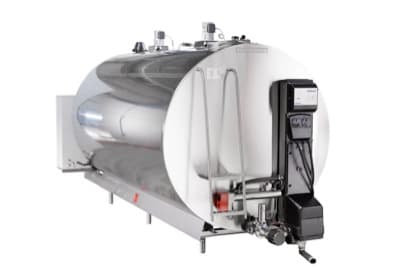
The first milk cooling tank in the European market to use CO2 as refrigerant in standard cooling systems of the direct expansion cooling type has been introduced by Wedholms. The tank is compatible with the revised F-gas Regulation that will be mandatory in the European Union from January next year.

The DFC 953 range of milk cooling tanks is available for robotic milking with 1-8 robots and with capacity ranging from 3,200 litres to 30,000 litres.

Synthetic refrigerants, such as hydrofluorocarbons, are currently being phased out by the European Union. According to the revised F-gas Regulation, recently signed into EU law, all new self-contained refrigeration equipment, with the exception of chillers, installed from January 2025 must use refrigerants with a GWP (Global Warming Potential) value of less than 150. Existing systems may still be used and repaired for the remainder of their economic life. However, effective from 2032, refrigeration systems using refrigerants with a GWP value above 750, apart from chillers, can no longer be refilled during maintenance and service.

From 2027, further restrictions on the maximum amount of synthetic refrigerants that can be placed in the EU market will be introduced, capping the amount at around 20 million tonnes CO2 equivalent per year. This will increase the price of synthetic refrigerants, making milk cooling tanks with outdated technology more costly to purchase and operate, thus incentivising investments in milk cooling tanks using technology that is more modern and environmentally sustainable.

“Refrigerants that are environmentally friendly are being introduced across the board and milk cooling tanks is no exception. Refrigeration is an essential process in the farming and dairy industries and we need to use processes that work in harmony with the natural environment that we depend on,” says Stefan Gavelin, managing director of Wedholms.

Early refrigerants back in favour

The phasing out of harmful refrigerants is a process that has been ongoing for nearly 40 years. During the 1980s, the first evidence of holes in the ozone layer started to emerge. Since then, successive regulatory regimes have heralded new product generations of refrigerants, each less harmful than the previous one.

Early refrigeration systems, back in the 1800s, used natural refrigerants such as CO2, ammonia or hydrocarbons. However, these refrigerants were not practical to use with the manufacturing technology and safety practices used at the time. In the 1930s, freon was introduced, providing effective refrigeration at low pressure while also improving safety.

Freon started to be phased out by the ratification of the Montreal protocol in the 1980s, due to its high ozone depletion potential. Since then, there has been a shift of focus back towards natural refrigerants again. CO2 has a GWP of 1 and an ozone depletion potential of 0, making its environmental impact neutral.

“We are coming full circle, with natural refrigerants once again becoming the norm. CO2 refrigeration requires a high operating pressure, but thanks to technological advancements, such systems have, over the last decade, become viable for both commercial and industrial use, in many different applications.”

“At Wedholms, we have chosen to work with CO2 as refrigerant. Ammonia is toxic as well as corrosive; hydrocarbons, such as propane, are flammable. CO2 have none of these disadvantages. In addition, it is readily available in large quantities and at low cost,” says Gavelin.

Stay Updated

Get the latest dairy industry news directly in your feed.

Prefer Us on Google Search

Swipe to continue reading

Previous Article

Next Article