Latest Blogs
See More
Indian Dairy News


DairyNews7x7
Global Dairy News


DairyNews7x7
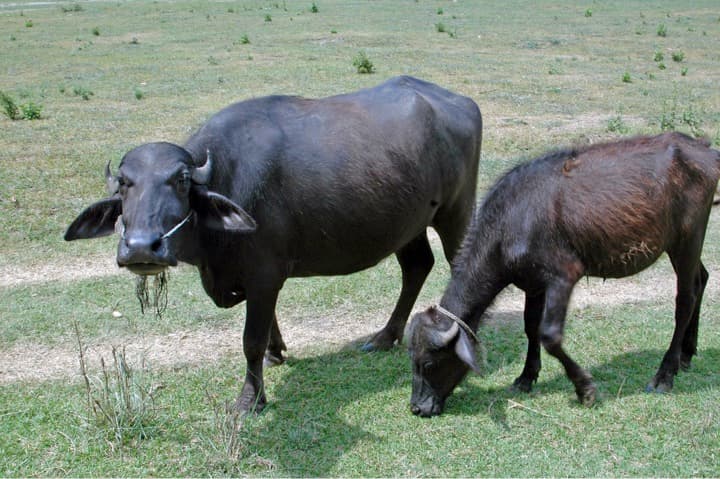
Balanced diet, effective breed and manure management and precision dairy farming technologies could improve dairy productivity in India and reduce planet-warming greenhouse gas emissions from the sector, according to a new report.
The report, titled "India's Dairy Future: Aligning Livelihoods, Growth, and Climate Solutions", says the doubling of the female bovine population in India -- from 122.7 million in 1972 to 246.7 million in 2019 -- has led to a corresponding doubling of greenhouse gas emissions from dairy animals.
India's livestock sector is projected to account for 15.7 per cent of global enteric methane emissions by 2050, it said.
According to the data published by the International Energy Agency earlier this year, India is the third largest emitter of methane. Studies suggest livestock are responsible for about 48 per cent of all methane emissions in the country, with cattle accounting for the majority of it.
Despite the significant rise in female bovine population and emissions from enteric fermentation, the country's average milk yield per cow remains low, accounting for only two-thirds of the global average, and is far lower than in developed countries.
On the other hand, climate change is adversely affecting dairy productivity and livestock health, the report by the Confederation of Indian Industry's Food and Agriculture Centre of Excellence and Environmental Defense Fund said.
For example, heat stress is reducing milk yields, impairing reproduction, and increasing the risk of disease. Water scarcity, exacerbated by erratic weather patterns, is further challenging farmers who rely on irrigation for feed crops, while the rising costs of feed and water place additional financial pressure on smallholder farmers, the report said.
It said that dairy farmers need support to adopt more climate-resilient dairy practices that improve both productivity and resilience.
Such practices include balanced diets, supported by initiatives like the National Dairy Development Board's Ration Balancing Programme, to enhance livestock productivity and reduce emissions.
Practices such as silage feeding, especially in water-scarce regions, and the use of crops like maize and sorghum are particularly beneficial for smallholders, the report said.
Innovative solutions, such as hydroponics and climate-resilient forage crops including Bajra, Napier, and millets, address fodder shortages in drought-prone areas. However, wider adoption of these practices requires accessible extension services, robust feed quality standards, and improved supply chain infrastructure, it added.
Breeding management is another critical area, with artificial insemination using high-genetic-merit bulls widely adopted to improve progeny. However, challenges such as repeat breeding and poor estrus detection necessitate multiple inseminations.
Addressing these challenges through better animal health services, cold chain infrastructure, and staff training can enhance outcomes, said the report created after multiple stakeholder consultations in Delhi, Patna, Bengaluru, and Ahmedabad, and deep dives in the states of Punjab, Maharashtra, and Tamil Nadu for their contributions to India's dairy sector.
Manure management practices, including timely drying of manure, composting/ vermicomposting, and biogas/compressed biogas production, significantly reduce methane emissions.
Good animal husbandry practices, such as vaccination, deworming, biosecurity, and precision antibiotic use, enhance farm productivity and animal health. However, gaps in awareness, limited veterinary services, and cost concerns hinder widespread adoption.
Addressing these challenges through region-specific biosecurity protocols, strengthened veterinary infrastructure, and regulatory enforcement can boost adoption, the report said.
Precision dairy farming technologies, including automated milking systems and climate-resilient sheds, offer significant potential for efficiency gains but are currently limited to larger farms due to high costs.
Developing cost-effective solutions could facilitate scalability among smallholder farmers.
With over 300 million dairy cattle and buffaloes, India is the world's largest milk producer, contributing about 25 per cent of global milk production. The sector accounts for around 5 per cent of India's gross domestic product and provides essential nutrition to millions of people, particularly through milk production.
Smallholder farmers, who own 2 to 5 animals, produce 62 per cent of the country's milk supply and are the backbone of India's dairy industry.