Logo
IndianGlobalBlogsPublicationsPodcastsMarketAboutContact
Logo
IndianGlobalBlogsPublicationsPodcasts
7News
Mandatory Daily Record of Production and Raw Material UtilisationHeritage Foods inaugurates new Ice Cream PlantFSSAI makes registration to all milk vendors in IndiaGujarat Ice Cream Makers Face Cone ShortageSummer Heat to Stress India’s Dairy Cold Chain

Indian Dairy News

FSSAI Licences Get Perpetual Validity
Mar 14, 2026

FSSAI Licences Get Perpetual Validity

India’s food regulator, the Food Safety and Standards Authority of India (FSSAI), has announced a major reform granting perpetual validity to food licences and registration certificates, eliminating t...Read More

Dairy Sector a ‘Safety Net’ for Farmers: NABARD
Mar 14, 2026

Dairy Sector a ‘Safety Net’ for Farmers: NABARD

The Chairman of National Bank for Agriculture and Rural Development, Shaji K V, has highlighted the crucial role of India’s dairy industry in protecting rural livelihoods, describing it as a “safety n...Read More

Bihar Dairy Officer Arrested in ₹30,000 Bribery Case
Mar 14, 2026

Bihar Dairy Officer Arrested in ₹30,000 Bribery Case

A field officer of the district dairy development department in Bihar was arrested by the Vigilance Investigation Bureau (VIB) for allegedly accepting a bribe of ₹30,000 in West Champaran district. Th...Read More

DairyNews7x7
Advertisement

Latest Blogs

See More
Mandatory Daily Record of Production and Raw Material Utilisation
Mar 14, 2026

Mandatory Daily Record of Production and Raw Material Utilisation

I recently reviewed the notification issued by the Food Safety and Standards Authority of India in the context of Schedule IV of the Food Safety and Standards (Licensing and Registration of Food Busin...Read More

FSSAI makes registration to all milk vendors in India
Mar 13, 2026

FSSAI makes registration to all milk vendors in India

The recent advisory issued by Food Safety and Standards Authority of India (FSSAI) mandating registration of milk vendors is a timely and progressive step towards strengthening traceability and accou...Read More

Rajahmundry Milk Incident: Accident or Adulteration?
Mar 10, 2026

Rajahmundry Milk Incident: Accident or Adulteration?

The recent editorial “Bitter Milk” published by The Hindu raises important concerns about food safety in India. The editorial deserves appreciation for attempting to broaden the conversation and under...Read More

Milk Prices Rise in South & West: Is North Next?
Mar 05, 2026

Milk Prices Rise in South & West: Is North Next?

The recent round of retail milk price increases across South India and Maharashtra is no longer an episodic adjustment but a clear signal of structural stress building up in India’s milk economy. Over...Read More

Global Dairy News

Global Dairy Commodity Prices Show Signs of Rally
Mar 14, 2026

Global Dairy Commodity Prices Show Signs of Rally

Global dairy commodity prices have shown a rally in the first quarter of 2026, particularly for products originating from Australia and New Zealand, according to a new Q1 Global Dairy Quarterly report...Read More

How Walmart Keeps Great Value Milk So Affordable
Mar 14, 2026

How Walmart Keeps Great Value Milk So Affordable

Retail giant Walmart has managed to keep the price of its private-label Great Value milk significantly lower than many competing brands through a vertically integrated dairy supply chain and direct co...Read More

Lactose-Free Milk Seen as Growth Driver in Coffee
Mar 13, 2026

Lactose-Free Milk Seen as Growth Driver in Coffee

Lactose-free milk is emerging as a major growth opportunity for the dairy industry, particularly in the rapidly expanding coffee and café segment. A recent US-based study highlighted that lactose-free...Read More

DairyNews7x7
Advertisement
Dairy News 7x7

Your trusted source for all the latest dairy industry news, market insights, and trending topics.

FOLLOW US
CATEGORIES
  • Global News
  • Indian News
  • Blogs
  • Publications
  • Podcasts
SUBSCRIBE TO OUR NEWSLETTER

Stay informed with the latest updates and trending news in the dairy industry.

No spam, unsubscribe at any time

GET IN TOUCH
C-49, C Block, Sector 65,
Noida, UP 201307
+91 7827405029dairynews7x7@gmail.com

© 2026 Dairy News 7x7. All Rights Reserved.

Terms of ServicePrivacy Policy
Prefer Us
Prefer Us

Making contract rearing a ‘win-win’ for all involved

By DairyNews7x7•Published on August 18, 2024

Making contract rearing a ‘win-win’ for all involved
Prefer on

Contracting out heifer rearing offers many benefits once both parties take time to draw up a tailor-made agreement that covers all the potential scenarios that can arise, Collaborative Farming Specialist at Teagasc, Ruth Fennell shares the key details.

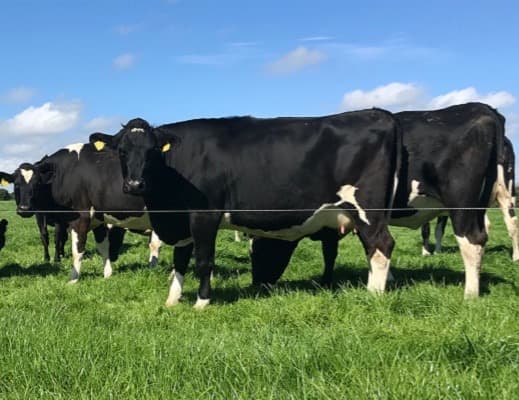
Cuts to organic nitrogen stocking rates, difficulties sourcing land to lease, high land rents and labour shortages are some of the reasons dairy farmers might consider having their replacement heifers contract reared by another farmer. For the contract rearer, the pluses include not having to buy stock, a steady income through the year and the reduced financial risk associated with a turbulent beef market.

Dairy farmers faced with reducing their stocking rate have several options including:

  • Cutting cow numbers.
  • Scaling back, or eliminating, the beef enterprise, if they have one.
  • Contract rearing the replacement heifers.
  • Investigating the possibility of cows dropping a nitrates band.
  • Leasing additional land.
  • Exporting slurry (the assigned nitrogen content of slurry was reduced in 2023 from 5 to 2.4kg N/m3. The result is that you have exported double the volume to reduce the same level N).
There are financial considerations with all of the above but, in some cases, the cost savings may considerably outweigh the outlays. A combination of the above options should also be considered.

Animal performance

For a contract-rearing arrangement to work long term, it is important that it is a “win-win” for both the dairy farmer and the contract rearer. The dairy farmer must be confident that the rearer is capable of managing his/her stock, achieving good animal performance, reaching the target weight-for age milestones and returning the heifers in-calf and ready to join the dairy herd.

Payments

The contract-rearer must receive healthy calves that have received sufficient colostrum to maximise their well-being and future performance. They must receive a fair price for their labour and payments must be made on time. There should be regular contact with the dairy farmer to update them on how the stock are performing and to discuss any possible issues promptly.

Each contract-rearing agreement should be tailor-made. There are many different arrangements operating successfully on farms and it is important that time and effort is invested into drawing up an agreement. All parties are most likely to be happy if they fully understand what is expected of them.

Making sure that as many potential scenarios as possible are covered in the agreement will result in a better understanding of each party’s role. This will help to prevent possible disagreements in the future. Teagasc has developed template agreements to help in this process.

View the Teagasc contract rearing arrangement template here.

Stocking rates

Removing the replacement heifers from the dairy farm can have a significant impact on the overall farm stocking rate. A farmer with 44ha (110 acres), 100 band II cows, 20 R1s and 20 R2s would have had a whole farm stocking rate of 245kg organic N/ha. By contracting out the rearing of those heifers from when they are calves to 21 months old, he/she is able to drop their overall stocking rate to 217kg organic N/ha.

This also allows for the ground used by the heifers to be allocated to the dairy cows, which should have benefits for cow performance and also save on input costs. In this example, an additional 6ha (15acres) would be required to meet the same equivalent level of organic nitrogen reduction per ha.

Where leasing additional land is being considered, it is important that the financial implications are addressed. In many cases, it would make more economic sense to have the heifers contract reared rather than leasing additional ground.

Aspects to consider

If you are considering contract rearing there are a number of aspects that should be considered. There are advisors in each of the Teagasc area units who have been assigned the role of supporting clients that may be interested in looking at contract rearing. These advisors can discuss your options and help you decide if this might be an arrangement that might suit you and your farm.

In addition, the Teagasc contract rearing template is a useful document for starting the conversation as to how the arrangement could work. In addition, there is an Excel-based calculator that can be used to determine the proposed costs. This allows for the costs associated with each rearing term to be divided up into six distinct time periods, starting with calf rearing and going right through to the point of calving.

The programme can therefore be tailor made to suit all of the different rearing arrangements that are in place. It also takes into account your own labour, a land opportunity cost and your estimated rates for the associated variable costs. Depending on the term of each specific arrangement, costs will be based on your own input cost guidelines. These calculations can be done with your Teagasc advisor, who can guide you through the process.

This article first appeared in the July/August edition of Today’s Farm. Access the full publication here.

Stay Updated

Get the latest dairy industry news directly in your feed.

Prefer Us on Google Search

Swipe to continue reading

Previous Article

Next Article