Latest Blogs
See More



Indian Dairy News


DairyNews7x7
Global Dairy News



DairyNews7x7
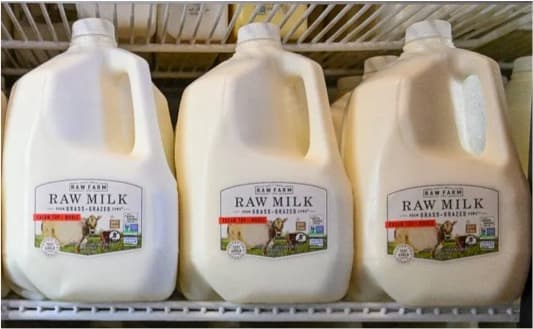
Remember the days when you didn’t know what raw milk was (and didn’t need to)? Well, those are over: raw—or unpasteurized—milk has been in the news for months. Robert F. Kennedy Jr., President-elect Donald Trump’s nominee to lead the U.S. Department of Health and Human Services, is an ardent supporter of raw milk; at the same time, as H5N1 circulates, some raw milk is being recalled following the detection of bird flu virus in samples.
Here’s what to know about the risks of drinking raw milk.
“Infections caused by raw milk are rare,” says Marion Nestle, professor emerita of nutrition, food studies, and public health at New York University, “but when they occur they can be deadly, especially to children. This is a risk I would rather not take.”
Nestle is not alone in sounding the alarm. The U.S. Food and Drug Administration (FDA), the U.S. Centers for Disease Control and Prevention (CDC), and the U.S. Department of Agriculture (USDA) all urge consumers to keep raw milk off their breakfast table.
A farm is not a sterile place, and dairy cows can pick up uncounted pathogens—including e. coli, salmonella, H5N1, streptococcus, staphylococcus, mycobacterium, campylobacter, and more—all of which can be transferred to their milk. Pasteurization is a process of sterilization, during which milk is heated at temperatures ranging from 145°F to 280°F to kill any pathogens.
The CDC cites no known cases of bird flu specifically in humans connected to consuming raw milk—though that is not the same as saying no cases have in fact occurred. The best officials can say is “the risk of human infection is unknown at this time.” But all manner of other bacteria and viruses can be transmitted by raw milk.
In milk that's commercially produced in the U.S., the step after pasteurization, homogenization, involves forcing milk through a small nozzle at a high pressure to break up its fat globules and give it a uniform consistency. Pasteurized and homogenized milk from virtually anywhere tastes much like milk from pretty much everywhere—and that, to some people, is a reason to give raw milk a try.
“I’ve had milk that’s pasteurized but otherwise just straight from the cow, and I agree it’s delicious,” says Meghan Davis, professor of environmental health and engineering at Johns Hopkins Bloomberg School of Public Health.
But raw milk has major risks, particularly right now. The World Health Organization (WHO) warns people to avoid raw milk if the presence of H5N1 is suspected, especially since pasteurization is such an easy and effective means of eliminating the virus. According to a June study published in the New England Journal of Medicine, when milk is heated at just 145°F or 161°F—two of the lower pasteurization temperatures—H5N1 can be eliminated in 30 minutes at the lower temperature and 20 seconds for the higher one.
“Drinking raw milk can present a greater risk of acquiring an infectious disease than drinking pasteurized milk,” says Alexandria Boehm, professor of environmental studies at Stanford University and the senior author of the June paper. “Our study showed that influenza virus is killed during the pasteurization process.”
To some people, the risks do not eliminate the draw of raw milk. One of the common misconceptions the FDA seeks to debunk is that since raw milk seems somehow closer to nature, it boosts the immune system, especially in young children. That belief has its roots in a real phenomenon, but one that is being misapplied.
“There is a concept where exposure to diverse microbes, some of which can be associated with animals, can affect you in a beneficial way,” says Davis. For instance, growing up on a farm with lots of animals is linked to lower rates of allergies and asthma later on. “The exact mechanism for this is not completely understood, [but] we think it has to do with immune education,” she says.
But being exposed to an ambient, low-level dose of germs is very different from gulping down a concentrated slug of them. “[If] you're drinking raw milk, it's hit or miss as to whether or not it's going to contain a pathogen,” says Davis. “You might drink it for weeks or months and not experience any ill effects, and then, bam, one of the batches you purchase could have one of these pathogens, and that could disrupt your gut in a way that's quite severe.” One of the most serious such disturbances is caused by the campylobacter bacterium, which can cause severe diarrhea in children and even lead to stunted growth.
Advocates of raw milk make other arguments too: that skipping the pasteurization process can cure lactose intolerance, prevent osteoporosis, and provide superior nutrition, all claims the FDA and others dispute.
Lactose intolerance, for example, occurs in people who lack the enzyme lactase, which breaks down the lactose sugar molecule found in both raw and pasteurized milk. Proponents argue that raw milk produces its own lactase thanks to beneficial bacteria, or probiotics. But the only bacteria raw or pasteurized milk contain are the nasty kind—salmonella, campylobacter and the like, according to the FDA. The regulatory agency similarly cites studies going back as far as 46 years showing no difference in calcium deposition in the bones when people consume raw milk as opposed to pasteurized milk, giving raw milk no edge in preventing osteoporosis.
Pasteurized milk matches or exceeds raw milk for nutritional value too, with the FDA pointing to studies showing that both types of milk contain equivalent amounts of protein and minerals and that a whole alphabet soup of vitamins—A, C, D, E, K, B1, B2, B6, B12, and more—remain heat-stable during the pasteurization process. Indeed, much store-bought, pasteurized milk is fortified with additional vitamins, particularly vitamin D. “Vitamin D actually aids the absorption of calcium,” Balk says.
The raw milk advocates’ claims do not end there. Skipping pasteurization, they say, boosts immunoglobulins—key components of the immune system. But the concentration of immunoglobulins in bovine milk is low to begin with, and the temperature at which milk is pasteurized has no impact on them, says the FDA. The same is true of natural antimicrobial compounds in milk, including lactoferrin, lysozyme, and lactoperoxidase, which simply do not exist in raw or pasteurized milk in sufficient concentrations to have much effect on the quality of the end product.
“It’s all nuts,” says Balk. “It’s all unfounded.”
That won’t necessarily change the minds of believers, of course; all scientists can continue to do is put the facts out there and hope that consumers believe them, for the sake of their own health.