I recently reviewed the notification issued by the Food Safety and Standards Authority of India in the context of Schedule IV of the Food Safety and Standards (Licensing and Registration of Food Businesses) Regulations, 2011. Although I came across it a little late, there is still an opportunity for stakeholders to review the implications and submit their comments to the regulator within the prescribed timeline.
Industry Note on Draft Amendment in FSSAI Licensing & Registration Regulations (2026)
The Food Safety and Standards Authority of India has issued a draft notification proposing amendments to the Food Safety and Standards (Licensing and Registration of Food Businesses) Regulations, 2011.
The notification specifically proposes changes in Schedule II (Conditions of License) and Schedule IV (General Hygienic and Sanitary Practices). As per the notification, stakeholders have 30 days to submit objections or suggestions before the regulation is finalised.
While the amendments appear small at first glance, their practical implications for Food Business Operators (FBOs), particularly manufacturers and processors, could be significant.
As a dairy professional myself, I believe the industry should carefully review the implications before these provisions become mandatory.
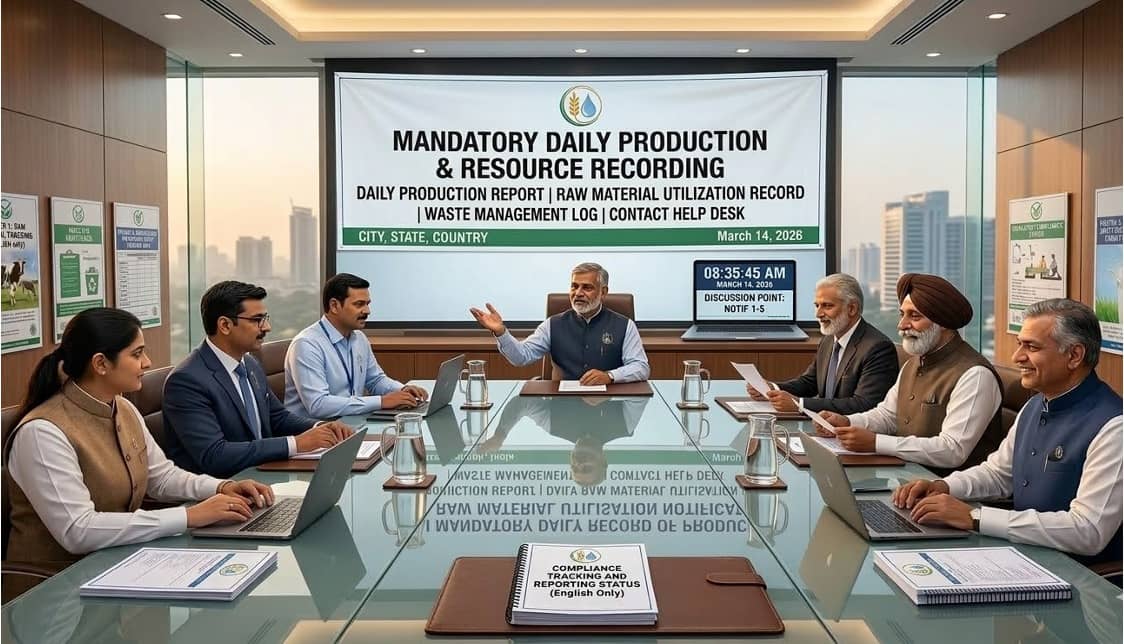
1. Mandatory Daily Record of Production and Raw Material Utilisation
The proposed amendment requires that daily records of production and raw material utilisation must be maintained separately, with an exemption only for non-manufacturing food businesses.
While maintaining records is a good regulatory practice and many organised plants already do this under Schedule IV hygiene and traceability expectations, the concern lies in how this will be interpreted and enforced across different categories of food businesses.
In sectors such as:
- Dairy processing
- Traditional food processing
- Small and medium manufacturing units
- Seasonal production businesses
daily reconciliation of raw materials versus finished production is not always linear or technically practical.
Examples include:
- multi-stage processing
- product standardisation during processing
- rework material utilisation
- batch blending
- evaporation and moisture losses
- process yield variations
In such cases, strict daily reconciliation could lead to unnecessary compliance disputes, despite the product being fully compliant from a food safety perspective.
2. FIFO / FEFO Compliance for Storage
The draft amendment reiterates that storage of:
- raw materials
- ingredients
- work-in-progress
- processed or packaged food
must follow FIFO (First In First Out) or FEFO (First Expiry First Out) principles, with exemption for retailers.
While this principle is globally accepted in food safety systems, Schedule IV already expects inventory discipline under Good Manufacturing Practices.
The challenge again lies in interpretation at inspection level.
In real manufacturing environments:
- ingredients may be batch blended
- partial lots may be used
- production scheduling may require technical deviation from strict FIFO
- FEFO depends on supplier batch shelf life, which is not always uniform
If inspectors interpret this clause rigidly, many technically compliant operations may be flagged unnecessarily, particularly in MSME food processing units.
3. Alignment with Schedule IV Implementation Reality
Schedule IV already lays down detailed GMP and GHP requirements covering:
- hygienic processing
- storage conditions
- inventory management
- traceability
- sanitation
However, implementation across states remains inconsistent, with varying interpretations by field officers.
Before tightening documentation requirements, it would be useful if the regulator:
- clarifies format of records
- distinguishes between traceability records and production reconciliation
- provides sector-specific guidance
Without this clarity, the amendment may unintentionally create compliance pressure rather than improving food safety outcomes.
4. Why Industry Feedback is Important Now
Many times, regulations are issued with good intent but ground realities of food processing operations are not fully reflected in the drafting stage.
Once notified, changing a regulation becomes extremely difficult.
This draft stage is therefore the most important window for industry to provide constructive inputs.
5. My Request to Fellow Food Business Operators
I strongly encourage all Food Business Operators, industry associations, consultants and quality professionals to:
- Carefully review the proposed amendments to Schedule II and Schedule IV
- Assess their practical impact on your operations
- Submit constructive objections or suggestions to FSSAI before the deadline
Suggestions can be sent in the following format to the coordinates given below :
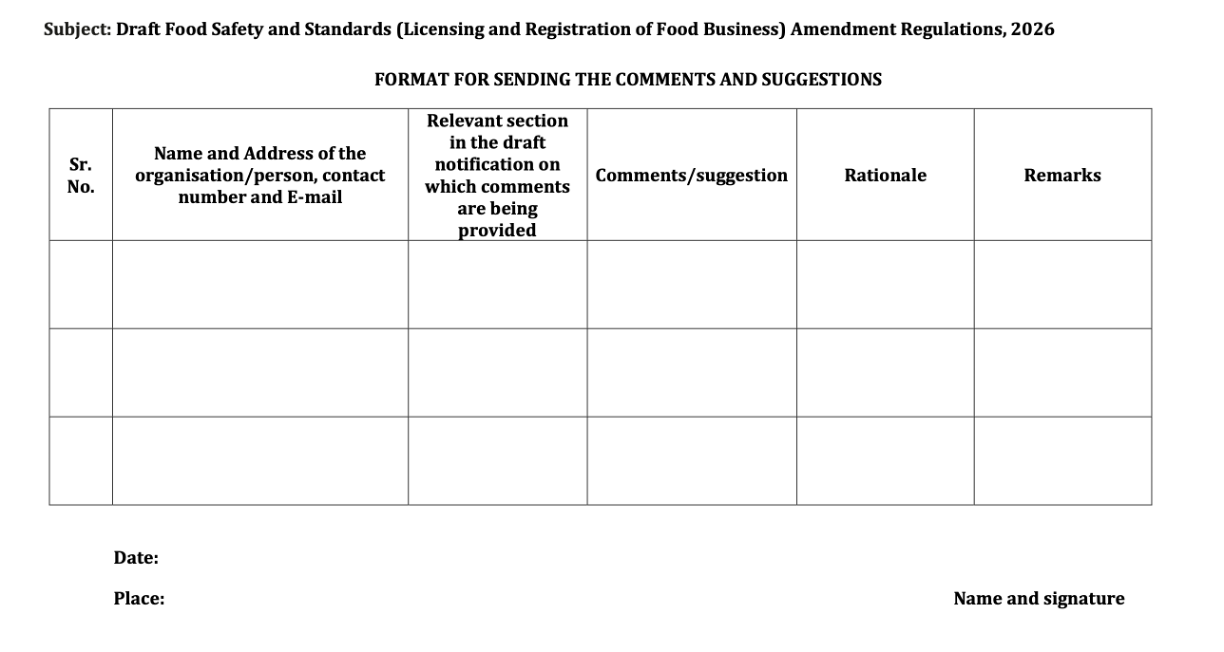
Addressed to the Chief Executive Officer, FSSAI.
Please ignore of already sent.
The Gazette for this draft amendment was published on 27 January 2026. Therefore, the last date to submit objections or suggestions is 26 February 2026. Still you may send it as I have submitted my response as shared above. You may also bring more practical views or echo with my response if you find it appropriate.
Download the notification from this link : Mandatory production records FSSAI
Format for submitting the response : Response format
6. Final Thought
India’s food safety ecosystem has evolved significantly in the last decade, and the efforts of Food Safety and Standards Authority of India in strengthening regulatory oversight are commendable.
However, good regulation must always balance food safety with operational practicality.
Constructive industry feedback today will help ensure that the final regulation strengthens compliance without creating avoidable operational hurdles.
Source : FSSAI notification interpretation by Kuldeep Sharma Chief Editor Dairynews7x7
Never miss an important dairy update
Follow DairyNews7x7 on Google to get live milk prices, policy alerts, and daily headlines directly in your feed.