Latest Blogs
See More



Indian Dairy News



DairyNews7x7
Global Dairy News

DairyNews7x7
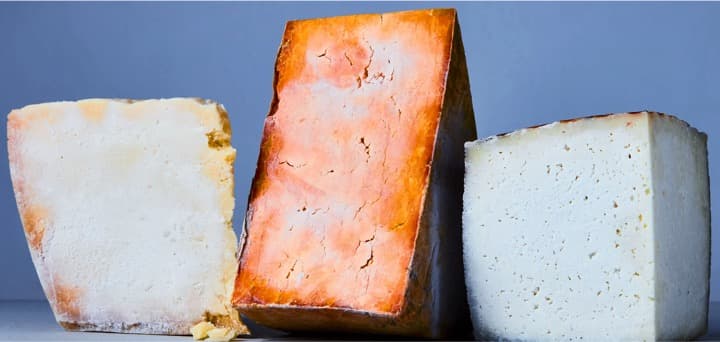
There are a ton of different ways to store cheese in your fridge. Some folks will toss a wedge in a plastic baggie, while others prefer to use cheese paper or handsome wooden boxes. But for longer storage, is it ever okay to store cheese in your freezer?
Maybe there was a big sale on your go-to supermarket cheddar and you decided to stock up. Or you went a little overboard at the cheese counter and won’t finish that fresh chèvre before leaving town for a week. Or you’re serving your famous macaroni and cheese recipe at Thanksgiving and hope to pre-shred the sharp cheddar and Parmesan to save last-minute prep.
Is it a good idea to pop any of the above—or a hunk of smoked Gouda or a wheel of Brie—into your freezer? I talked to a few experts to find out when it’s okay to freeze cheese, which types of cheese are best for freezing, and how to make sure your cheese is as tasty as possible after you thaw it out.
How quickly the cheese freezes determines the size of those crystals. Faster freezing equals smaller ice crystals, which will have less of an impact on the texture of the cheese once it’s thawed. Pieces of cheese with smaller surface area, like shreds or small blocks, will freeze more quickly than large blocks.
Freezing can affect a cheese’s flavor too. The enzymes and living cultures in cheese that develop flavor over time are deactivated by freezing, and no amount of careful thawing will change that. “We always recommend not to freeze our natural cheddars because it’s going to halt that aging process,” says Jill Allen, director of product excellence at the Tillamook County Creamery Association.
With the proper packaging and careful thawing (more on that in a minute), though, freezing shouldn’t impact the performance of those styles too much, especially if you’re planning on cooking or baking with them.
“Keep in mind how you’re going to use it later,” Rosen says. “I personally would not freeze most cheeses to eat raw, because even the hardest cheese still has a fair amount of moisture.” Cheeses that will be heated in a recipe should be okay, but if you’re hoping to preserve a wedge of Manchego to shave on a salad later, you may find it’s less flavorful than usual, or that it’s crumbly or gritty rather than supple and smooth.
“In the world of fine cheese, everybody freaks out as soon as you talk about freezing cheese,” says Erin Harris, a recipe developer and cheese specialist with Montreal-based distributor Aux Terroirs. But she acknowledges the practical reasons for doing so, like avoiding waste. “You have to go into it knowing that you’re saving that product, but you may lose a little bit of quality in the process.”
Harris offers one rule of thumb: the more processed a cheese is, the more likely it is to freeze well. In this case, processing could mean added stabilizers in the recipe as well as additional steps the milk may undergo during the cheesemaking process, such as standardization (balancing protein and fat content) and pasteurization. On the other hand, Harris says, most smaller-production, handmade cheeses are best enjoyed ASAP after you bring them home.
It’s worth noting that there are exceptions to every rule. Some consider it sacrilege to freeze soft-ripened cheeses, with their bloomy rinds and delicate textures—but Harris has seen some larger-production French bloomies, like Fromager d’Affinois and Crémeux De Bourgogne, stand up surprisingly well to freezing and thawing.
Source : Epicurious Nov 21st 2023 by Alexandra Jones