Latest Blogs
See More
Indian Dairy News
DairyNews7x7
Global Dairy News

DairyNews7x7
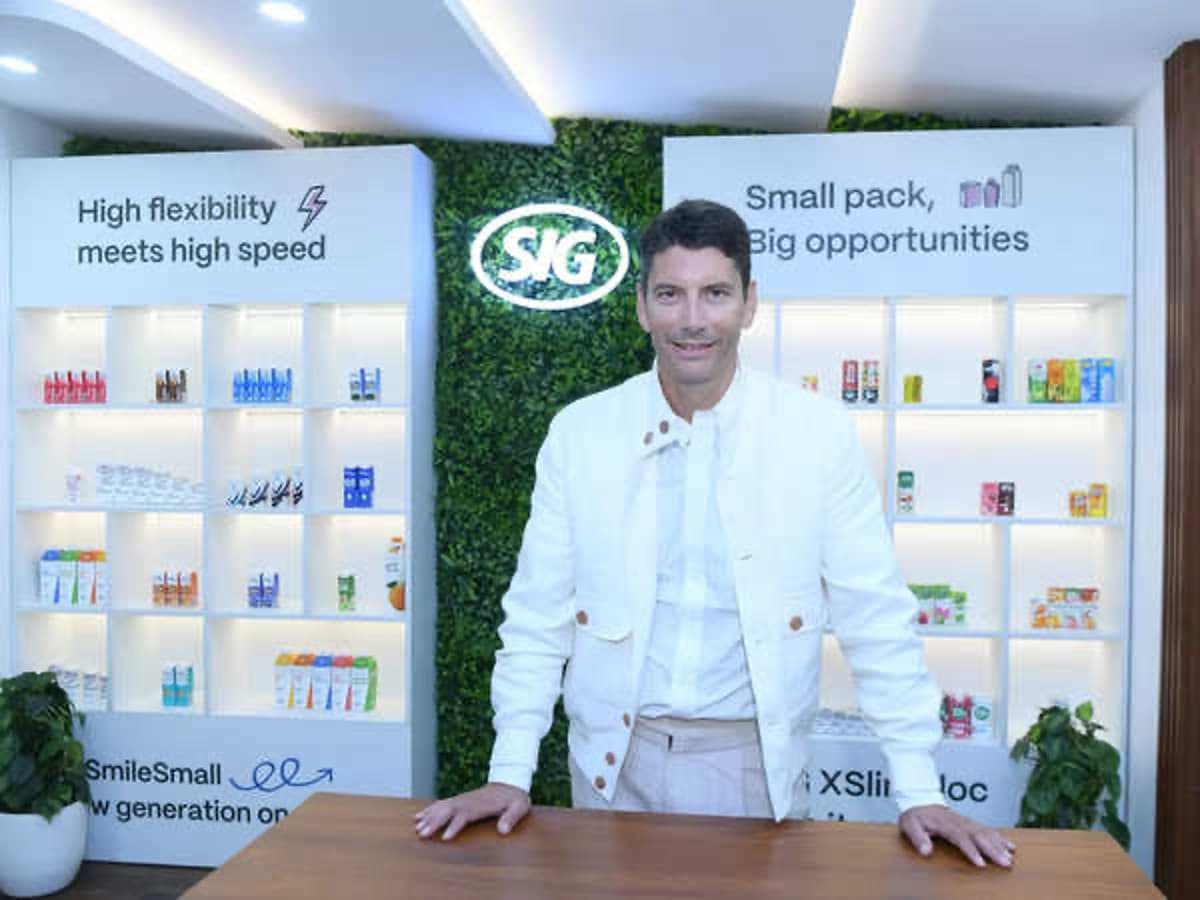
India is the largest milk producer in the world; it accounts for nearly 22-25% of the world’s production, according to the Food and Agriculture Organisation (FAO). According to a report by Fortune Business Insights, the country’s dairy market size was valued at $115.57 billion in 2022. This number is expected to reach $227.53 billion by 2030. These numbers necessitate sustainable packaging. This is where global packaging provider SIG Combibloc wants to make a difference.
Last year, the Swiss firm — with a India clientele of brands like Amul, KMF, MilkyMist, Heritage Dairy, Coca-Cola, Parle Agro — began constructing its 10th global aseptic packaging plant in Ahmedabad, which will create over 300 jobs. In a conversation with ET Digital, Samuel Sigrist, CEO, SIG Group, talks about aseptic packaging technology and how India is the right market for it. Edited excepts:
Economic Times (ET): What kind of potential is SIG looking to cater to in India when it comes to sustainable dairy packaging or sustainable packaging? Samuel Sigrist (SS): This is an amazing starting point, because in some markets in Asia, we first need to teach people to like milk. But that is not the challenge here. So the problem statement here starts with an opportunity statement. It is the largest milk market in the world and less than 10% is processed and packaged; and even a smaller part is in the safest form in the aseptic beverage carton. Now that just shows you the upside that we see. What drives this upside is not just the population growth, but also rising disposable income growth, a growing middle class and urbanisation.
ET: SIG’s Ahmedabad plant began its construction last year. How is that going?
SS: As a matter of fact, we were in Ahmedabad recently with the team. We are on schedule to open at the end of this year and ramp up commercial production in Q1 next year. That is our initial phase. We have made a 100 million euro investment in it. I have already signed off on the next expansion, which provides us the opportunity to also source the ingredients for such a packaging locally. This will be up and running in about two years. But before the second expansion is completed, I am sure we have to add capacity. We have a big enough plant that allows us to add lines there.
ET: What kind of equipment are you using there? SS: We give a filling machine to our customers. We provide them packaging material. We provide them technical service for the aseptic beverage carton. So, aseptic sounds very critical, but what our customers do with our machines is that they take a product, a dairy product, that is made sterile through a heat treatment — UHT treatment. Then, we fold the carton, close the bottom, sterilise the carton in a sterile environment, and fill the sterile food product in there. Through this packaging, the shelf life of the product goes up to 12 months. No need for additives, no need for preservatives. It just preserves the nutrients and the vitamins. It is the safest form of preserving dairy products and providing nutritional benefits to consumers all over the country.
In Ahmedabad, we have the equipment for this. Also, our food filling machines are in the plants of our customers, and they are all over the country, and we have field service engineers to service this equipment all over the country.
ET: What sort of production capacity are we looking at with the Ahmedabad plant? SS: We look at 4 billion packs in the initial phase. In the second phase, this extrusion machine that allows us to provide these compound structures is already designed for a multiple of that. So we now can easily add printing lines. We can add what we call finishing lines, and basically invest as we grow. But we do not only invest into our plant. Whenever we place a filling machine at the customer, we normally also co-invest. Such a machine costs $2 to 3 million. We also make, on average, about 50% co-investment, so we deploy capital basically all over the country.
ET: Aseptic packaging is also known to be a costly technology. With India being a price-sensitive market, how are you planning to deal with that? SS: It is actually a very cost-efficient technology, but I understand it may not yet be affordable for 100% of the market. But if you look at the process, it is a cost-efficient solution. We are able to cater to the Rs 5-10 price point and high-value nutrition without any implications from a bad packed product. And dairy is very sensitive.
Aseptic is a technology where we see huge potential, because in alternative technologies, the methods lose all nutrients and sometimes even the colours. Aseptic preserves all that. You do not need to add sugar. As a matter of fact, no preservatives are needed.
We believe aseptic packaging is very important, especially in a world where more food is distributed by e-commerce and at times it waits at your doorstep for hours until you return home. Now, if the milk needs to be in a chilled environment, then the regular packaging does not work. That’s where aseptic provides us an opportunity. Therefore, I think it is a very cost-efficient way.
ET: I want to know more about sustainable manufacturing. How is SIG ensuring that its supply chains, manufacturing is also sustainable? SS: In terms of Scope 2 emissions, we are at zero emissions, because we use only renewable energy. Also Ahmedabad is going to have solar panels on the roof.
Now, if I look at a standard packaging material here in SIG, it is the best performing substrate from a CO2 perspective. The carbon footprint of making a 250ml dairy carton pack in our plant has been reduced by 10-20% since 2020 through various measures in our manufacturing plants.
Now, the next big step is to take the aluminium foil out, which is a cost-efficient barrier but has a higher carbon footprint. With that we can reduce our carbon footprint by another 30% to 40% . Currently, the aluminium foil SIG use is certified by Aluminium Stewardship Initiative (ASI).
ET: So, after Ahmedabad, what is in the pipeline? SS: Our beverage carton travels well because of secure packaging. Transport of such cartons is easier and more convenient than opening up various plants across the country. Therefore, we tend to have larger plants at one place and many plants distributed all over the country. So, I think for the near term, the next couple of years, there will be a lot of money going into Ahmedabad. That is going to be our hub.
We already have a presence in Maharashtra. In Pune, we have a training centre where we train customer operators to use our filling machines. And we also have in Maharashtra two other smaller plants for other packaging solutions. We create labour as an ecosystem to our filling machines.