Latest Blogs
See More
Indian Dairy News


DairyNews7x7
Global Dairy News


DairyNews7x7
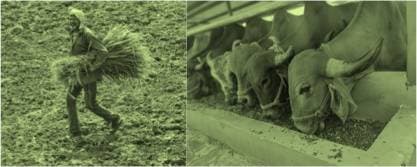
India has set an ambitious goal of increasing the domestic dairy market from Rs 13 lakh crore to Rs 30 lakh crore by 2027 and also tapping export markets in neighbouring countries of Bhutan, Nepal, Bangladesh and Sri Lanka. Rising prices and shortage of fodder pose hurdles which need to be overcome to achieve the goals. The Central Government informed the Lok Sabha in December that wholesale price index (WPI) data released by the Commerce and Industry Ministry showed that the index value for fodder registered an increase of 27.66 per cent in November 2022, over the same month in 2021. Rising fodder prices led to a hike in milk prices and but the hike in milk price is quite less compared to fodder price which is affecting the profitability of dairy farmers.
Estimates of the ICAR- Indian Grassland and Fodder Research Institute (IGFRI), Jhansi show that there is a deficit of 11.24%, 23.4 % and 28.9% in green fodder, dry fodder and concentrates respectively at the national level. Addressing shortages in fodder is vital for supply-side intervention for price stabilization but the states assessing current and projected demand due to expansion in the dairy sector is essential for demand-side management. The Department of Agriculture and Farmers Welfare designates National Dairy Development Board (NDDB) as implementing agency under the scheme of Formation and Promotion of 10,000 Farmer Producer organizations (FPOs) to form and promote 100 FPOs, primarily fodder-centric and animal husbandry activities as a secondary activity as Fodder plus model is an initiative to address fodder shortage.
The Fodder Plus FPOs will take fodder development activities such as green fodder/forage production and sale, production of ‘ready-to-eat’ total mixed ration feed to cattle, securing crop residues and its sale and other animal husbandry activities, to provide market access to small and marginal farmers. According to official information, the NDDB has initiated consultations for the identification of the Milk Unions/Federations/ Milk Producer Organisations/Government Agencies etc., as Cluster Based Business Organizations (CBBOs) and till December last year 34 organizations had submitted Letters of Intent for the formation of 62 FPOs which indicates the response by stakeholders.
Farmers focusing on commercial crops, degradation of grazing lands, rising input cost, non-availability of quality fodder seeds, rising demand for fodder to cater to the growth of the dairy sector and policy gaps in fodder management are the primary reasons behind fodder shortage. National Action Plan on Fodder and Feed Security Programme estimates that fodder and feed contribute up to 50% towards livestock productivity and production. The plan highlights the fact small and marginal farmers in the country own only 44% of agricultural land but they own over 80% of livestock assets which explains the importance of the dairy sector’s growth in achieving the national goal of doubling farmers’ income.
The national plan has projected that the shortage of green fodder in 2025 according to the 34th Report of the Parliamentary Standing Committee on Agriculture would be around 40%, that of dry fodder would be around 23% and concentrate shortage would be 38%. Assam government signing a Memorandum of Understanding with the NDDB for the creation of a joint venture for creating the milt processing capacity to the tune of 10 lakh litres of milk every day triggered new hopes in the state’s dairy sector. Estimating fodder requirements and ensuring availability to small and marginal farmers at affordable prices will be critical for the long-term sustainability of such initiatives.
The Strategy Paper on Feed and Fodder Sector, Assam prepared by the Animal Husbandry and Veterinary Department points out the limitation of the traditional practice of feeding rice straw as fodder. Rice straws contain high fibre but minimum nutrition and therefore feeding it cannot keep animals productive for a long duration and quality production cannot be expected by feeding only straws. Building awareness among farmers in the state about the available fodder market due to the rising demand for milk and expansion of the dairy sector can motivate them to take fodder cultivation on a commercial scale.
Conservation of pastoral lands is also crucial. Providing such farmers with quality fodder seeds at an affordable price and market linkage and support for selling their products are essential to boost their confidence to keep engaged in fodder cultivation. Encouraging dairy farmers to take up fodder cultivation or fodder cultivators to rear cattle for milk production will go a long way in increasing their income through quality and increased milk production, provided milk produced is procured by milk unions or cooperatives in the village or the nearby village at a remunerative price.
The government supporting the milk unions or dairy cooperatives through the creation of the dairy milk value chain through setting up of chilling, processing, packaging units, transport, distribution and retail sale of milk and milk derivatives will be crucial for the sustainability of fodder cultivation in the state and elsewhere in the country.