Latest Blogs
See More




Indian Dairy News



DairyNews7x7
Global Dairy News

DairyNews7x7
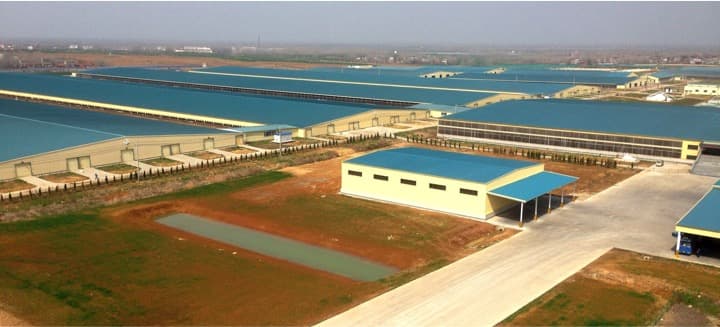
OTOROHANGA, New Zealand—As the sunrise cast a pink glow around 6:30 a.m., Michael and Susie Woodward worked together to attach suction cups to the udders of dozens of cows in the milking shed of their New Zealand dairy farm.When a tanker arrived to take the milk to a processor, Michael Woodward calculated the day’s earnings—and figured he and his wife would lose about $25 on the shipment.
“I try not to think about it, to be honest," Michael Woodward, 43 years old, said as nearly 1,400 gallons of unprofitable milk was transferred from a storage vat to the truck. “If you dwelled on it, you wouldn’t be in a good space."
Their troubles show the global impact of a slowdown in the world’s second-largest economy this year. China has been struggling to revive growth after an initial bounce from its Covid-19 reopening fizzled, as consumers who initially spent on traveling and dining out curtailed spending.
Its prolonged real-estate downturn has hit demand for iron ore, copper and other commodities, pressuring global prices and sapping export earnings for major producers in Latin America and Australia. The value of China’s imports, including consumer products, fell 6.2% in September compared with the same month last year. Everything from cosmetics to cars to dairy has taken a hit.
In New Zealand, the world’s biggest dairy exporter, farmers are now feeling the pain. As is the case with other countries, New Zealand’s economy has become more intertwined with China’s because of the country’s heft and strong growth in recent decades. To meet demand from its expanding middle class, China imports billions of dollars of dairy products each year, with New Zealand sending more than 30% of its dairy exports by value there.
But Chinese demand for milk, which historically has been viewed as a bit of a luxury, has also slumped amid the economic slowdown, as Chinese dairy companies have been ramping up production. The resulting supply glut has reduced China’s need to get milk from overseas. One measure of New Zealand’s dairy exports to China, which includes fresh milk, milk powder, butter and cheese, fell 31% by value in September compared with the same month last year.
The weak demand from China is driving dairy prices lower. They are now down nearly 40% compared with March last year. A few weeks ago, they were down nearly 50%.
“That’s a big hit," said Jim van der Poel, chairman of DairyNZ, an industry group. “The milk that China is not buying is only finding a home at lower prices."
New Zealand dairy companies have exported more of certain products to other markets recently, including some countries in the Middle East and Southeast Asia. But China’s continued role in driving global dairy prices is highlighting the economic pitfalls of being so closely tied to one big buyer—and how hard it can be to diversify.
Farmers in New Zealand are now cutting costs as they try to adjust. Those who took out hefty loans to buy their farms in recent years are struggling the most—particularly as interest rates rise. Post-Covid inflationary pressures have increased the costs for labor, materials, spare parts and transport.
The Woodwards bought their farm, tucked in the rolling hills and green pastures of New Zealand’s Waikato region, about four years ago. The family owes about $2 million tied to the farm and equipment, and they are aiming to keep their overall losses this season to about $30,000.
To do that, they have cut back on fertilizer and are using more of the milk they produce to sustain their calves instead of buying expensive feed. They are putting off big purchases, such as equipment to make the milking process more automated. The couple, who have four children, said their lender agreed to allow them to pay only interest on their loans for now.
“We want something here for generations," Susie Woodward said, as she stood on a hill looking across the farm. “But if it continues to be really tough and tight, then we have to start thinking about, ‘What do we do?’ We can’t keep piling on debt and the banks are only going to carry on with you for so long."
One of New Zealand’s big dairy exports is whole-milk powder, which is used in beverages, yogurts, ice cream and other food products. But with lackluster demand from consumers, China’s domestic producers converted much of their surplus fresh milk into powder to give it an extended shelf life, reducing demand for imports. In the third quarter, the value of New Zealand whole-milk powder exports to China fell about 40% compared with the same quarter last year, government figures show.
“When we see any kind of changes to Chinese buying patterns, it impacts on New Zealand farmers more dramatically," said Emma Higgins, senior agriculture analyst at Rabobank in New Zealand.
Northwest of Auckland, New Zealand’s biggest city, David and Janine Kidd owe roughly $1.6 million to the bank an additional $300,000 to a family loan tied to their dairy farm and equipment. Janine Kidd went back to work full-time as an occupational therapist earlier this year so they could earn more cash to offset losses from the farm—which David Kidd said could hit around $20,000 this season.
Repairs to pathways where the cows walk are nearly double what he expected, David Kidd said, but they need to be fixed. If dairy prices don’t improve by this time next year, they may have to consider selling the farm.
“It’s been a dream and a goal to get there to farm ownership. It would be a crushing blow to see it all disappear," he said. Even so, “there have been days where I question why on earth I bought it."
There are signs China’s economy could be improving. Third-quarter economic growth recently came in at 4.9% compared with the previous year, faster than some economists had expected. It also showed strengthening retail sales, suggesting consumer sentiment may be picking up.
Dairy prices have bounced from their recent lows over the last couple of months, and some banks and dairy processors have recently lifted their milk-price forecasts—though payouts to farmers are still expected to be lower than last season.
One positive sign for New Zealand’s farmers is that an increase in cull rates of Chinese herds could slow domestic milk production, said Teh-han Chow, the chief executive for China, Hong Kong, Macau and Taiwan at Fonterra, New Zealand’s main dairy exporter. Consumer demand is returning to some products, such as ice cream, he said.
For now, the impact of lower dairy prices is being felt throughout many rural towns in New Zealand. Norman Burmester, who owns a farm machinery store in Otorohanga, a town of about 3,000 people close to the Woodwards, said sales at his shop are down 40% this year, as farmers put off repairs, maintenance and new purchases. The streets, he said, seem a little emptier during the day.
“I have never seen it so bad," he said about his business. When asked if his shop could stay viable, he said, “I’m hoping that we can. I’m just hoping. But I don’t know."
Source : The Mint /Wall street Journal Oct 24th 2023 by Mike Cherney