Fssai notification on A2 milk : Let me play devil's advocate here
The Food Safety and Standards Authority of India (FSSAI) recently issued a notification aimed at regulating the labeling and marketing of A1 and A2 milk products in the country. This move is seen as a response to growing consumer interest and confusion regarding the health benefits and differences between these two types of milk.
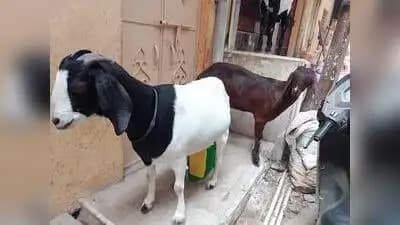
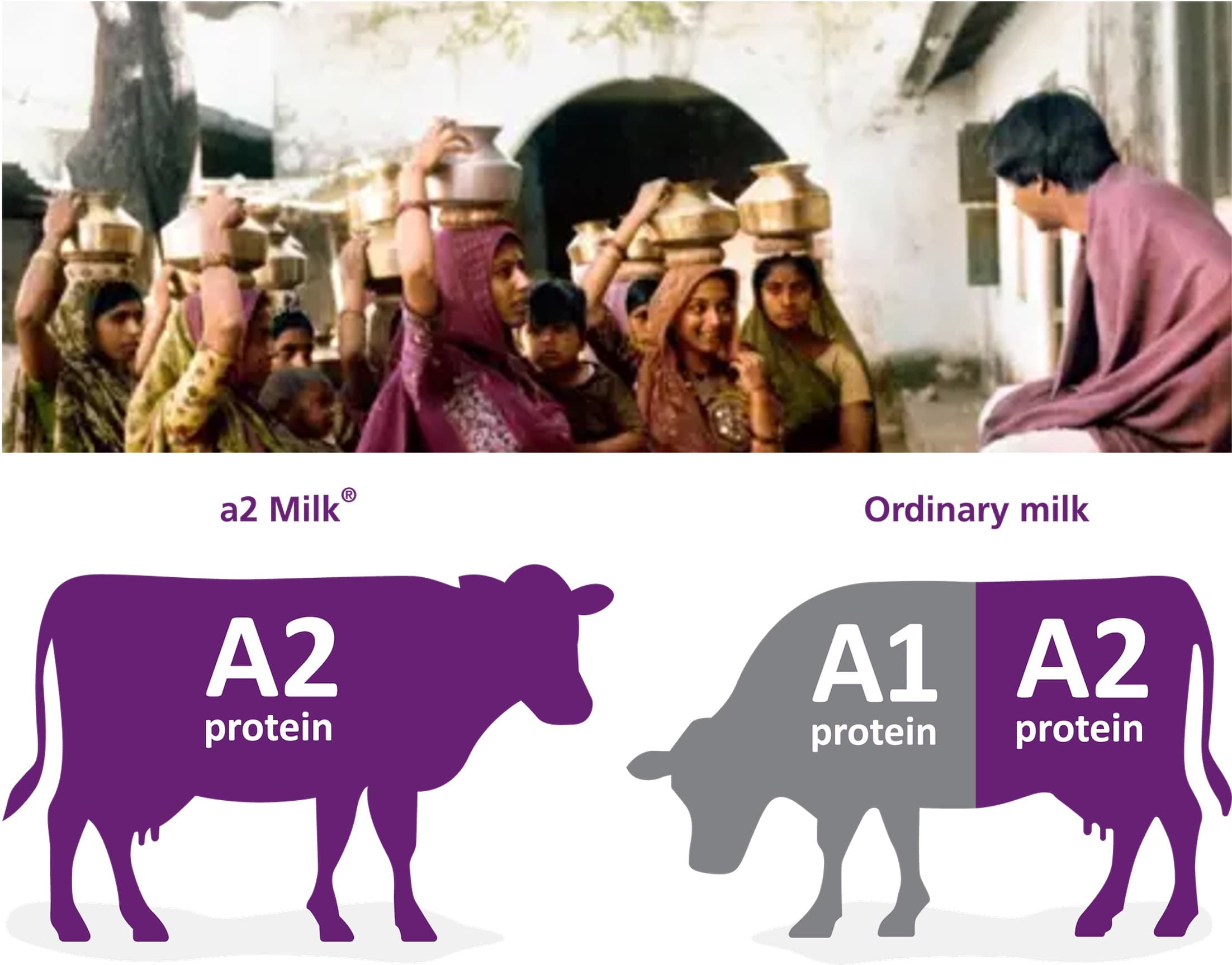
A1 and A2 milk refer to the different types of beta-casein protein found in milk. A2 milk is produced by pure indigenous cows , buffalos , goat, sheep, camels , etc. As it is a genetic configuration so can be obtained in exotic breeds also with A2 A2 allele. Though it is not clinically verified but A2A2 origin milk is believed to be easier to digest and less likely to cause discomfort in some individuals compared to A1 milk, which is more commonly found in milk from European breeds like Holstein. However achieving A2A2 in exotic breeds is also happening.
FSSAI mandate on A2 milk the swiftest decision
The FSSAI’s notification mandates that dairy producers clearly remove A1/A2 from their label and follow the guidelines of milk, based on provisions laud down in FSS Act 2006 and following the definition of milk and milk products under chapter 2.0 . This is intended to prevent misleading advertising and to help consumers make informed choices.
The notification has been welcomed by consumer rights groups and health advocates who have long called for clearer regulations in the dairy sector. It could also be seen as a step towards non-supporting indigenous cow breeds, which are primarily responsible for A2 milk production in India. There is a big concern about government's initiative to promote indigenous cattle and big blow to the entrepreneurial pursuit of smaller dairy farmers. and new age dairy startups which are getting premium for their pure A2 milk.
The most impressive part of this notification is the speed at which this decision has taken place. A meeting in this regard was organised a few weeks back with few selected stakeholders. Dairy and trade associations and small dairy farmers who will be majorly impacted were hardly present. From reliable sources we came to know that most of the discussions were mainly around A2 ghee and not A2 milk. The claims on A2 ghee in the absence of protein is still understandable, but not for A2 milk. A2 has dual connotation of nature of protein and genetic identity. The genetic identity preservation is an important aspect of traceability. It is something like calling a ghee as made from Sahiwal, cow ,buffalo or A2 milk.
Commercial value of products under question
The organised market of dairy products is around 250000 Crores out of total of 850000 crores of value of milk production. The share of A2 milk or A2 ghee in the organised sector may not be even half a percent of these sales. The real culprit is not A2 milk and A2 ghee rather analogues and
adulterated ghee which might be in thousands of crores. Interestingly the regulator took couple of years in introducing new standards for testing ghee as well as notifying analogue manufacturers to stop using dairy terms on their labels. The implementation and effective enforcement of the same is still a big question mark. I do not understand why the same urgency is not shown in this case.
Global acceptability of A2 A2 cows
In today's world wherein the developed world is moving towards A2 milk this notification by FSSAI could be seen as a deterrent for Indian dairy sector to uniquely position their milk and milk products as A2 milk. I
n recent years, the level of A2 beta-casein in New Zealand milk has been increasing rapidly and the level of A1 beta-casein has been correspondingly decreasing. Unpublished data from New Zealand’s leading herd-improvement cooperative, LIC, which was supplied to me on request, indicate that once the 2023-born dairy calves join the milking herd in 2025, these two-year-olds will produce beta-casein that is approximately 84% A2. In contrast, only 16% of their beta-casein will be A1.
Similarly the large expansion of dairies in middle east is also focussing to bring 100% A2A2 cows at the farm. H.H. the Ruler of Sharjah toured the farm facilities, built on an area of three million and seventy-seven thousand square metres, and include purebred Holstein cows, the first of their kind in the Middle East, which produce A2A2 protein organic milk.
Since Modi 1.0 era from 2014 the government is working for promoting indigenous cattle and developing sexed semen for local breeds. The only way the farmers could charge premium of a low productive cow is by preserving its identity through A2 label.
In certain states the dairy federations have paid Rs 10-15 premium for getting this A2 milk with identity preservation as in the case of Bhinjarpuri cows in Odisha. The federation also hugely invested by setting up Q PCR machines to ensure identity presertation at point of collection. Amul and some other large dairies are also currently selling Buffalo milk with A2 label and the product has shown great acceptance in Indian market.
Government commitment towards promoting A2 milk from indigenous cattle
In Feb 2018, in response to a parliamentary query, the Ministry of Agriculture and Farmers Welfare outlined the Government of India's efforts to promote indigenous breeds of cows across the country. The Ministry highlighted several initiatives aimed at developing and conserving these breeds. Key among these is the Rashtriya Gokul Mission, which focuses on the conservation and promotion of indigenous breeds. Additionally, the establishment of two National Kamdhenu Breeding Centres is underway, designed to scientifically and holistically advance the development of these breeds.
The National Dairy Plan-I is being implemented in 18 major dairy states, with a specific emphasis on enhancing milk production and productivity by focusing on 12 indigenous breeds. The government is also implementing the Livestock Health and Disease Control Programme, which aims to prevent, control, and contain animal diseases, and the National Livestock Mission, which enhances the availability of feed and fodder and mitigates economic losses through livestock insurance. Moreover, three subordinate organizations—Central Cattle Breeding Farms, the Central Herd Registration Scheme, and the Central Frozen Semen Production and Training Institute—play crucial roles in supplying high genetic merit bulls and semen doses of indigenous breeds.
Furthermore, the Indian Council of Agricultural Research (ICAR) is actively involved in the genetic improvement and conservation of these breeds through its research institutes. In addition to these efforts, the ICAR’s National Bureau of Animal Genetic Resources is conducting a study on the health implications of A1 and A2 milk, particularly focusing on their effects on type 1 diabetes and coronary heart disease. The government has also initiated schemes like the Rashtriya Gokul Mission, the establishment of National Kamdhenu Breeding Centres, and the National Dairy Plan-I to increase awareness about the importance of indigenous breeds and the benefits of milk produced by these breeds.
We have not heard of outcome of any such report in public domain. Even in some meeting the dairy sector requested BIS to develop standards for testing A1/A2 and other identity preserved milk and milk products but nothing has been heard or notified in this regard.
Perception is the only reality
Overall, FSSAI’s notification on A1 and A2 milk is expected to have a far-reaching impact on the dairy industry in India. In one way it is promoting greater transparency and accountability in the sector but on the other it is impacting the emerging opportunity for India to show case it self as the largest A2 milk producing nation in the world. However if the consumers have developed a predisposition towards the goodness of A2 then why the regulator is intervening , at least in the case of milk and that too in the absence of proof of having conducted some studies or research in this regard.
These are my observations only and I would like dairy fraternity to decide on whether the paradigm of doubling the farmer's income with indigenous cows and A2 milk is getting hazy slowly.