Latest Blogs
See More
Indian Dairy News
DairyNews7x7
Global Dairy News

DairyNews7x7
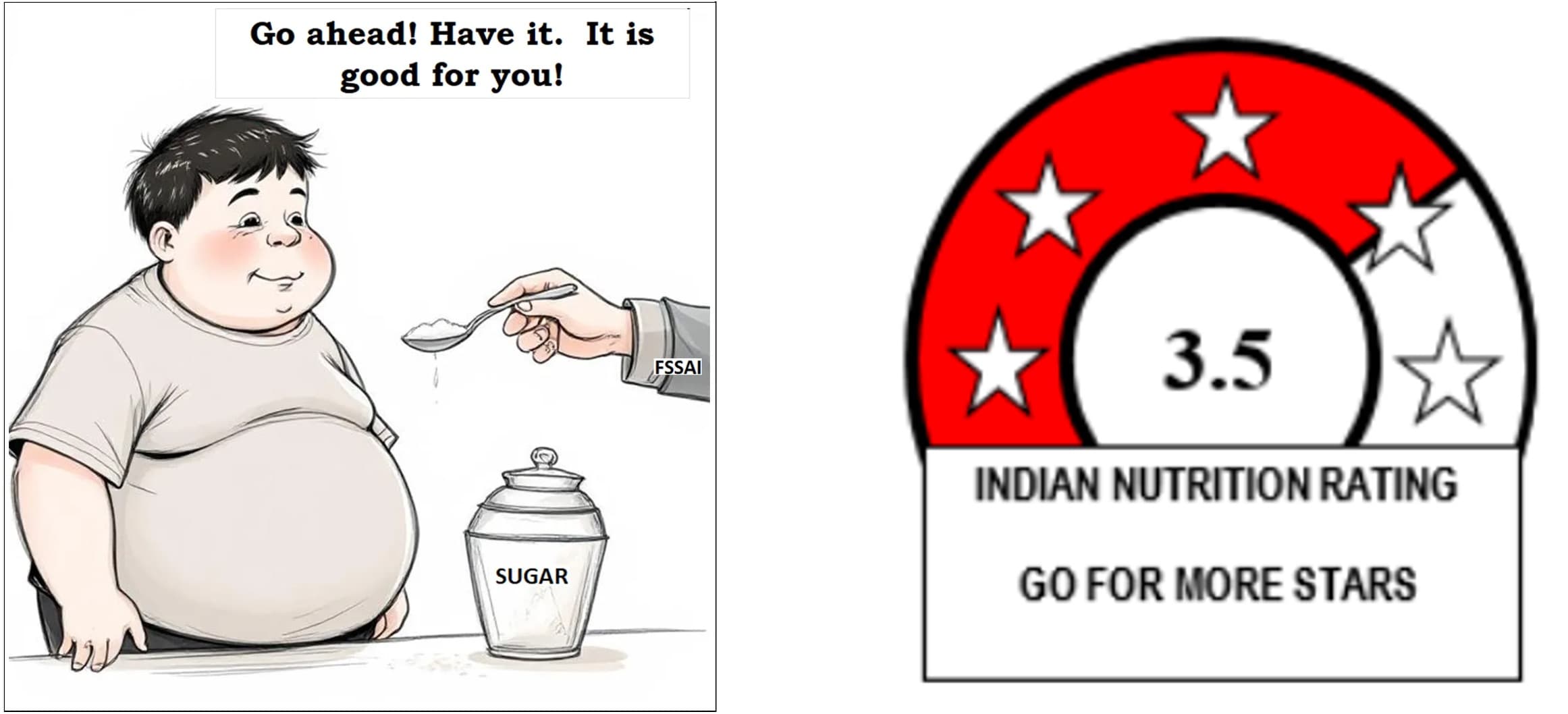
FSSAI (the Food Safety and Standards Authority of India -- https://fssai.gov.in/ — is also known as the Food Authority. It comes under the ministry of Health & Family Welfare and Chemicals & Fertilisers (https://fssai.gov.in/flipbook.php?bookid=460&doc2=0#book2/). It was established in September 2008 for “laying down science-based standards for articles of food and to regulate their manufacture, storage, distribution, sale and import to ensure availability of safe and wholesome food for human consumption.” Its mandate thus covers hawkers, food stalls, restaurants, and produces of edible items irrespective of whether it is edible oil or packaged food.
Curiously, however, there has been no public audit of its functioning. Look at many of its decisions, and you realise that there is a lot of caprice at play here. Unfortunately, Indian laws do not permit citizens to sue arms of the government. Whimsical orders would otherwise have invited class action suits. And when caprice is at play in many cases, it is usually indicative of poor governance, collusion or corruption or all the three.

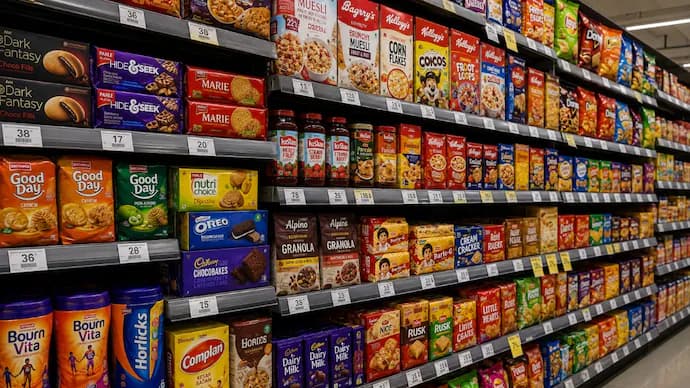
This appears to be the case with the FSSAI’s approach to ratings for packaged food items, which the industry calls FOPL (or Front-of-Pack-Labelling). And some of the ratings for packaged foods are bizarre. This is especially the case when one compares these with the ratings the FSSAI has given for milk and dairy products.
The FSSAI appears oblivious of the fact that milk is crucial to the Indian economy in many ways. It is milk which is the key source of nutrition for most Indians. It accounts for a GDP share which is larger than that of wheat and rice put together. And it employs around 10 crore milk producers – almost 80% of them are small and marginal farmers owning just 1-2 cattle heads. Moreover, cattle skin contributes significantly to the leather trade, which is itself a major employer and exporter. And India remains the second largest player in the global beef export market (it ranks first in export of carabeef).
Despite these achievements, there are many who inadvertently have almost caused the Indian milk industry to get fragmented and broken. That is the case with the cattle slaughter laws as well (free subscription -- https://bhaskarr.substack.com/p/dairy-ruminations-that-make-little). Also watch the video at
This is what happened even with Piyush Goyal’s ministry, in August 2019, when he sought to permit New Zealand to bring some of its dairy produce into India (https://asiaconverge.com/2019/08/indian-bureaucrats-almost-shortsold-the-milk-industry-at-fta-cpec-negotiations/). A howl of protests from around 10 crore farmers was a rude shock for the government and it promptly cancelled such plans.
One reason could be that many policymakers do not understand why any tinkering with this industry could wreck India’s economy, hurt nutrition, and force millions into poverty.
Donald Trump also attempted this, by insisting that India permit agricultural imports from the US. But a wiser government put down its foot and did not permit this.
This time, FSSAI appears to have created a similar situation, That is what one is led to conclude if one goes by the findings of industry expert Kuldeep Sharma (Protect Dairy’s : FSSAI must provide a Dedicated FOPL Category for Milk’s Unique Nutritional Power).
As he states, “Why should dairy with superior nutrition be rated at par or lower than unhealthy foods under FOPL? If we use the current algorithm of FSSAI for star-ratings, also known as Indian Nutrition Ratings, the critical interpretations are as follows.
· Dairy based flavoured milk gets a rating of three-star while highly caffeinated beverages such as energy drinks get the same rating of three stars. Does it mean that flavoured milk and energy drink are same in terms of nutrition and health?
[embed]https://www.youtube.com/watch?v=6Hj3LsMWsKw&ab_channel=dairynews7x7Channel[/embed]
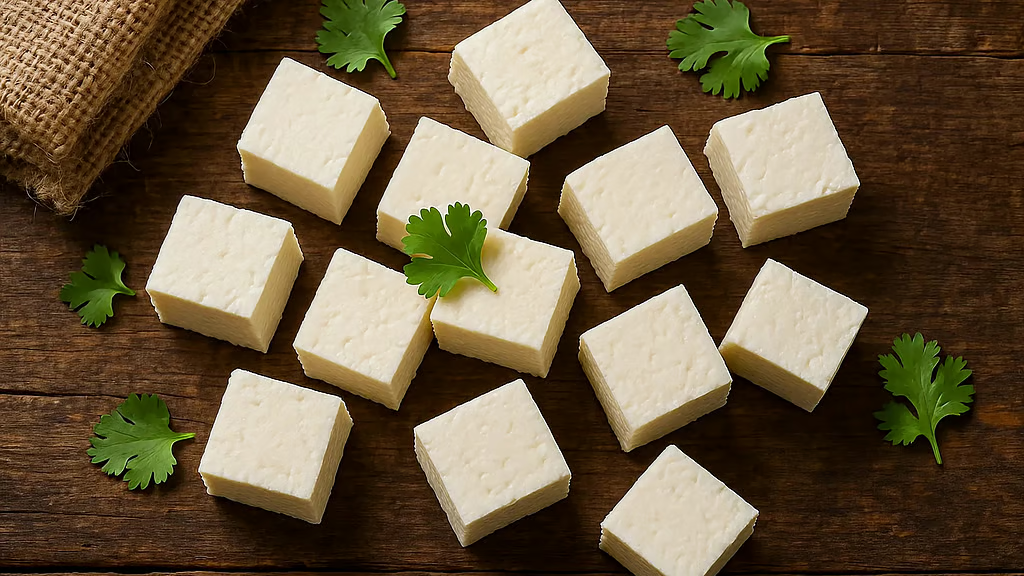
· Noodles have high levels of salt and oil. It gets 2.5 stars. But a highly nutritious product like paneer also gets the same rating.
· Analogues made with palm or vegetable oil get a higher rating than cheese.
· A dedicated category for milk and dairy products is essential.”

More caprice?
Unfortunately, this is not the first time that FSSAI has attempt to push through highly contentious rules and norms. Both the FSSAI and its sister organisation, the FDA (Food and drugs Administration), have a not-so-comforting track record.
Remember how, in 2015, the FSSAI imposed a ban on Nestle’s Maggi Noodles on charges of this product being adulterated and hence injurious to public health (https://asiaconverge.com/2015/06/fssai-bans-and-corruption/)? The matter finally reached the courts, and the Bombay High Court revoked the ban (https://www.nestle.in/media/statements/high-court-decision-on-maggi-noodles-in-india).

Intriguingly, the FSSAI’s own “Statement regarding number of samples found adulterated, and prosecutions launched” (It could be downloaded from fssai.gov.in/Portals/0/Pdf/Enf_Year_wise_data.pdf, but is no longer accessible) shows how in the first six months of 201415, as many as 49,290 samples were tested, of which 8,469 (17%) were found to be substandard. Prosecution was launched against 7,098 (84%), while convictions/penalties were made applicable to just 2,701 (38%). In reality, many cases are not even filed, and the wrongdoers allowed to peddle harmful products.
But what is glaring is the FSSAI’s refusal to look at some other sectors which appear to be playing with public health.

One such sector is soft drinks. They use levels of sugar that are clearly injurious to public health. India’s statistics on diabetes are alarming. Approximately 11.4% of India's population has diabetes, while an additional 15.3% are estimated to be living with pre-diabetes, according to a study published in The Lancet Diabetes and Endocrinology. This means that over 100 million people in India are currently living with diabetes, The need of the hour is to prevent over-consumption of sugar – and that is FSSAI’s responsibility.
Just look at the data.

Why? Just look at data from the National Library of Medicine (https://pmc.ncbi.nlm.nih.gov/articles/PMC10568594/). Between 2015 & 2021, the mean sugar content of soft drinks sold in Germany decreased by only 2% from 5.3 to 5.2 g/100 mL, falling short of the 9% reduction target. This is reiterated by a doctor in his tweets --


It would, therefore, appear that FSSAI has been busy protecting the interests of multinationals. It is even willing to sacrifice the image of the dairy industry.
It has done little to curb the proliferation of substandard milk in the Indian market. It is even willing to turn a blind eye to the huge diabetes problem confronting India. Who is going to pay the medical costs for the next generation? Who is going to pay for the loss of national productivity?
FSSAI needs to come up with answers quickly.
Source : Guest blog by Sh R N Bhaskar -The author is a senior journalist and researcher
Image generated with through https://deepai.org/machine-learning-model/text2img