Latest Blogs
See More
Indian Dairy News
DairyNews7x7
Global Dairy News


DairyNews7x7
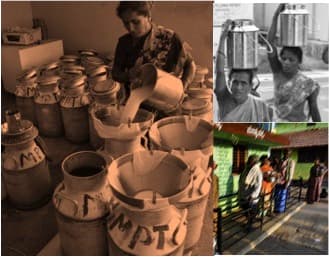
Ravi., a dairy farmer in Keelara village in Mandya district in the heart of the Old Mysore region, has been able to earn a supplementary income from the cows that he rears and from the paddy he cultivates. However, the long spell of drought since last year forced him to sell two cows about six months ago because fodder has become difficult to procure.
He now has one cow to ensure milk supply to his own family and he is able to sell only a couple of extra litres to the local milk co-operative society. Though he has a borewell, the water yield has reduced so drastically that he cannot even grow green fodder. Purchasing fodder is out of the question because it is too expensive.
There are similar stories across Mandya, Kolar, Tumakuru, and Bengaluru Rural districts, which contribute the bulk of the Karnataka Milk Federation’s (KMF) milk procurement, along with Hassan, Mysuru, and Shivamogga districts in the State.In Karnataka, about 24 lakh dairy farmers are members of village-level milk cooperative societies, and an unspecified number of non-members also rear cows in the State. The Old Mysuru region in south Karnataka has seen growth in milk production since the milk revolution started in the mid-70s. Affected by the vagaries of monsoon in rain-dependent arid and irrigated areas, dairy farming has brought supplementary income to the farming community, and women’s participation is also high.
The failed monsoon in 2023, which led to crop loss, has reduced post-harvest hay availability, while water scarcity has prevented farmers from growing green fodder, triggering a shortage of cow feed. Though the State government issued fodder kits containing seeds to farmers as a drought-mitigation measure, farmers complained that without water, the kit remained unused, and the green fodder wilted in many cases.
Karnataka is currently facing the worst drought in the last four decades, with 223 of the 236 taluks in the State being declared drought-hit. While the previous monsoon’s bountiful rainfall helped fill lakes and improve groundwater, which sustained farmers’ lives, the onset of summer has brought misery to rural households as a large number of water bodies and borewells have dried up or yielded less water.
Since 2008, the State government has been providing incentives to dairy farmers, and the incentive has increased from ₹2 per litre when it was launched to ₹5 per litre now. The aid has helped draw more farmers to dairy farming, as milk procurement has more than doubled from 2008, when the average daily procurement was 36 lakh kg, to about 81 lakh kg by the end of the 2022-23 financial year.
While the government incentive does not have specific timelines for release, dairy farmers get their regular payment for milk from the KMF through their respective milk unions. Based on the financial strength of the union, the milk procurement price per litre also varies from district to district. This payment comes to farmers fortnightly through direct benefit transfers to their bank accounts.
“A 50 kg bag of dry feed sold by KMF costs ₹1,260. A tractor load of fodder can cost anywhere from ₹5,000 to ₹10,000. Only farmers who have fodder in excess are selling it. The government has delayed subsidy payments. Enough water and fodder are not available. To make matters worse, milk yield from cows has reduced because of heat,” Jayakumar, a farmer in Gejjalgere in Mandya, pointed out.
Tumakuru, another district where dairy farming provides supplementary income, is no different. Dairy provided them with a steady source of income during any kind of distress. But that’s no longer the case because of scarcity of water and shortage of fodder. Many, like Jayanna, a resident of Belagarahalli in Tiptur, have kept just one cow to provide for only the family’s milk needs.
Those who have grown paddy or sugarcane with great difficulty, with water from the few functional borewells, are the ones who are left with hay, which is taking care of fodder needs. However, Panchalingu, a resident of Keregodu, said dry hay alone does not improve milk yield.
Those in the know about developments in the dairy industry say farmers began selling cows last year as dairying became unremunerative. One reason was the delay in increasing the procurement price.
KMF has been making multiple proposals to increase the retail price of milk since the BJP government. Finally, in July last year, the current Congress government allowed a hike in retail price by ₹3 per litre in July 2023, most of which is transferred to the farmers.
The BJP government was said to have delayed a price increase during an election year, fearing a backlash from the middle class. KMF sources said it was during that period that farmers resorted to selling cows because of increased input costs and dipping incomes. In July 2023, when the retail price was finally increased, the KMF had justified that despite the retail price hike, milk prices in Karnataka continued to be cheaper than in the neighbouring states.
In contrast to the farmers’ claim that the yield from their cows has reduced, the KMF sources say the total procurement across the State has actually increased over the last summer while the number of farmers supplying milk has remained almost the same.
“I have hay from the paddy that I grew last year. However, hay does not help in increasing the milk yield. We are using a combination of hindi (local feed) made from grams, ragi, and other locally available proteins. Feed supplied by KMF has become expensive,” he complained. Farmers are selling cow dung to get as much additional income as possible though they will require dung as fertilisers for the coming monsoon, he added.
Dairy farmers like Lakshamma, a resident of Keelara, who do not have land to grow fodder, are dependent on stray fodder available in the village in open fields. But they have now dried up.
“Dairying is an important source of livelihood. I also work as a farm hand. It is difficult to maintain cows without having land. Buying fodder is not financially viable. I graze cows on the fringes of the village with whatever I get.” Lakshmamma has three cows, and she said she has asked her two sons to look after one cow each.