India’s transition to a net-zero economy by 2070 depends on the decarbonisation path it takes.
A recent study by consulting firm McKinsey & Co says decarbonising could help India save a cumulative USD1.7 trillion in forex on energy imports by 2070. Besides, an orderly transition could turn the country into a manufacturing and R&D hub for clean technologies such as electric mobility, batteries, and electrolysers. Not only that, adopting sustainable-farming practices and reducing greenhouse-gas emissions could supplement farmers’ income by up to INR4,800 per hectare a year, the study says.
The study looks at opportunities and challenges in India’s decarbonisation path through two scenarios. The ‘line of sight (Los)’ scenario is based on current announced policies and foreseeable technology adoption. The accelerated scenario assumes adoption of far-reaching policies and rapid technology adoption.
Here are some of the key takeaways from the report:
Emissions will continue to rise
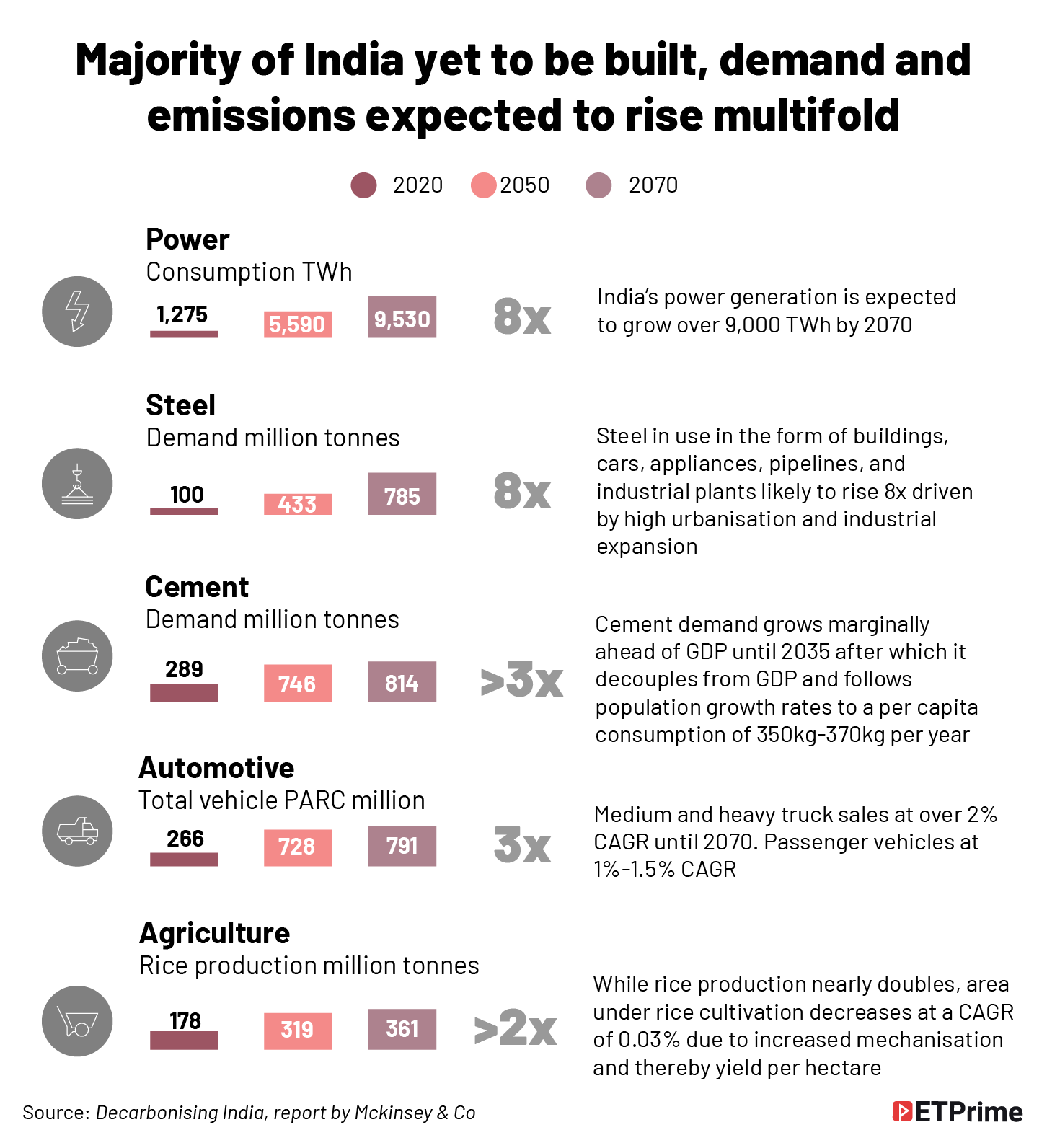
Over three-fourths of the India of 2050 is yet to be built, and this growth could multiply demand across sectors, including some of the major polluters: power (eight-fold), steel (eight-fold), cement (triple), automotive (triple), and food (double). If proper policies are put in place to create the right demand within this decade, the capacities India adds in the two decades thereafter will be low-carbon ones.
The key fight lies in five sectors
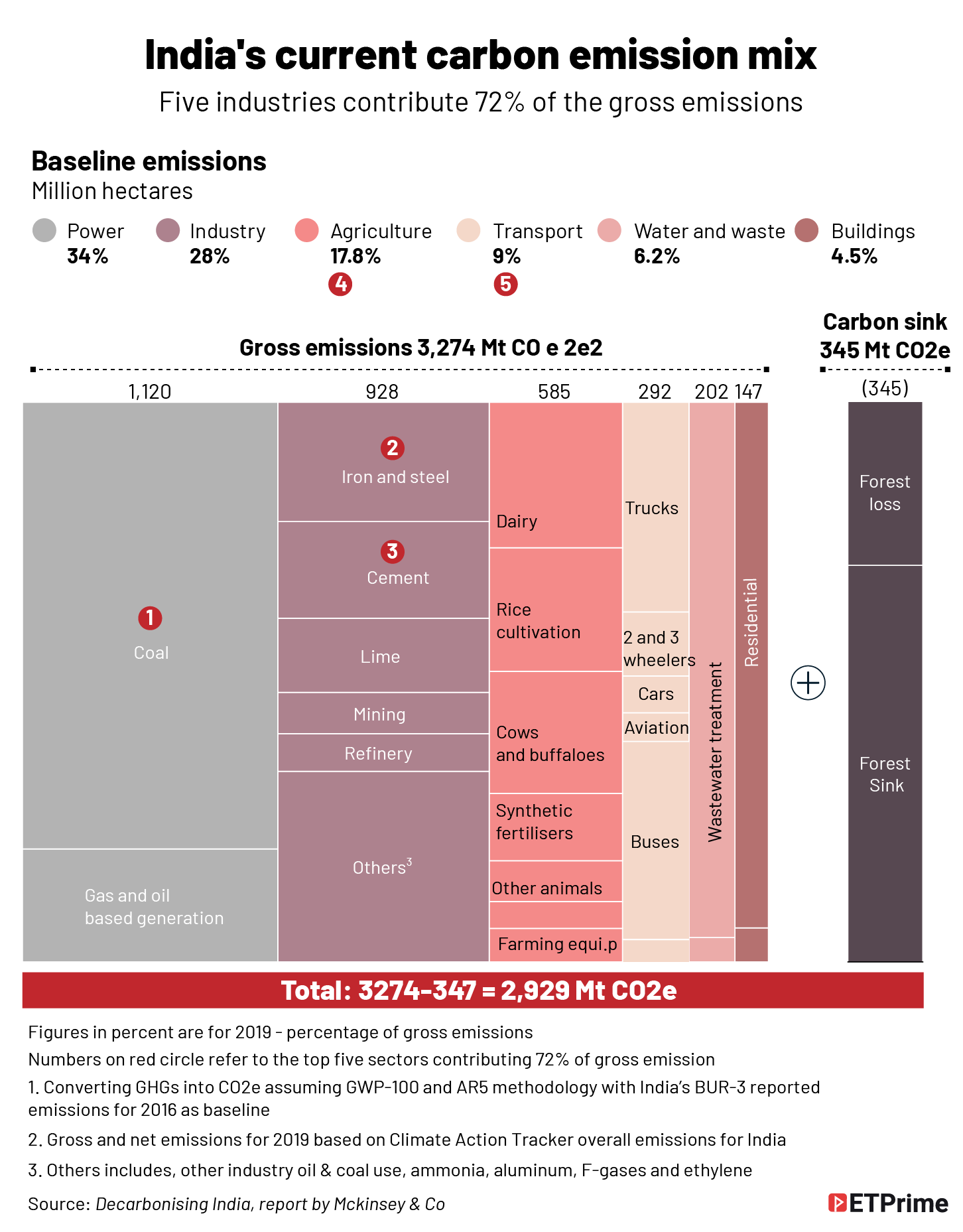
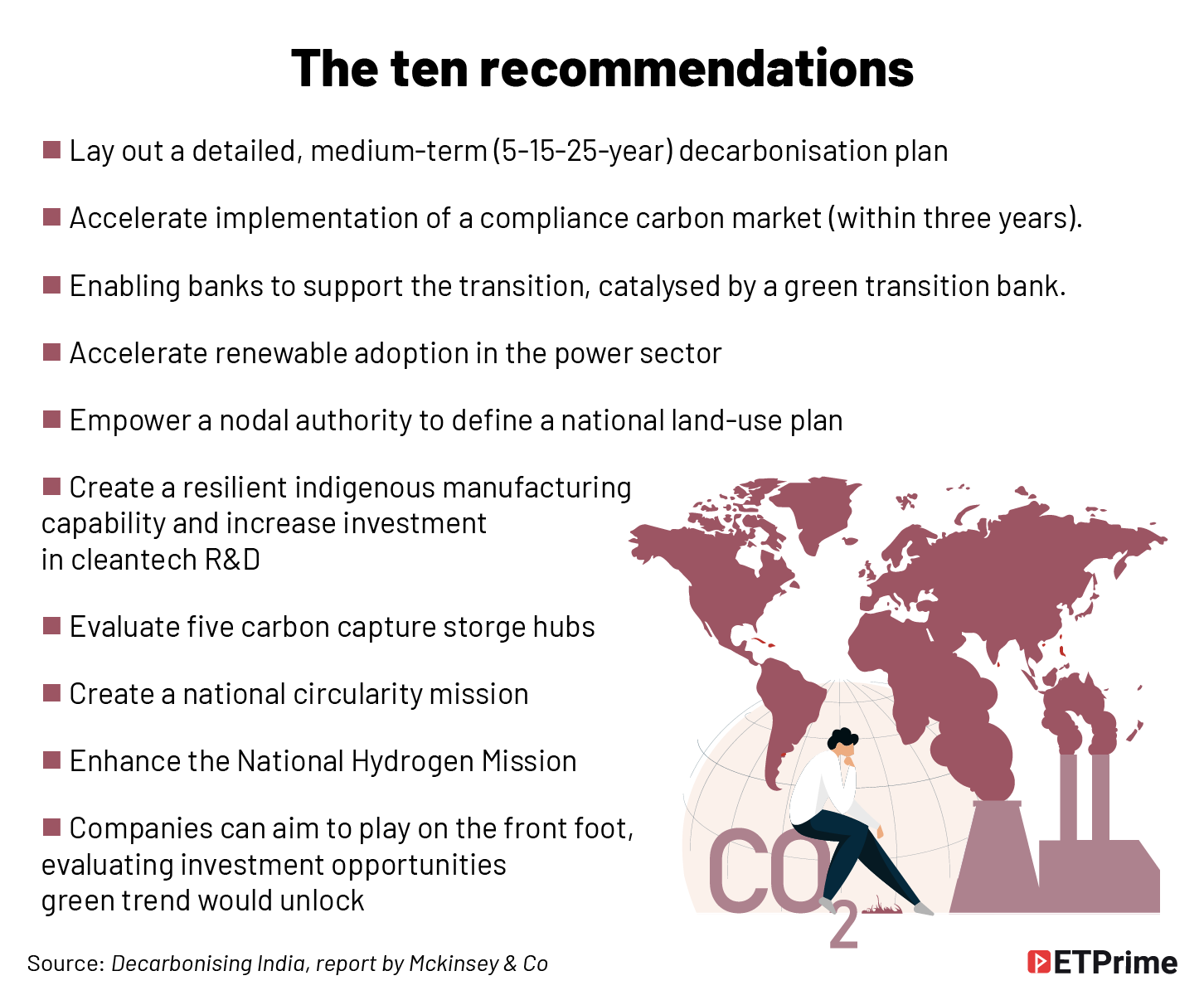
Five industries account for around 72% of India’s overall emissions: power, iron and steel, cement, transport, and agriculture. Some of these industries will continue to have high emissions and that is where targeted interventions are required. Enablers that can help decarbonise multiple sectors include carbon-capture usage and storage (CCUS), natural climate solutions (NCS), material circularity, and green hydrogen.
The funds required
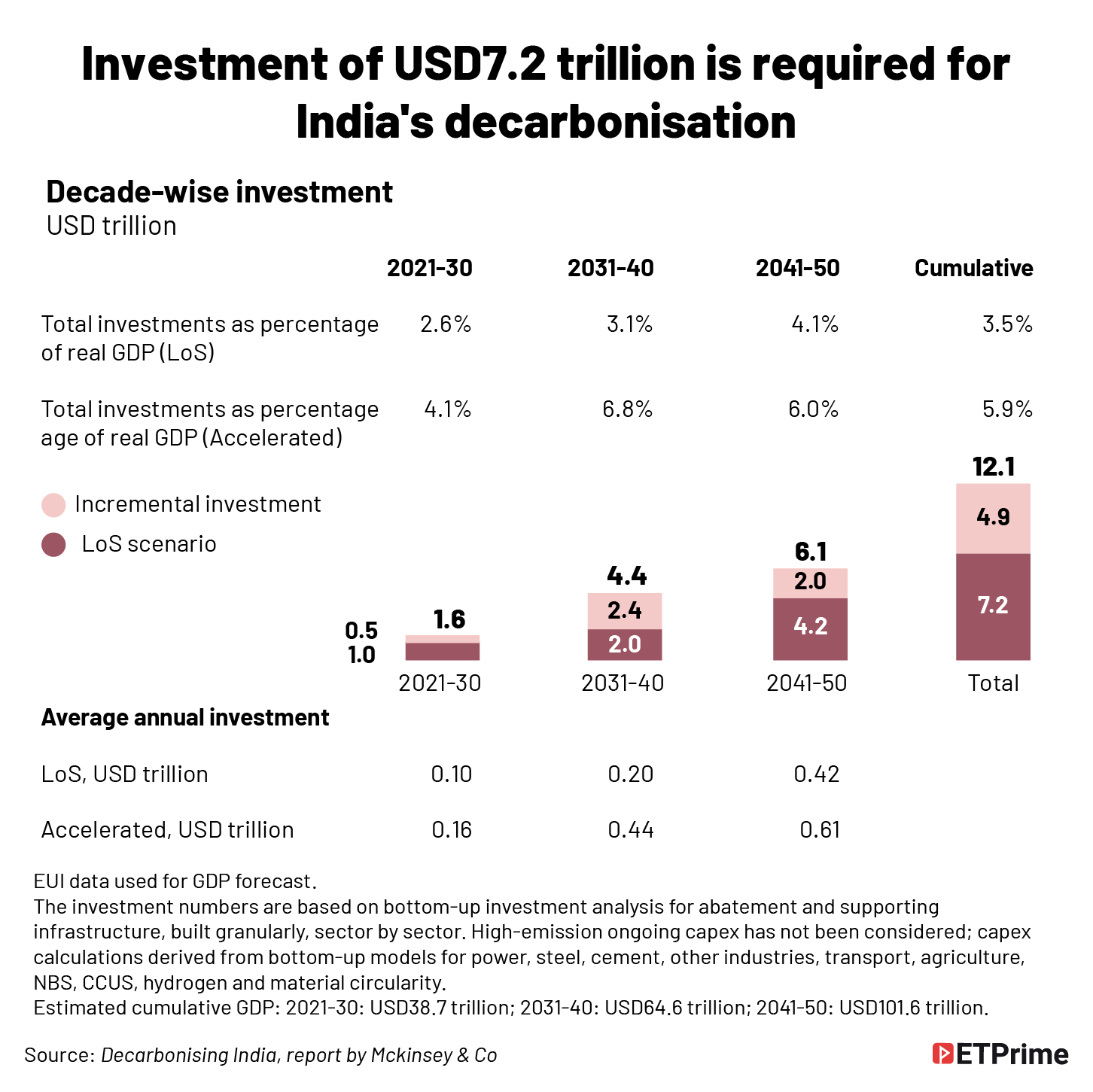
India will require USD7.2 trillion investment by 2050, which is 3.5% of GDP, for decarbonisation in the LoS scenario. This would translate to an average annual investment of USD240 billion in LoS. The current annual investments towards decarbonisation and other green projects are about USD44 billion (heavily skewed towards the power sector), accounting for 10%-12% of the investment required in the future. The cost of decarbonisation is expected to decline as technologies mature — even in a high-growth economy — as innovation and economies of scale lower technology costs over time.
Big investment in the power sector
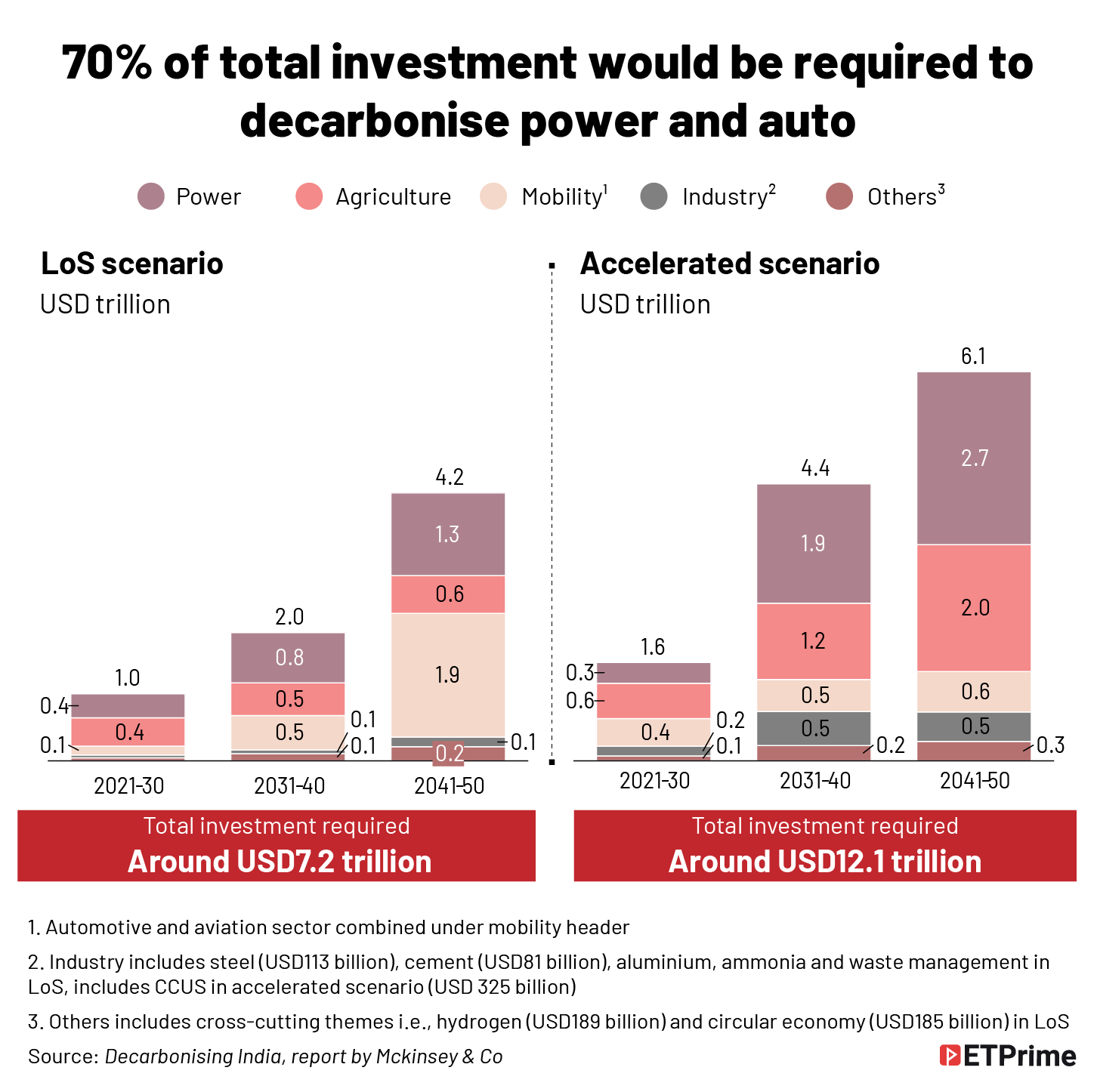
About 70% of funding would be needed for capex investment in the power and automotive sectors, primarily to drive expansion of renewable-energy capacity and electrification of the automotive sector. Transition to renewable sources of electricity would also decrease power generation costs from the current INR3.9 to INR2.9 per kilowatt hour by 2050, with lower-cost renewables and grid stabilising storage. To accelerate renewable energy production, India would have to quadruple the rate of capacity addition, resolve supply-side bottlenecks (land, grid, etc.), accelerate market reforms, and storage buildout (1,200GW by 2050) to integrate renewables and grid reliability, foster innovation, and localise manufacturing.
Solving the agriculture conundrum
The agriculture sector, which is most vulnerable to climate change, is the bedrock of the Indian economy, accounting for 14% of the country’s GDP, and 40% of its employment. It is estimated that by 2100, up to USD10 billion of annual losses are expected due to climate change, with yields of major crops decreasing up to 30%. Therefore, a green transition in the agriculture sector becomes all the more important, but perhaps the most difficult one.
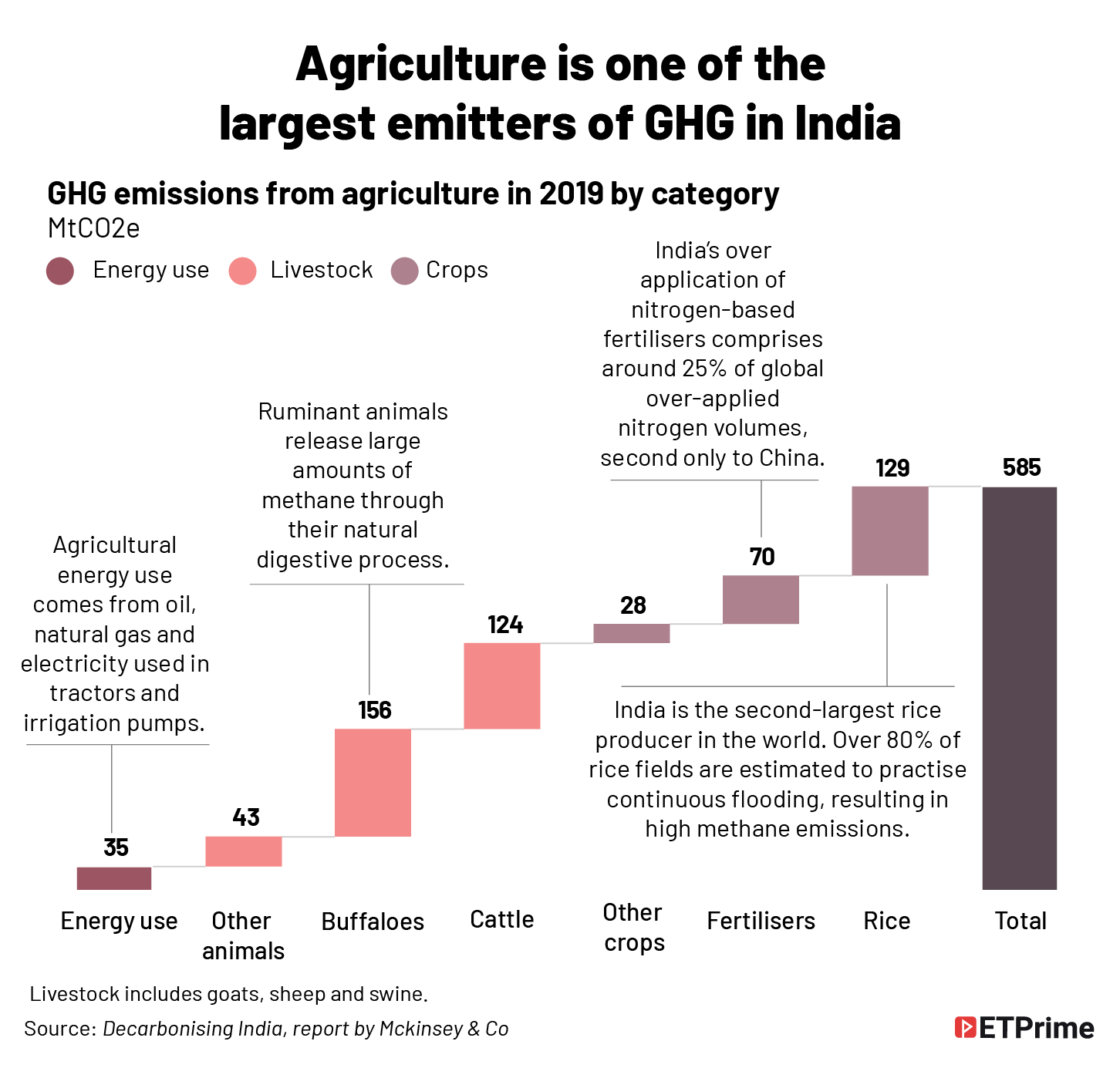
Another unique challenge is that agriculture is one of the highest greenhouse gas (GHG) emitting sectors, accounting for nearly 20% of the country’s total GHG emissions. The emissions would only grow over the years as food demand increases. Total agricultural emissions in India are expected to increase from 585 MtCo2e in 2019 to 650 MtCo2e by 2030, and then gradually decline to around 530 MtCo2e by 2070 (MtCo2e stands for metric tonne of carbon dioxide equivalent).
The biggest transformation challenge in the agriculture sector is engaging with 150 million farmers, 95% of whom hold small farms. Use of sustainable production techniques, increasing use of nano-fertilisers and bio-decomposers are likely to help eliminate over-application of nitrates by 2070.
The McKinsey report points out that technological interventions alone could help cut over 75% of agricultural emissions. However, implementing such green interventions may require total capex spending of nearly USD240 billion by 2070.
The upside is that faster decarbonisation of agriculture could lead to additional earnings of USD145 billion by 2070.
Figuring out land-use patterns
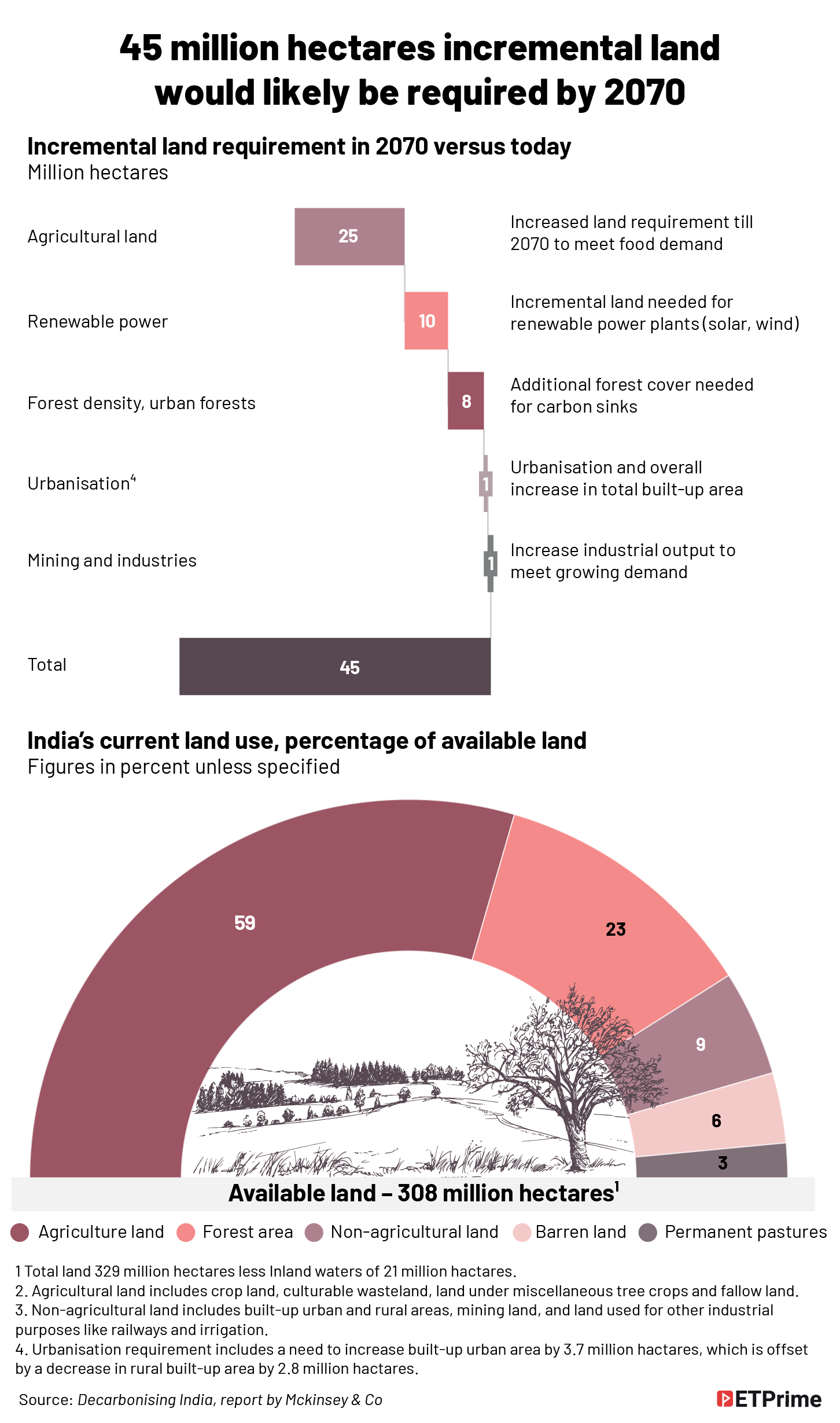
Additional land would be needed to meet India’s net-zero target. Based on current land-use practices, the McKinsey study estimates that the increased land requirement would be 45 million hectares in 2050. For instance, the agriculture sector would need 12 million hectares by 2040, the demand from solar plants is estimated to be 5 million hectares, while forest densification would require an additional 4 million hectares in the same period.
Clearly, sufficient volumes of suitable land will not be readily available unless efficient land-use practices are implemented. The measures for better land use could include increasing agricultural productivity through sustainable farming, using barren land for installing wind and solar power plants, increasing density of forests to meet carbon-sink goals, and using vertical urbanisation to create higher population densities in towns and cities.
The study estimates that these measures would free up 34 million hectares, leaving a deficit of 11 million hectares.
The road to net zero
While most of the estimates and targets in the report may appear daunting, they are also for the long term, allowing a long runway to achieve them. Proper planning and staying focused on the goals can make all the difference.
(Graphics by Sadhana Saxena)
Source : (Originally published on Nov 3,in ET, 2022, 04:15 AM IST)
Stay Updated
Get the latest dairy industry news directly in your feed.