Latest Blogs
See More

Indian Dairy News


DairyNews7x7
Global Dairy News

DairyNews7x7
THE interim Budget has made an allocation of Rs 1.27 lakh crore (about 2.6 per cent of the total) for the Ministry of Agriculture and Farmers’ Welfare. The Budget has outlined the government’s intent to implement measures to increase the productivity of high-yield crops.
The government has announced a comprehensive programme aimed at supporting the dairy sector. It builds on the success of existing schemes, including the Rashtriya Gokul Mission, National Livestock Mission and the Infrastructure Development Fund dedicated to the dairy processing and animal husbandry. The Gokul Mission, which focuses on the conservation and development of indigenous cattle breeds, has been a success in promoting genetic improvement and enhancing milk productivity. The Livestock Mission, aimed at sustainable development of the livestock sector, has played a crucial role in augmenting the income of farmers. The focus of the infrastructure fund on dairy processing and animal husbandry underscores the government’s commitment to modernising and strengthening the backbone of the dairy
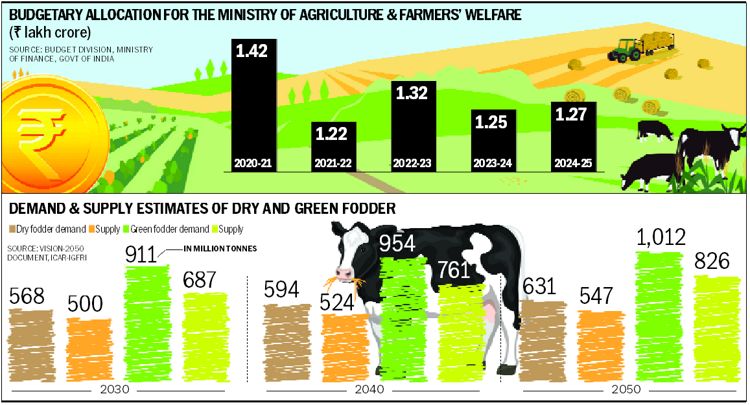
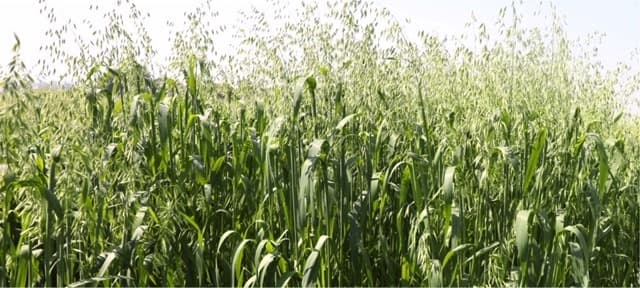
In the Budget speech, the Finance Minister highlighted India’s status as the world’s largest milk producer but hastened to add that the productivity of our milch animals remained low. This anomaly has a lot to do with the neglect of the critical fodder sector, which is a key component of the dairy ecosystem. The average yield of milk and meat of animals in India is 20-60 per cent lower than the global average. Unavailability of nutritionally rich feed and fodder adversely impacts the productivity of farm animals. Moreover, feed and fodder expenses account for 60-70 per cent of the cost of milk production. The supply of feed and fodder has invariably fallen short of the aggregate demand in the country. As per recent reports, for every 100 kg required, India is short of 11.24 kg of green fodder. The scenario is more disturbing in about 15 states where the deficit is above 25 per cent. Considering the burgeoning livestock population and the government’s focus on genetic upgrade of cattle through cross-breeding programmes, the demand-supply gap of green fodder will widen considerably in the absence of long-term policy planning and its grassroots-level implementation. The Budget, while encompassing various initiatives and allocations for the dairy sector, has failed to turn the spotlight on the indispensable role that a robust fodder sector plays in enhancing the productivity of dairy animals and ensuring sustained growth of the livestock industry. This calls for a comprehensive and strategic policy intervention to bridge the gap and fortify the foundation of India’s dairy industry.
The government can support the fodder sector through multi-pronged strategies, right from production to marketing. At the outset, all state governments must be directed to earmark adequate funds for fodder resource development. Technical guidance can be taken from the Jhansi-based ICAR- Indian Grassland and Fodder Research Institute (IGFRI), which has developed fodder plans for various states and agro-climatic regions.
Investment is also required to ensure parallel development of supporting market environment for surplus fodder, encompassing backward and forward market linkages. The provision of a dedicated market space will facilitate transparency and remunerative prices for fodder traders. As there is regional and seasonal disparity in fodder production, channelling funds for establishing community fodder banks where surplus fodder can be stored as hay/silage/fodder blocks for use during scarcity would be crucial for safeguarding the interests of small dairy farmers. These initiatives are imperative for ensuring a consistent and reliable supply of fodder to dairy farmers throughout the year. The government’s decision to allocate Rs 582 crore for the formation of Farmer Producer Organisations (FPOs) is expected to empower agricultural communities and foster collective strength. However, it is crucial to advocate for a specific focus on the formation of FPOs in the fodder sector. While the broader support for FPOs is beneficial, a targeted initiative in the fodder domain can address the unique challenges faced by livestock farmers. FPOs dedicated to forage production can streamline procurement, processing and marketing of fodder, leading to a more organised and efficient supply chain.
Incentivise farmers
Financial incentives play a pivotal role in promoting agricultural advancements and directing them towards the adoption of improved fodder varieties is crucial. By offering farmers monetary rewards for embracing high-yielding and climate-resilient fodder crops, widespread adoption of forage can be promoted. This approach not only acknowledges the intrinsic link between fodder quality and livestock productivity but also addresses the economic concerns of farmers. Incentivising the cultivation of improved fodder varieties ensures increased availability, positively impacting the nutritional wellbeing and productivity of livestock.
Making India a global hub of Shree Anna (millets) is an important thrust area of the Union Government. Research and promotion of dual-purpose millets varieties will help in improving food security and the wellbeing of farmers while reducing the fodder deficit to a large extent. Promoting start-ups with technical backstopping for preparing millet-based cattle feed will also enhance the production of these super crops in the long run.
Expectations are high among stakeholders that the full Budget, to be presented later in the year, will allocate adequate resources for feed and fodder development.