Latest Blogs
See More


Indian Dairy News

DairyNews7x7
Global Dairy News


DairyNews7x7
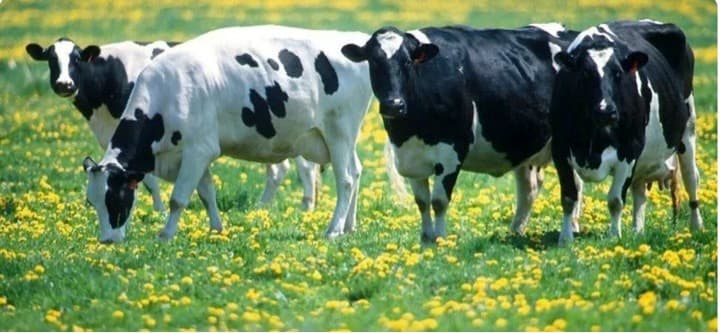
It’s easy to ruminate over methane when thinking about dairy and its challenges. Dairy cattle are an essential piece of Wisconsin’s $45.6 billion dairy community, but cattle have to eat — and when they eat, they produce the greenhouse gas methane during digestion.
This methane-producing process is natural, with individual cows emitting 150 to 260 pounds of the gas per year — primarily in the form of belches. Fortunately, there are ways to reduce the amount of methane that cattle burp up. Scientists from the University of Wisconsin–Madison recently received funding from the Greener Cattle Initiative to do exactly that, according to a news release from the University of Wisconsin-Madison.
The Greener Cattle Initiative (GCI), originally launched by the Foundation for Food & Agriculture Research (FFAR) and the Innovation Center for US Dairy in 2021, is an international multi-partner consortium of stakeholders created to support research that seeks to minimize enteric methane production in dairy cattle. In September 2023, GCI awarded a $3.3 million grant to Francisco Peñagaricano, UW–Madison assistant professor of animal and dairy sciences, for his project “Integrating genomics, milk spectrometry, and microbial manipulations to mitigate enteric methane emissions from dairy cattle.”
Peñagaricano’s project takes a three-pronged approach to the challenge: using genetics to selectively breed cattle that produce lower methane emissions; developing a milk-based test that can predict a cow’s methane emissions; and exploring the rumen microbiome for possible dietary or other interventions.
“The Greener Cattle Initiative was launched to address the many challenges that remain in identifying, developing, and validating effective enteric methane mitigation options… that meet farmers’ and broad socioeconomic needs,” says Juan Tricarico, director of GCI and senior vice president of environmental research and distinguished scientist at Dairy Management Inc. “The project awarded to Dr. Peñagaricano and his collaborators is important for long-term mitigation because selectively breeding low methane-producing dairy cattle is permanent and cumulative, and will probably also be cost-effective.”
Along with Peñagaricano, who is the project’s principal investigator (PI), three additional faculty members in the UW–Madison Department of Animal and Dairy Sciences are involved in the project: Hilario Mantovani, who specializes in rumen microbiology; Kent Weigel, who focuses on breeding and genetics; and Heather White, who studies nutritional physiology.
All four UW–Madison team members are associated with the UW Dairy Innovation Hub. The Hub, funded through a $7.8 million per year investment by the state of Wisconsin, harnesses research and development across the UW–Madison, UW–Platteville and UW–River Falls campuses to ensure Wisconsin’s $45.6 billion dairy community remains a global pacesetter in dairy innovation.
Through various funding awards, including one to Peñagaricano, the Hub has helped UW–Madison purchase two methane-measuring GreenFeed systems, bringing the university’s total to five. A GreenFeed device is a portable feeding bin that captures all the air exhaled by a cow while she is eating and delivers a reliable estimate of methane emissions for that individual cow.
“Thanks to the Dairy Innovation’s Hub contributions, we were able to begin work on this important topic at UW–Madison and attract a substantial grant award from GCI to expand it significantly,” says Peñgaricano.
A first step for the new GCI-funded project will be to develop a reference population of almost 4,000 dairy cows — and the first research prong will be to look at the genetics of these animals, focusing on the natural methane-burping variability found in the group.
All cows produce methane, but not every cow is alike. According to research previously conducted by Peñagaricano, some cows release around 600 grams of methane per day, while others average around 300 grams. For the GCI study, the cows in the reference population will undergo genomic evaluations for various methane emission traits, such as the quantity or frequency of production. Once these traits are better understood, the team can pursue selective breeding for cows that produce less methane.
“Variability is crucial, [and] part of that variability is due to genetics,” says Peñagaricano. “We can use that variation to improve cows in the next few generations through genetic selection.”
The second prong of the project explores milk testing. Generally, dairy farmers send monthly milk samples to a lab to monitor quality and to get an idea of protein and fat levels in the milk. Peñagaricano’s team envisions farmers also being able to receive a prediction of methane emissions from the herd. The new test would involve milk spectrometry, scanning milk samples with infrared light to identify specific chemical compounds. The goal is to develop a low cost, non-invasive tool that farmers could potentially use at the national level.