Over the last three days, I have had the privilege of participating in thought-provoking workshops on rural development and climate-resilient dairying. Amidst all the innovative discussions, one stark truth emerged: the problem does not lie in designing policies or ensuring that benefits trickle down to the people. The real challenge is in defining the true stakeholders and recognizing the actual beneficiaries. Take, for instance, the issue of water stress—a crisis that has gripped the world for decades. We often measure this crisis by the distance women walk each day to fetch water for their families. In one study, it was 6 kilometers in parts of Africa; in another, it stood at 2.78 kilometers. And yet, here we are in 2023, with the United Nations World Water Development Report revealing that one in four people—26% of the world's population—still lack access to safe drinking water.
Why has this problem not been resolved, despite humanity’s boastful strides into "godlike" achievements, such as Artificial Intelligence and Generative AI?
The answer lies in the way we perceive water—and more importantly, who we see as its stakeholders. For generations, water scarcity has been viewed through the lens of statistics and governance, but never through the eyes of the women who bear the brunt of this crisis. The patriarchal mindset has failed to prioritize the struggles of the "fairer gender," for whom fetching water is a daily burden. Let me ask you this—had it been men’s responsibility to walk for hours every day to bring water home, do you think we would still be where we are today? Would this issue have remained unresolved for so long?
The problem is not just about water. It is about whose voices matter, whose struggles are seen, and whose needs are prioritized. Until we change the lens through which we view such crises, true solutions will remain out of reach. Let us look at the issue of climate change with a different lens.
The climate change conversation has taken a sharp turn in recent years, with a disproportionate focus on livestock—particularly dairy animals. Calls to cull livestock, eliminate dairy products, and replace cows with synthetic alternatives are gaining traction globally. But is this narrative truly just, especially for a country like India, where dairy is not just an industry but the lifeline for over 80 million farmers and their 400 million family members?
The Indian Reality: Livelihoods at Stake
In India, the dairy sector forms the backbone of the rural economy. For millions, a handful of cows or buffaloes provide not just nutrition but a steady source of income, employment, and empowerment. Unlike industrialized economies, Indian dairy farming operates predominantly on small, decentralized systems where cows coexist symbiotically with their environment. If the global debate succeeds in pushing an anti-dairy agenda, what happens to the fate of these farmers? What happens to the generations whose livelihoods hinge on this vocation? Can we afford to marginalize one of the most vulnerable sections of society in the name of “climate action”?
Climate Change: Who Bears the Real Responsibility?
It is a glaring injustice to blame cows—a natural part of the ecosystem—for the planet’s worsening climate crisis. In India, the majority of greenhouse gas (GHG) emissions stem from energy, fuel consumption, and heavy industries. Dairy, by contrast, contributes a small fraction. Yet, instead of addressing the colossal emissions from human-driven industrialization and overconsumption, cows are being vilified. Are we placing the blame where it doesn’t belong simply because it is easier?
Moreover, this rhetoric exposes a grave hypocrisy. On one hand, India is celebrated as the land where cows are worshipped, a symbol of nourishment and divinity. On the other, we accuse these very animals of environmental damage, while ignoring the human behaviors that are eroding the planet far more ruthlessly.
The Cow: Nature’s Most Sustainable Partner
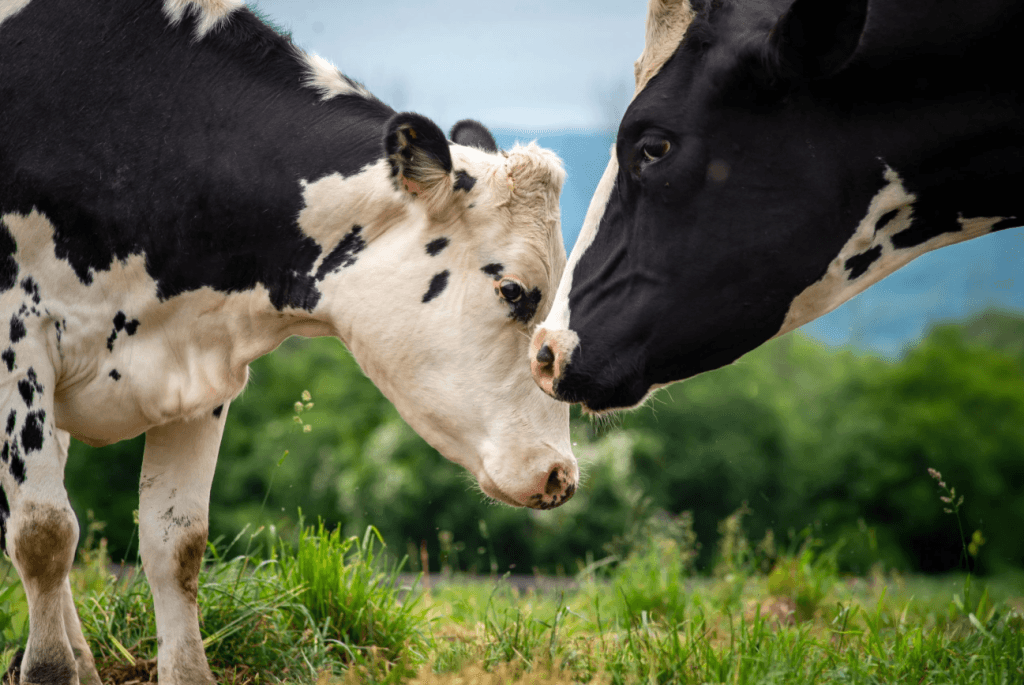
Cows are not the problem; they are part of the solution. Nature has endowed cows with a unique role—they are the perfect fermentors, capable of converting grass, agricultural by-products, and natural fodder into the world’s most nutritious food: milk. But their contribution doesn’t end there. Dung and urine from cows play a vital role in sustainable, organic farming. For centuries, Indian agriculture has thrived on these natural inputs, enhancing soil fertility and reducing dependence on chemical fertilizers.
To blame cows for climate change without acknowledging their role in regenerative farming and carbon sequestration is shortsighted and dangerous. The cow’s value in a sustainable agricultural system is unparalleled—a fact that gets buried in today’s oversimplified climate debates.
Human Behavior: The Real Culprit
If we are serious about building a climate-resilient future, the solution does not lie in culling livestock or eliminating dairy. The solution lies in addressing human greed, excess consumption, and unsustainable practices. Climate change is not the fault of cows; it is the consequence of unchecked industrialization, energy-intensive lifestyles, and exploitative resource management.
Perhaps it is time to ask: Do we need climate-resilient livestock or climate-resilient humans? The two-day global emissions from sectors like energy and transportation far exceed the annual emissions from dairy farming in India. A brief pause in human activity, as witnessed during the COVID-19 lockdowns, demonstrated how quickly the Earth can begin to heal itself.
The Way Forward: A Holistic Approach
The conversation must shift from blaming cows to holding ourselves accountable. Building a climate-resilient future requires:
- Behavioral Change: A global movement toward mindful consumption, reduced energy wastage, and eco-friendly living.
- True Sustainability: Supporting farmers in adopting natural, regenerative practices that leverage the cow’s role in organic farming.
- Justice for Farmers: Ensuring policies do not unfairly penalize vulnerable farming communities who contribute little to global emissions.
- Cow as a Stakeholder: Recognizing the cow as a partner in sustainability, not as an obstacle.
Conclusion: A Shift in Perspective
The real question we need to ask ourselves is this: Will we continue to blame cows for a problem created by human excess, or will we hold ourselves accountable and work toward real solutions? Cows, with their role in natural farming, are allies in our fight for a sustainable planet. The real transformation lies in building climate-resilient human societies—ones that live responsibly, consume thoughtfully, and coexist harmoniously with nature.
Blaming the cow for climate change is not just unjust; it is a distraction. Let us focus on the real culprits and take meaningful action to secure a future where both humanity and nature can thrive.