Latest Blogs
See More


Indian Dairy News


DairyNews7x7
Global Dairy News



DairyNews7x7
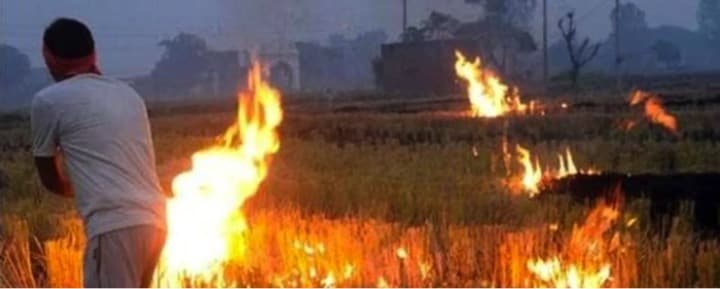
The monsoon has receded, and North India is bracing for a smoggy winter. And with that the feverish focus on crop stubble burning has returned to India’s public discourse. Like each year, discussions have begun on how bad this year’s stubble burning season will likely be and what potential ad hoc techno-fixes could solve the issue — in the short term.
A problem that is historic
We will soon read in-depth analyses of satellite image-derived counts of the number of fires observed on each day, and source apportionment studies that determine the exact contribution of stubble burning to poor air quality. The purportedly apathetic farmer who cares little about the well-being of Delhi’s urban citizenry will be held to a high standard of environmental stewardship, and the inevitable political mudslinging will follow soon. However, this heated public discourse adopts an unhelpful adversarial frame to a complex challenge. The problem is a historic one that cannot be fixed with short-term, unsustainable solutions.
The root cause of stubble burning can be traced back to the 1960s-70s, when to meet the urgent challenge of feeding its rapidly growing population, India introduced several measures as part of its Green Revolution. The Green Revolution transformed the way agriculture was practised, especially in Punjab and Haryana. The economics of high-yielding varieties of paddy and wheat, supported by a guaranteed buyer (the government) and minimum support prices led to a crop duopoly oriented solely around increasing caloric intakes, supplanting the earlier diversity of crops grown in the region.
Further policy moves in subsequent decades, which included the introduction of subsidies for electricity and fertilizers, and ease of access for credit in agriculture only served to cement this duopoly. But this transition to a two-crop agricultural praxis, while filling godowns and feeding mouths, has been depleting the water table, increasing pesticide and fertilizer use exponentially. It has also led to the consolidation of small farms into larger landholdings.
In an attempt to address the growing water crisis, the Punjab and Haryana governments introduced laws around water conservation, encouraging farmers to look to the monsoon rather than groundwater to irrigate their crops. The shortened harvesting season that arose resulting from a not clearly thought-out policy move brought about the need for farmers to rapidly clear their fields between the kharif and rabi crops; the quickest of these ways was to burn off the remaining stubble post-harvest.
The repercussion of stubble burning is felt all through the Indo-Gangetic Plain (IGP) airshed, where what is burned in Punjab and Haryana has an impact on air quality all the way down to Bihar and West Bengal. With studies showing a large contribution of stubble burning emissions on winter air quality in the National Capital Region, the demand for governments to act on this seemingly avoidable practice translated initially into a criminalisation of the act.
No significant improvement
More recently, however, with concerted focus on the subject, a series of short-term ex-situ and in-situ solutions have been rolled out by the Union and State governments. In-situ solutions include happy seeders and bio-decomposers, while the ex-situ solutions include collecting and using stubble as fuel in boilers, to produce ethanol, or to simply burn away alongside coal in thermal power plants. Economic incentives to reduce burning have also been tested with limited success. With crores invested in these solutions over the last five years, we have yet to see any significant improvement in the situation.
Meaningful steps that are needed
Driven largely by short-term thinking, these techno-fixes or alternative uses work at the margins, without addressing the root cause. As pointed out in a recent article, the entire value-chain of agriculture in the region needs to change if air quality, water, nutrition, and climate goals are to be addressed. In practical terms, this means substantially reducing the amount of paddy being grown in the region and replacing it with other crops that are equally high-yielding, in-demand, and agro-ecologically suitable such as cotton, maize, pulses and oil seeds. It will also require building trust with farmers to ensure they are seen as partners (rather than perpetrators) and providing them the financial support necessary.
At a policy level, it also requires recognising that agriculture, nutrition, water, the environment, and the economy are all deeply intertwined in the era of the Anthropocene. One cannot be addressed in a silo without having second and third order effects on the other. Therefore, taking the long view on this would also mean establishing a mechanism for intersectoral policymaking that aligns our goals for sectoral policy within the broad frame of sustainable development we wish to follow.
A transition at this scale has not been witnessed since the Green Revolution, but it is what is required if we are to address stubble burning in the long run. Fostering the conditions necessary for such a transition is complex. Whether our institutions have the right mix of political will and professional skill to do so remains to be seen.
Source : The Hindu 21 Oct 2022 Bhargav Krishna