Latest Blogs
See More


Indian Dairy News

DairyNews7x7
Global Dairy News



DairyNews7x7
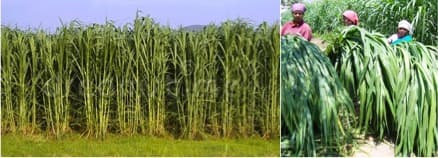
High on nutrition and resistant to drought, bajra-napier hybrid grass is ideal for livestock. It can help farmers in semi-arid areas
India’s post-Independence achievement in transforming itself from a milk deficit country to the world’s largest milk producer has been exemplary . That said, India has the world’s largest dairy herd but milk yield of our farm animals is miserably low.
Animal production systems in India are mostly based on low-cost inputs drawn from crop residues and agro by-products, causing nutritional deprivation of the animals and thus impeding their productivity potential.
Farmers often resort to feeding concentrate to lactating animals for exploiting maximum milk, but high concentrate diet not only accentuates production costs but also sometimes induces rumen metabolic disorders in the animals.
Volatility in prices of the feed ingredients is another area of concern, as it destabilises cash inflows of the farmers. The current spike in cattle feed prices has thrown dairy farmers into distress.
Many studies have empirically established that green fodder is crucial in balancing ration for livestock and sustaining milk yield growth in the long run. But, as per the recent report, ‘Revisiting National Forage Demand and Availability Scenario’, released by Indian Grassland and Fodder Research Institute (IGFRI), for every 100 kg of green fodder required, India is short of 11.24 kg. The situation is especially bad in 15 States, where the deficit is above 25 per cent.
With burgeoning livestock population and government focus on genetic upgradation of cattle by cross-breeding programmes, the demand-supply gap of green fodder will widen considerably.
Reportedly, earmarking 14-17 per cent of the land for fodder cultivation will help in meeting shortages. It is true that sparing more area for fodder is difficult due to intense competition for additional land from commercially important crops. Therefore, policy focus on bringing more area under perennial grasses with high biomass would be imperative for meeting green fodder needs of livestock.
Among the cultivated perennial grasses, bajra-napier hybrid grass, popularly known as BN hybrid, has been acclaimed as the highest forage yielder. The grass is endowed with several unique characteristics in terms of biomass, nutrition quality as well as palatability. The green fodder yield potential of the grass is reported to be 200-450 t/ha depending upon varieties, management practices and agro-ecological regions. Notably, the grass maintains its productivity for 4-5 years.
Farmers are advised to take first cut at 60-65 days after planting and subsequent cuts at 25-30 day intervals. Scientific studies show that with proper management, at least six to eight cuts can be taken annually. On the nutritional front, the grass is rich in water-soluble carbohydrates and possesses a high crude fibre (28-30 per cent) and protein (8-10 per cent) aggregate.
The BN hybrid is well adapted to diverse agro-climatic conditions and can withstand drought conditions for fairly long spells. It can thus provide an excellent alternative livelihood opportunity for farmers experiencing crop failures every year in semi-arid areas.
Research institutes have also developed cultivars which are suitable for acidic soils (for example, IGFRI-7) and well tolerant to saline soils (IGFRI-10).
Also, the grass is eco-friendly, improves soil fertility, prevents pests attack on crops, and even serves as an effective wind/fire break to the farm when intercropped and planted on field bunds. Economic studies have also attested its cost-effectiveness on small farms. Therefore, by wedding dairy farms with BN hybrid grass, farmers can enjoy a steadier income with healthy, well-fed cattle. For bridging the demand-supply gap of green fodder for our livestock, the government should help by strengthening extension agencies to help promote the adoption of this magical grass across the country.
The grass can be promoted among small landholders on bunds without affecting their cropped area while for large and medium size landholders as round the year fodder production system intercropped with legume fodder for balanced ration.
Awareness needs to be generated among farmers to take up high density planting of this grass for assured year-round supply of green fodder. Parallel development of a supporting market environment for surplus green fodder, encompassing backward and forward market linkages, have to be ensured. Moreover, investment must be tailored for further research to accentuate potential of such perennial grasses.
Choudhary is Scientist, Sharma is Principal Scientist, and Chandra is Director, ICAR-IGFRI, Jhansi. Views are personal