Latest Blogs
See More
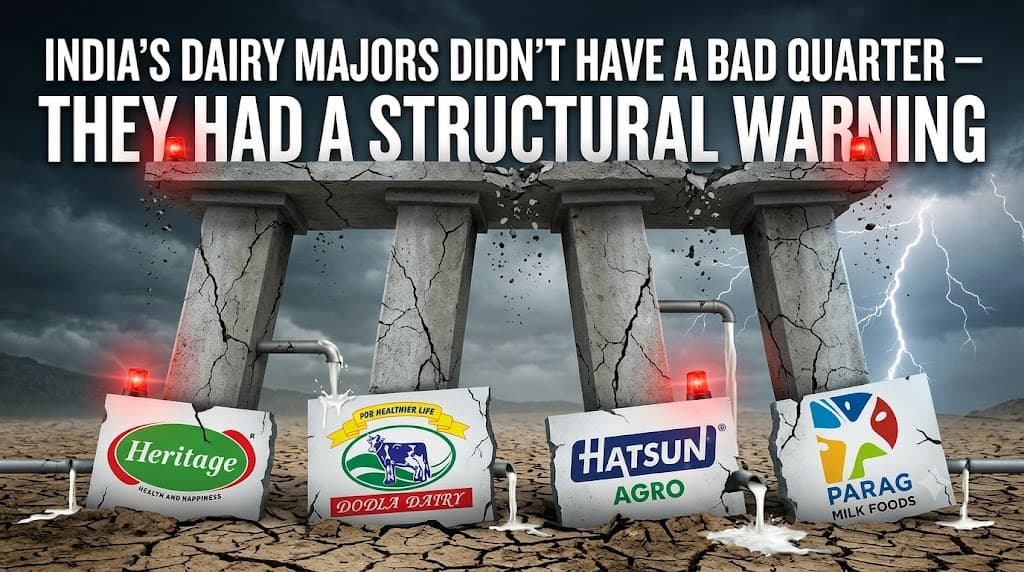

Indian Dairy News

DairyNews7x7
Global Dairy News

DairyNews7x7
Over the past few years, the budget allocation for dairy has seen limited growth, with funds primarily directed toward livestock health and Rashtriya Gokul Mission. However, the critical areas of dairy infrastructure, feed & fodder, and farmer-centric incentives have been consistently underfunded.
Last year, in the post-election 2024-25 budget, the absence of dairy from the government’s nine core agricultural priorities (Navratna strategy) was concerning. Even in current budget the term “dairy” was mentioned only once, signalling a reduced focus despite the sector's significant contribution to rural livelihoods and nutrition security. The budget highlights increased funding for crop resilience, digital infrastructure, and cooperatives, but dairy remains marginalized in the broader policy framework.
Report Card on Budget from 2017-18 to 2022-23 of cooperative sector development
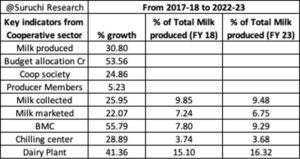
It is evident that the majority of our dairy budget continues to be directed toward cooperative sector development, while the private sector remains largely ignored. Despite its significant contribution to the dairy ecosystem, private players are not considered for any backward linkage-related schemes—except for limited interest subvention on infrastructure development over the last 3-4 years. Even in state-led milk subsidy programs, farmers supplying milk to private dairies or even FPOs are excluded, with Maharashtra being one of the few exceptions.
A fundamental analysis reveals concerning trends regarding the effectiveness and sufficiency of budget allocation in proportion to infrastructure development and farmer inclusion. Between 2017-18 and 2022-23, the dairy budget increased by more than 50%, while milk production rose by 30%. However, the inclusion of producer members in formal milk procurement systems saw only a marginal 5% increase. Alarmingly, there was a decline in the percentage share of milk procured, milk marketed, and the installed capacity of chilling centres.
Even with a significant 50% budget hike, only Bulk Milk Cooler (BMC) capacities and dairy plant infrastructure saw growth exceeding the increase in milk production—likely a result of programs launched before or just after COVID. These figures highlight a stark reality: the allocation for dairy infrastructure remains grossly insufficient. Without adequate collection and processing infrastructure, the vision of providing stable market linkages and better remuneration to farmers will remain a distant dream.
As we examine the current budget, it is crucial to assess its adequacy in addressing the chronic capacity shortages plaguing the Indian dairy sector. The future of millions of dairy farmers depends on it.
Key Observations from Budget 2025 Trends:
The livestock sector has become a key driver of growth in Indian agriculture, with its share in agriculture and allied sector Gross Value Added (GVA) rising from 24.38% in FY15 to 30.23% in FY23. In the same year, livestock alone accounted for 5.5% of total GVA, growing at an impressive CAGR of 12.99%.
Its economic impact is evident in its soaring output value, which reached ₹17.25 lakh crore (US$205.81 billion) in FY23. The milk industry, a dominant force, generated ₹11.16 lakh crore (US$133.16 billion), surpassing the combined value of staple crops like paddy and wheat.
More than just an economic contributor, the livestock sector is a pillar of agricultural prosperity, food security, and rural livelihoods, reinforcing its indispensable role in India's economy.
Performance of Dairying in overall agriculture sector
India contributes 11.6% of global cereal production, yet crop yields remain low, with the sector growing at a modest CAGR of 2.1% (FY13–FY22). Oilseeds grew even slower at 1.9%, highlighting concerns over India’s dependence on edible oil imports.
In contrast, high-value allied sectors drive agricultural growth, with fisheries growing at 13.67% CAGR and livestock at 12.99% (FY15–FY23). Rising incomes are further boosting demand for dairy, making it a key pillar of nutrition, rural livelihoods, and economic growth.
Given dairy's perishable nature, robust post-harvest infrastructure and market access are essential. Support from FPOs, cooperatives, SHGs, and private investment will strengthen the sector. Prioritizing dairy in the annual budget is crucial to sustaining growth, ensuring food security, and reducing income volatility for millions of farmers.
Complete Neglect of dairy in Agriculture section of budget 2025
The recent Union Budget has introduced several commendable initiatives aimed at bolstering various agricultural sectors, including the Prime Minister Dhan-Dhaanya Krishi Yojana, the Rural Prosperity and Resilience program, and missions targeting pulses, fruits, vegetables, and makhana. However, it is concerning that the dairy sector, a cornerstone of India's agricultural economy, has not received adequate attention in these allocations.
Dairy is the single largest agricultural commodity in India, contributing 5% to the national economy and directly employing more than 8 crore farmers. As mentioned earlier the milk industry, in FY23 generated ₹11.16 lakh crore (US$133.16 billion), surpassing the combined value of staple crops like paddy and wheat.
This substantial contribution underscores the critical role of dairy in sustaining rural livelihoods and ensuring nutritional security across the nation.
Challenges faced by dairy sector
Despite its significance, the dairy sector faces numerous challenges, including fluctuating milk prices, inadequate cold chain infrastructure, and limited access to advanced processing technologies. Addressing these issues is essential for enhancing productivity, ensuring fair remuneration for dairy farmers, and meeting the growing domestic and international demand for dairy products.
Neglecting the dairy industry in the current budget represents a missed opportunity to strengthen a sector that not only supports millions of farmers but also plays a pivotal role in the nation's food security. It is imperative that future budgetary provisions prioritize the dairy sector, allocating resources for infrastructure development, technological advancements, and market support mechanisms. Such focused attention will ensure the sustained growth and resilience of India's dairy industry, benefiting farmers and consumers alike.
The growing importance of animal husbandry, dairying, and fisheries highlights the need for income diversification to enhance farmer resilience and reduce dependence on traditional crops. These allied sectors offer additional revenue streams, mitigating risks from agricultural volatility.
However, challenges like climate change and water scarcity demand targeted interventions. Aligning agricultural practices with regional agro-climatic conditions and investing in R&D for climate-resistant crops, high-yield varieties, and micro-irrigation are crucial for long-term sustainability. Digital technologies can further boost productivity and efficiency.
Market efficiency and price discovery must also improve. Strengthening market infrastructure through e-NAM, empowering FPOs, and enhancing cooperatives' role will create a more inclusive and competitive agricultural market, ensuring better returns for farmers.
The dairy sector plays a crucial role in income diversification for farmers, offering a stable revenue stream compared to volatile crop production. However, climate change, water scarcity, and market inefficiencies pose significant challenges that need targeted redressal through policy support and budgetary provisions.
Final Recommendations for Dairy Sector Growth
To ensure the sustainable and resilient growth of India’s dairy sector, a multi-pronged approach involving policy reforms, financial support, infrastructure development, and climate adaptation is essential.
Conclusion: A Roadmap for Dairy's Future
India’s dairy sector stands at a critical crossroads. Despite being the world’s largest producer of milk, policy neglect and underfunding threaten its long-term sustainability. A revamped dairy strategy, backed by adequate budgetary support and forward-looking policies, can ensure that millions of dairy farmers benefit from India’s growing demand for milk and dairy products.
By prioritizing dairy development in future budgets, the government can transform this high-employment, high-nutrition sector into a global powerhouse, ensuring economic prosperity and food security for the nation.
Source : Dairynews7x7 Feb 4th 2025 blog by Kuldeep Sharma Chief editor Dairynews7x7