Latest Blogs
See More


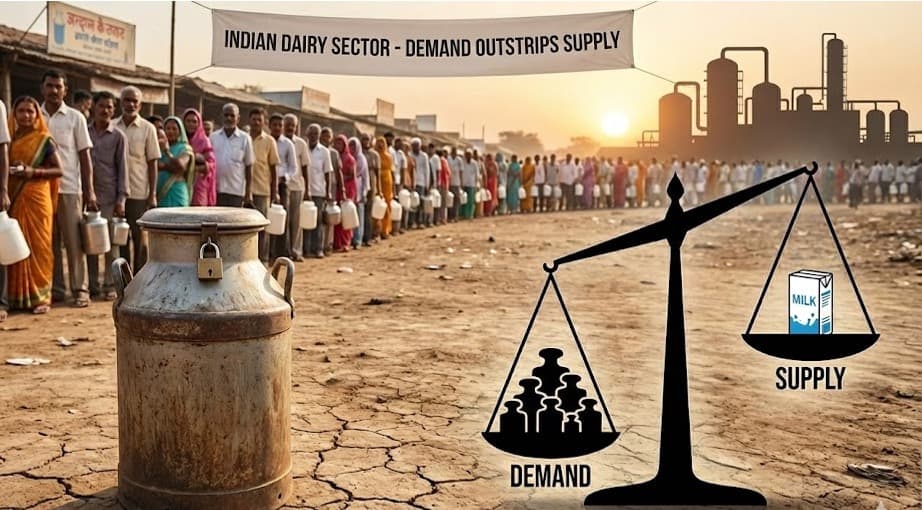
India’s dairy sector is confronting tightening milk supply and margin pressure as it heads into 2026, according to a Systematix Institutional Equities expert session. The industry, which saw a temporary surplus in late 2024–25, has now entered a phase of supply contraction following multiple disruptions.
Post-COVID challenges in 2022–23 saw milk prices fall below production costs, discouraging cattle induction and sharply reducing output. In response, cooperatives and private players later boosted farmers’ confidence with sustained fodder programs and engagement initiatives. These efforts produced a ~25% surge in milk production during the October 2024–March 2025 flush season, creating a short-lived surplus that dairy companies absorbed by expanding value-added product portfolios, enhancing cold-chain capacity, and ramping up marketing.
However, 2025 brought early and unseasonal rains that disrupted the typical summer milk supply cycle. Compounding this, geopolitical tensions — including conflict-linked disturbances in northern milk belts such as Punjab, Haryana, and Jammu & Kashmir — further constrained output. Strong festive season demand also depleted inventories, leaving only a limited surplus toward late 2025.
As a result, milk procurement costs have risen across regions even while retail product prices stayed relatively stable following a GST cut. Some states, including Bihar and Andhra Pradesh, reported regional price hikes of ₹1–1.5 per litre. Market participants anticipate potential procurement cost corrections around April 2026, coinciding with the Ramzan period.
The demand side has been reinforced by reduced prices and increased grammage post-GST cut, notably in small stock-keeping outlets, though this has squeezed margins due to channel disruptions and rising supply-chain costs. To restore profitability, several companies are now evaluating selective price increases or trimming high-volume strategies.
A significant structural trend emerging from the report is the shift toward value-added dairy products. Items such as curd, paneer, ghee, and ice cream are gaining traction, with ice cream demand expanding beyond traditional peak months. Consumers are increasingly choosing dairy over carbonated beverages as an impulse purchase.
Distribution dynamics are also evolving rapidly. Quick-commerce and e-commerce platforms are gaining share over traditional channels, while general trade is losing ground. Modern trade, although offering greater visibility, delivers lower margins, prompting dairy firms to strategically balance channel mix decisions.
Source : Dairynews7x7 Dec 28th 2025 ET