Latest Blogs
See More


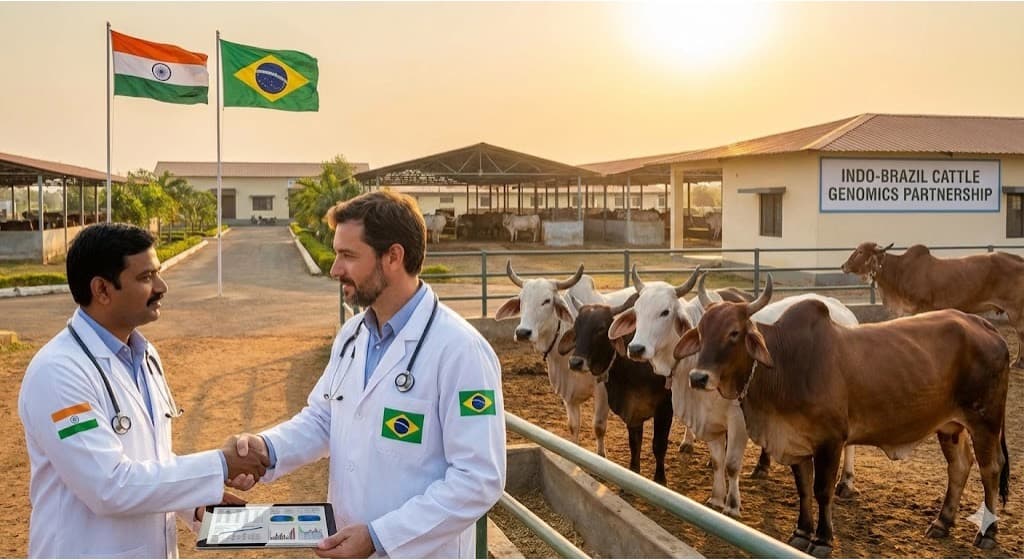
India and Brazil have stepped up cooperation in cattle genetics, aiming to leverage Brazil's advanced dairy-cattle breeding experience and India’s indigenous Zebu cattle heritage to improve milk yield and breed quality. The effort is led by ABCZ in Brazil and IFIZCI in India.
Under the collaboration, the two organisations plan to exchange genetic material (semen and embryos), share breeding-techniques, and set up modern genetic labs in India. These labs — proposed in Gurgaon (Haryana) and Gujarat — will offer services such as DNA-based testing, pedigree registration, and germplasm conservation at affordable cost, aiming to benefit small and marginal dairy-farmers.
As a first step, India’s National Dairy Development Board (NDDB) has reportedly placed orders for doses of semen from high-performing Brazilian bulls to inseminate native Indian cows — a move meant to boost milk production in indigenous herds. The collaboration also contemplates embryo-transfer and advanced assisted-reproductive technologies (ART), under relevant regulatory and phytosanitary frameworks.
Supporters say this partnership could address long-standing challenges in India’s dairy sector — low yield per cow, limited genetic improvement, and fragmented breeding infrastructure — by combining Brazil’s decades of breeding sophistication with India’s vast cattle population and heritage Zebu breeds (like Gir, Kankrej, Red Sindhi, etc.). If executed successfully, the collaboration could help raise per-animal yield, increase availability of high-quality milk, and strengthen the dairy supply-chain — benefiting both farmers and processors. However, the success will hinge on rigorous quality controls, transparent pedigree/registration systems, capacity-building among Indian breeders, and robust regulatory compliance.
Source : Dairynews7x7 Dec 11th 2025 Hindu Businessline and others