Latest Blogs
See More

India’s dairy industry — beyond being the world’s largest milk producer — is now being recognised as a strategic climate adaptation frontier where investments in resilience can protect both rural livelihoods and long-term food security. A recent analysis by Environmental Defense Fund (EDF) highlights how climate change impacts — including heat stress, water scarcity, fodder volatility and disease pressure — are already affecting milk yields and producer incomes, underscoring the need for climate-smart dairy systems. The blog positions India’s dairy economy not only as a mitigation challenge but also as a market opportunity to build adaptive capacities that strengthen both farmers and processors.
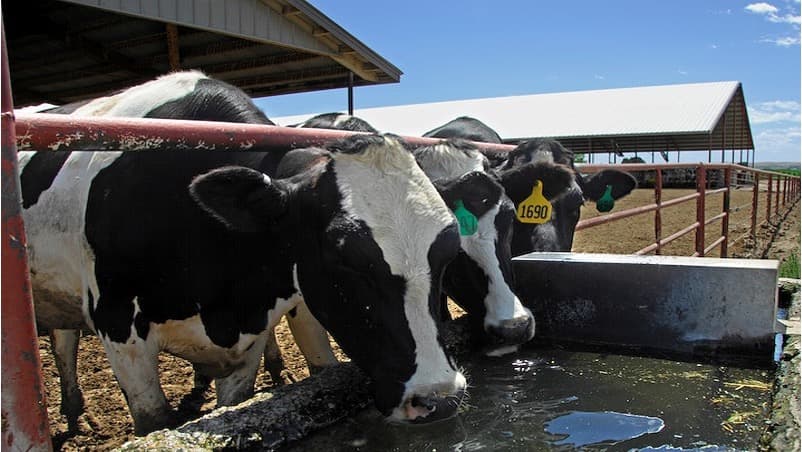
Heat stress is among the most significant climate risks for dairy, especially in the Indo-Gangetic Plains and central India. Rising temperatures reduce milk yield, affect reproduction, and increase metabolic stress in cattle, leading to 5–10% annual losses in some pockets. Temperature variability also exacerbates fodder shortages during lean seasons, compounding the vulnerability of smallholder producers who lack irrigation or drought-resilient forage systems. These climate realities directly translate into economic stress for farmers, higher production costs for processors, and episodic price volatility across input and output markets.
The EDF analysis emphasises that climate adaptation interventions — including shaded animal housing, precision water management, drought-tolerant forage varieties, and heat-resilient breeding — can significantly cushion productivity losses at the farm level. Broader adoption of climate-smart cattle management not only sustains milk yields but also reduces animal morbidity and improves feed efficiency. Such measures create value chain benefits by lowering unit cost of production and strengthening supply continuity — critical for both domestic consumption and export positioning.
The report also points to digital and data-driven tools as a key adaptation enabler. Mobile-based decision support systems, weather-indexed feed planning, and community-level climate risk mapping can empower farmers to make timely production decisions, particularly during heat waves or fodder stress periods. These technologies can also enable processors and cooperatives to anticipate supply disruptions and strengthen logistics, chilling infrastructure, and inventory buffers accordingly.
For India’s dairy export aspirations, climate adaptation is an emerging quality and reliability signal. International buyers — particularly in the EU, North America, and the Middle East — increasingly seek assurance on sustainability and climate resilience as part of procurement criteria. India’s adoption of climate adaptation frameworks thus becomes key not only for domestic resilience but also to unlock premium market access globally, especially for value-added products such as SMP, milk fat, and specialty ingredients.
A central message of the EDF commentary is that climate risk can be institutionalised as a business opportunity rather than a constraint. Investment in adaptation — from government schemes to private capital deployment — can yield dual benefits by protecting farmer incomes and strengthening the competitive footing of dairy processors. Climate-smart interventions can also align with India’s broader policy goals, such as improved fodder security, regenerative agriculture adoption, and sustainability reporting under global frameworks.
For India’s dairy sector — characterised by 8 crore smallholder producers and a strong cooperative foundation — climate adaptation must be inclusive, ensuring that resilience investments benefit the most vulnerable. Women, who play a central role in dairy production and household nutrition, stand to gain from climate-safe livestock practices, improved water access and enhanced fodder availability. Scaling these interventions nationally can safeguard milk yields, protect rural livelihoods and build an evidence-based model for climate-smart animal agriculture in emerging-market contexts.
In summary, the EDF perspective reframes India’s dairy sector from a climate risk victim to a climate opportunity platform — where targeted adaptation, technology adoption, and market alignment can protect producers, stabilise supply, and enhance competitiveness in a warming world.
Source : DAirynews7x7 Dec 20th 2025 Read full blog here