



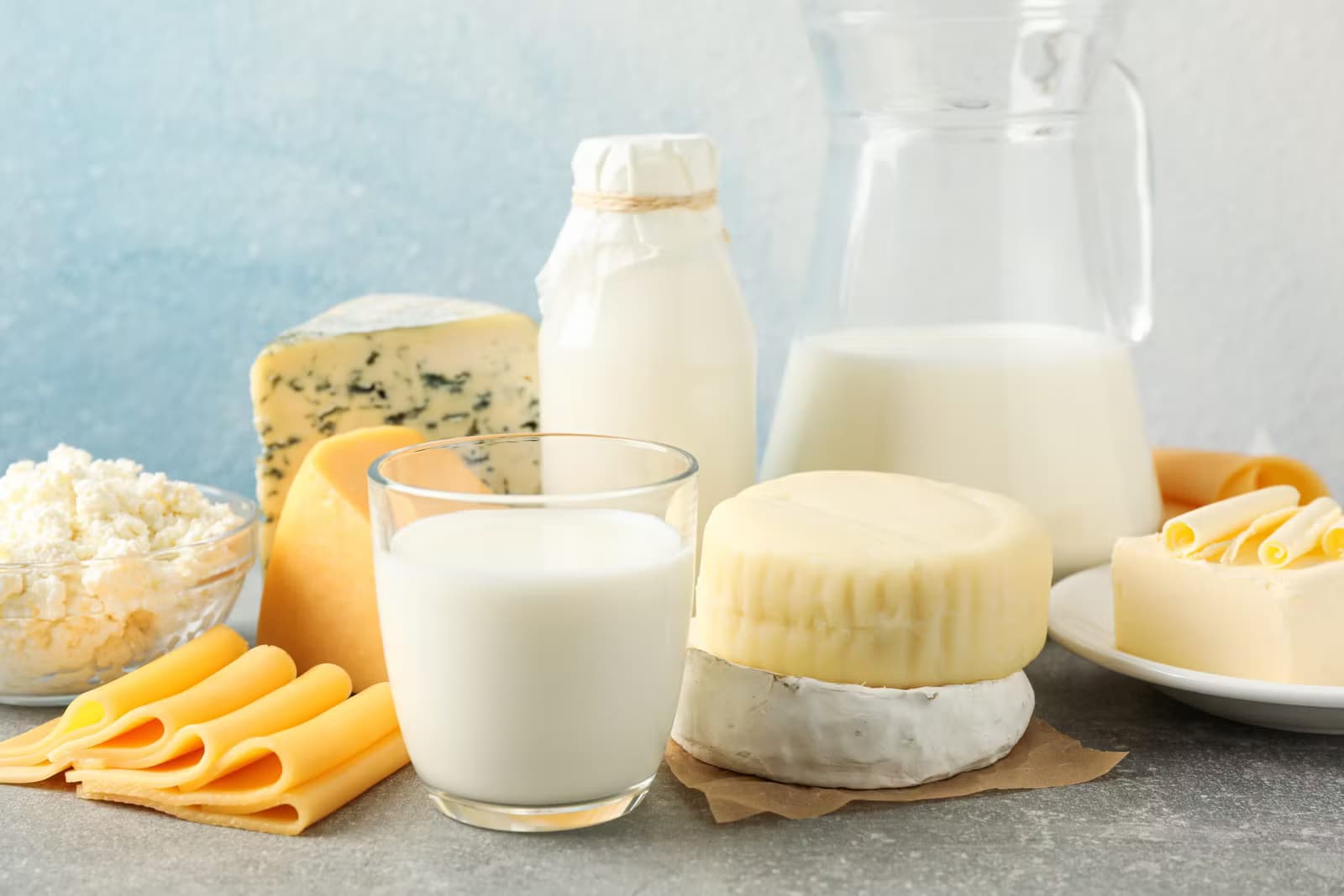







A higher intake of high-fat cheese and high-fat cream, but not low-fat dairy products, was associated with a lower risk for dementia, independent of lifestyle factors and overall diet quality, results of a large Swedish population-based study showed.
However, the investigators emphasized that the observational study design does not prove a causal link, and outside experts urged caution in interpreting the findings.
“For decades, the debate over high-fat vs low-fat diets has shaped health advice, sometimes even categorizing cheese as an unhealthy food to limit. Our study found that some high-fat dairy products may actually lower the risk for dementia, challenging some long-held assumptions about fat and brain health,” study investigator Emily Sonestedt, PhD, of Lund University in Lund, Sweden, said in a news release.
The study was published online on December 17 in Neurology.
Dairy and Dementia
The association between dairy intake and dementia risk remains uncertain, especially for dairy products with variable fat content, the investigators noted.To investigate further, they analyzed data from the Swedish Malmö Diet and Cancer cohort, which enrolled 27,670 adults (mean age, 58 years at entry, 61% women) who underwent a comprehensive dietary assessment at baseline between 1991 and 1996. During median follow-up of about 25 years, 3208 participants developed all-cause dementia.
In fully adjusted models, inverse associations of all-cause dementia with high-fat cheese and high-fat cream intake were observed (hazard ratios [HRs], 0.95 per SD increase for both).
Adults consuming ≥ 50 g high-fat cheese per day had a 13% lower risk for all-cause dementia (HR, 0.87) and a 29% lower risk for vascular dementia (HR, 0.71) than those consuming less than 15 g high-fat cheese per day (> 20% fat).
Consuming at least 20 g of high-fat cream per day (> 30% fat) was associated with a 16% lower risk for all-cause dementia (adjusted HR, 0.84) than no consumption. When modeled as a continuous variable, high-fat cream intake was inversely associated with the risk for AD and vascular dementia.
In contrast, intake of low-fat cheese, low-fat cream, milk (high-fat and low-fat), fermented milk (high-fat and low-fat), and butter showed no association with all-cause dementia. However, high butter intake (≥ 40 g/d) was associated with a higher risk for AD (HR, 1.27).
Genetic susceptibility modified some associations. Among APOEε4 noncarriers, higher intake of high-fat cheese was associated with a lower risk for AD (adjusted HR, 0.87), whereas no significant association was observed among ε4 carriers.
The researchers said these findings are align with findings from a Finnish cohort study, which showed a lower risk for dementia with higher cheese intake (quartile 4 vs quartile 1: HR, 0.72), and a UK Biobank study which showed a lower risk with higher intake frequency (once a week vs no consumption: HR, 0.81).
Furthermore, four cross-sectional studies from Japan, Netherlands, or the UK also consistently showed that higher cheese intake was associated with better cognitive function in older adults, they noted.
“Our study strengthens and extends previous evidence with the longest follow-up period to date and a large number of dementia cases, suggesting that the observed inverse association was mainly driven by cheese with higher fat content,” the authors wrote.
They cautioned that more research is needed to confirm the results and further explore whether consuming certain high-fat dairy truly offers some level of protection for the brain.
One of the study’s limitations was that participants were all from Sweden, a country where raw cheese is often, whereas in the US, cheese is often heated or eaten with meat.
Caveats, Cautionary Notes
In an accompanying editorial, Tian-Shin Yeh, MD, MMSc, PhD, with Harvard T. H. Chan School of Public Health, Harvard University, Boston, cautioned that dietary intake was assessed only once at baseline, which may not reflect long-term dietary habits over the 25-year follow-up.Importantly, in a sensitivity analysis restricted to participants who reported no major dietary changes during the first 5 years, designed to assess the influence of potential changes in diet over time, the associations for both high-fat cheese and cream became nonsignificant, “raising questions about the robustness of their conclusions,” Yeh pointed out.
She noted that mounting evidence suggests that brain-protective diets are defined not by a single food group, but by patterns rich in plant-based foods, particularly colorful fruits, and vegetables abundant in phytochemicals such as flavonoids, and plant proteins from beans and legumes, together with healthy fats.
“Ultimately, advancing public health requires that we move beyond simplistic ‘good food/bad food’ labels and instead embrace dietary patterns that prioritize moderation and strategic substitutions to promote and enhance cognitive health,” Yeh wrote.
Two experts shared their concerns about the study in a statement from the UK nonprofit Science Media Center.
“I do not believe there is a causal link here, as this is an observational study rather than a randomized controlled trial,” said Naveed Sattar, MBChB, PhD, professor of cardiometabolic medicine, University of Glasgow, Glasgow, Scotland.
Sattar said it’s important to note that individuals who consumed more high-fat cheese and cream were better educated, on average, raising the possibility of residual confounding, “whereby other ‘healthy’ characteristics associated with higher education, rather than the cheese or cream itself, may explain the lower dementia rates observed.”
“We already know of several well-established and proven factors that reduce dementia risk, such as maintaining healthy blood pressure, managing weight, and preventing heart disease or stroke. These interventions should remain the priority, given their strong evidence base, rather than focusing on unproven dietary associations,” Sattar said.
Tara Spires-Jones, PhD, director of the Centre for Discovery Brain Sciences at The University of Edinburgh, Edinburgh, Scotland, agreed.
“Strong evidence from across the field indicate that healthy diet, exercise, and cognitively stimulating activities (education, challenging jobs, and hobbies, etc.) can boost brain resilience to diseases that cause dementia. There is no strong evidence for any individual food protecting people from dementia,” she said.
The study was supported by Swedish Research Council, Swedish Heart and Lung Foundation, Crafoord Foundation, Magnus Bergvall Foundation, and Albert Påhlsson Foundation. Sonestedt, Yeh, Spires-Jones, and Sattar had no relevant disclosures.