Dairy Firms Shift Up the Value Chain for Better Returns
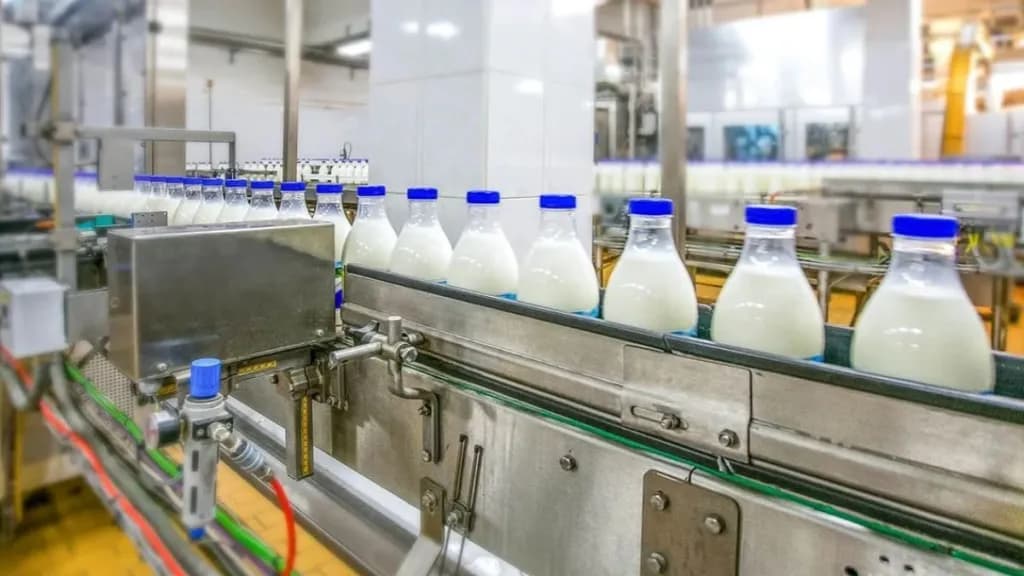
India’s dairy industry is increasingly moving beyond its traditional volume engine—liquid milk—as companies pursue higher-value categories such as cheese, paneer, yoghurt, ghee, ice cream and protein-led products. Rising health awareness, urbanisation and the convenience economy are accelerating this shift, while intense price competition continues to make basic liquid milk a relatively low-return business.
The opportunity is to generate more value from the same milk through deeper processing, while longer shelf life can help companies manage seasonal milk gluts and procurement-price volatility. Products such as cheese, paneer, whey and specialised dairy formats can deliver substantially higher realisation from milk solids than liquid milk.
Milky Mist Dairy Food is a prominent example of this strategy. CEO and Whole-time Director K. Rathnam said the company is a “100% value-added company” with no liquid milk in the market; its portfolio includes paneer, cheese, Greek yoghurt and high-protein products. The company listed at an 18% premium, while its FY26 revenue rose 34% year-on-year to ₹3,138 crore and net profit surged 175.7% to ₹127.01 crore.
Rathnam said the overall dairy industry is growing at around 12–20% in value terms, while Milky Mist is growing at more than 30%, supported by approximately 25–30% volume growth and value growth above 30%.
According to Akshali Shah, Executive Director at Parag Milk Foods, converting milk into protein derivatives can generate roughly 1.5–3 times higher value, while cheese and whey can deliver margins of around 25–45%. Parag plans to double its cheese-making capacity to 120 tonnes per day by FY28, expand whey production and grow its Avvatar sports-nutrition business; its new-age portfolio, including Avvatar and Pride of Cows, grew 59% year-on-year to ₹118 crore in Q1 FY27.
Heritage Foods is following a portfolio approach in which liquid milk remains the foundation for procurement, consumer reach and distribution, while value-added products act as the margin engine. Industry veteran R.S. Sodhi noted that fresh dairy products—including milk, curd, buttermilk and fresh paneer—still account for the bulk of organised consumption, but expects value-added categories to grow faster, supported by lower GST rates and the shift from unorganised to organised, branded dairy consumption.
Premiumisation is another growth layer. Mother Dairy Managing Director Jayatheertha Chary said consumers are increasingly seeking differentiated products and experiences, with the company’s premium ice-cream offerings already contributing around 10% of its ice-cream business.
Modern infrastructure is enabling the transition, with better cold chains, modern processing, UHT technology and aseptic packaging helping extend shelf life and take specialised dairy products beyond traditional geographic markets. E-commerce and quick-commerce are also improving access to premium and niche dairy products, although protein-led products require consistent milk quality, sophisticated processing and reliable cold chains, while affordability remains a challenge in India’s price-sensitive market.
The larger industry message is clear: India’s dairy opportunity is not simply about selling more milk—it is about extracting more value from every litre while using liquid milk as the foundation for a broader, higher-margin portfolio. (The Financial Express)
Source: Dairynews7x7 25 Aug, 2026 Read full story here
#DairyIndustry #ValueAddedDairy #DairyProcessing #ProteinFoods #DairyBusiness #IndianDairy #DairyNews7x7