Latest Blogs
See More

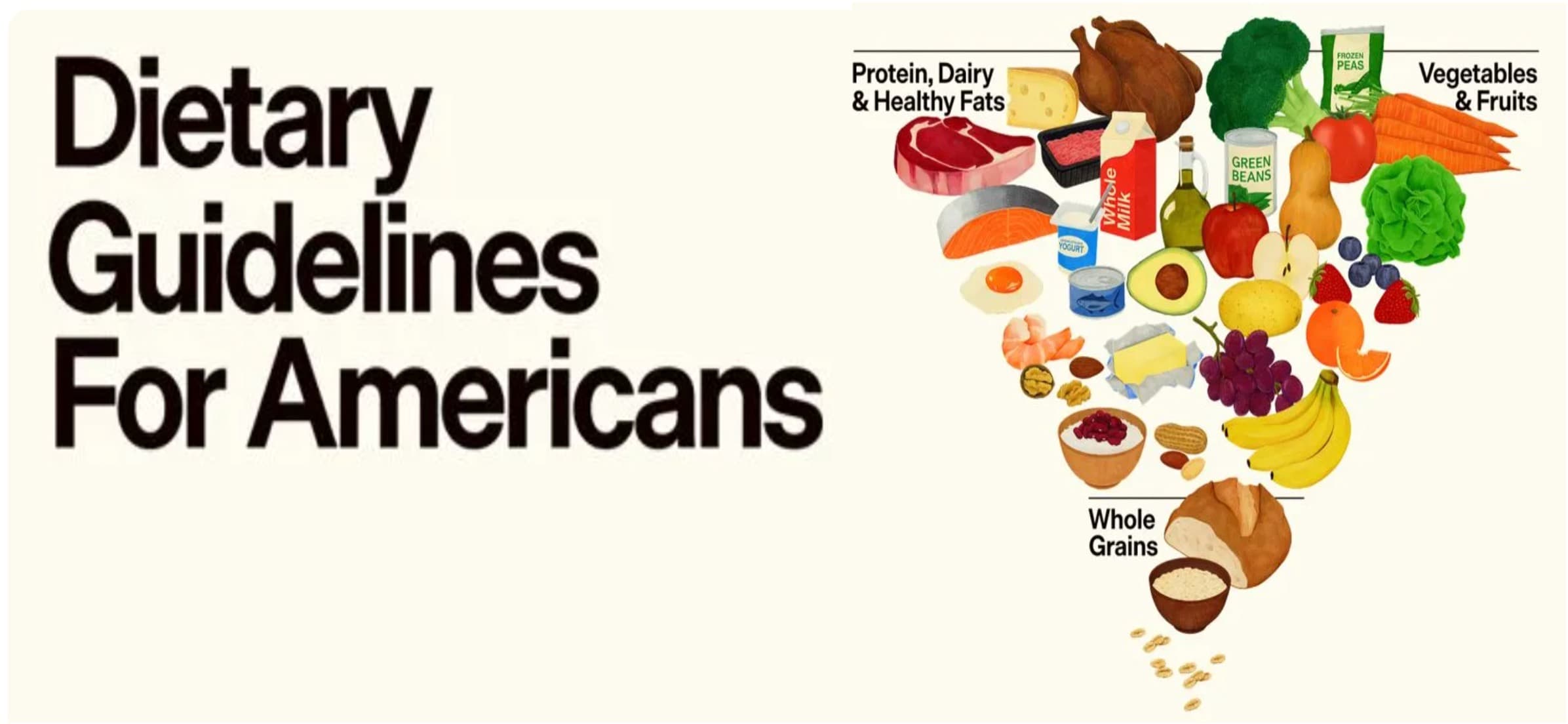
The newly released 2025–2030 U.S. Dietary Guidelines, unveiled by Health Secretary Robert F. Kennedy Jr. and the Department of Agriculture, represent a major shift in federal nutrition policy, placing meat, full-fat dairy, protein and healthy fats at the top of an inverted food pyramid, while strongly discouraging highly processed foods and added sugars as part of a broader “eat real food” approach.
Under the updated model, protein intake is emphasised at 1.2–1.6 g per kilogram of body weight per day, sourced from animal and plant foods, with full-fat dairy products such as whole milk, cheese and yogurt positioned as key components of a healthy diet—departing from previous guidance that favoured low-fat options. The visual “upside down” pyramid places these nutrient-dense foods, along with vegetables and healthy fats like olive oil and even butter, above grains, marking a significant departure from earlier dietary frameworks and the MyPlate model.
Officials say the guidelines seek to reverse decades of dietary emphasis on ultra-processed carbohydrates and low-fat messaging, arguing that focusing on whole, less processed foods will improve public health outcomes given high obesity and chronic disease rates in the U.S. Critics, including some nutrition researchers, have expressed concern that this approach elevates saturated fats and red meat beyond established evidence and may conflict with longstanding heart health recommendations, even though the guidelines still recommend keeping saturated fat intake below about 10 % of daily calories.
The inclusion of dairy at the top of the food pyramid could influence institutional nutrition programmes, school meals and federal food assistance policies in the coming years, while sparking broader debate over dietary science and the role of animal-based foods in health guidance.
Source : Dairynews7x7 Jan 9th 2025 Read full story here