Latest Blogs
See More

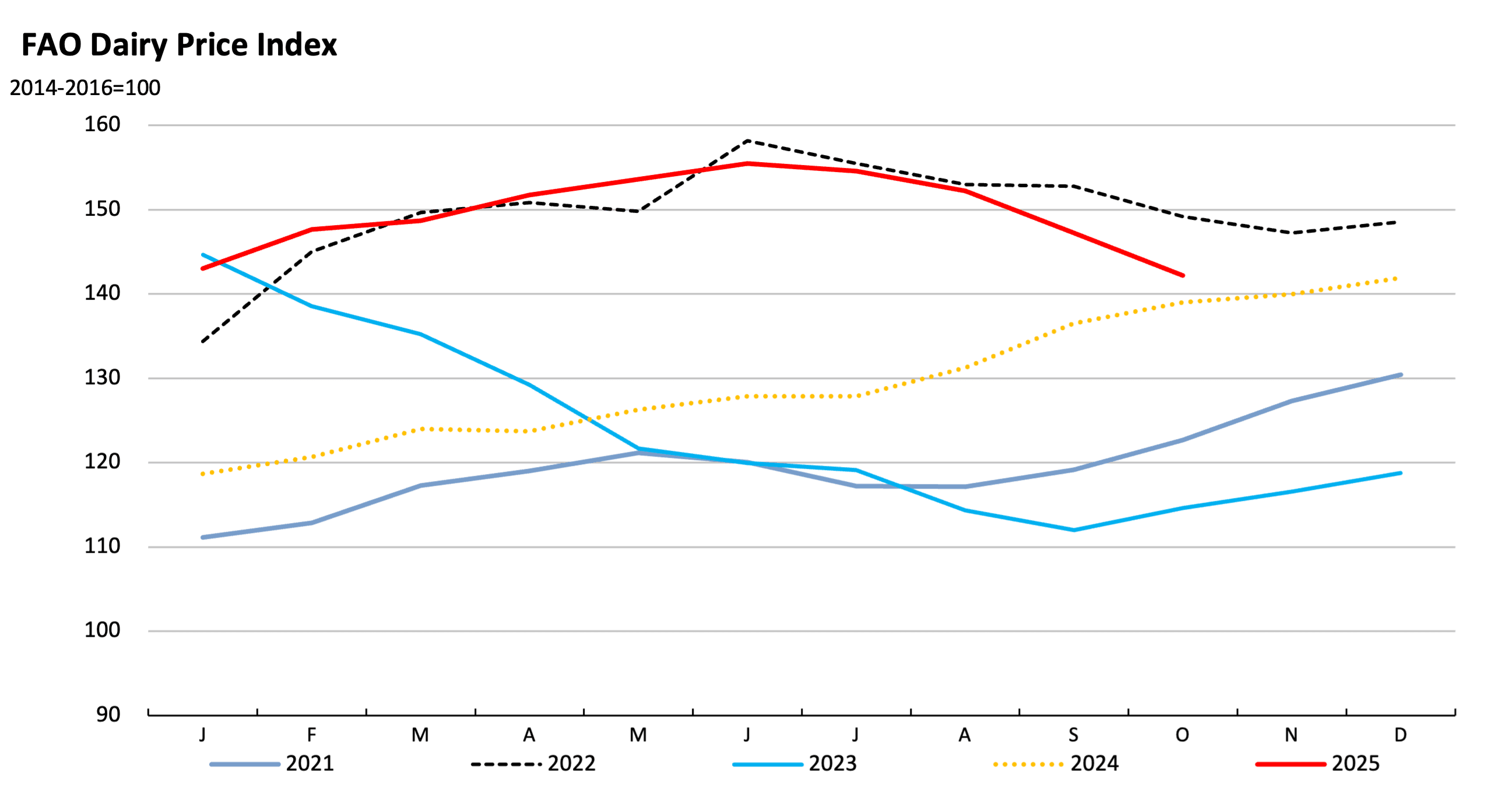
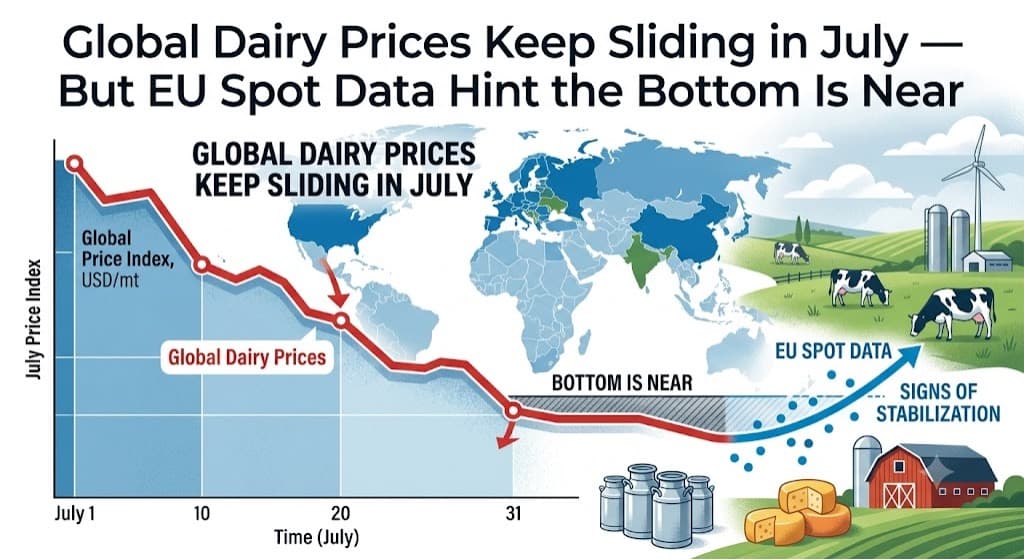
The FAO Dairy Price Index averaged 142.2 points in October 2025, down 5.0 points (3.4 percent) from September, marking the fourth consecutive monthly decline. Despite this decline, the index remained 2.7 percent above its level a year earlier. All sub-indices dropped – butter fell by 6.5 percent, whole milk powder by 6.0 percent, skim milk powder by 4.0 percent, and cheese by 1.5 percent. The continued decline in the butter price index largely reflected ample export availabilities from European Union and New Zealand, as moderate seasonal temperatures boosted milk production amid weaker import demand from Asia and the Middle East. Milk powder quotations also fell due to limited demand and strong export competition. The cheese price index declined only slightly, as modest easing in the European Union—where milk supplies remain adequate and export demand subdued—was partly offset by firmer prices in Oceania, supported by solid Asian orders and tighter early-season supplies.
The FAO Dairy Price Index recorded a decline in October 2025, reflecting easing global dairy market conditions. The fall was primarily driven by ample export availability from major producing regions such as the European Union and New Zealand, which increased shipments of butter and whole milk powder into already well-supplied markets. This intensified competition among exporters and led to downward pressure on prices. At the same time, import demand from key buyers in Asia and the Middle East weakened as inventories remained comfortable and purchasing slowed ahead of the winter season.
Favourable seasonal conditions in major dairy belts further supported steady or higher milk production, adding to global supplies of skim and whole milk powders. According to FAO data, all major product sub-indices slipped during the month — butter by 6.5%, whole milk powder by 6%, skim milk powder by 4%, and cheese by around 1.5%. Together, these movements pulled the overall dairy price index lower for the second consecutive month.
For India, the decline indicates a softer international environment that could compress export margins on fat-based commodities but also relieve cost pressures on imported feed and ingredients. It underscores the need for Indian processors and cooperatives to focus more on value-added and branded dairy exports rather than competing purely on commodity prices in a volatile global market.
Source : Dairynews7x7 Nov 9th 2025 FAO dairy price index