Latest Blogs
See More


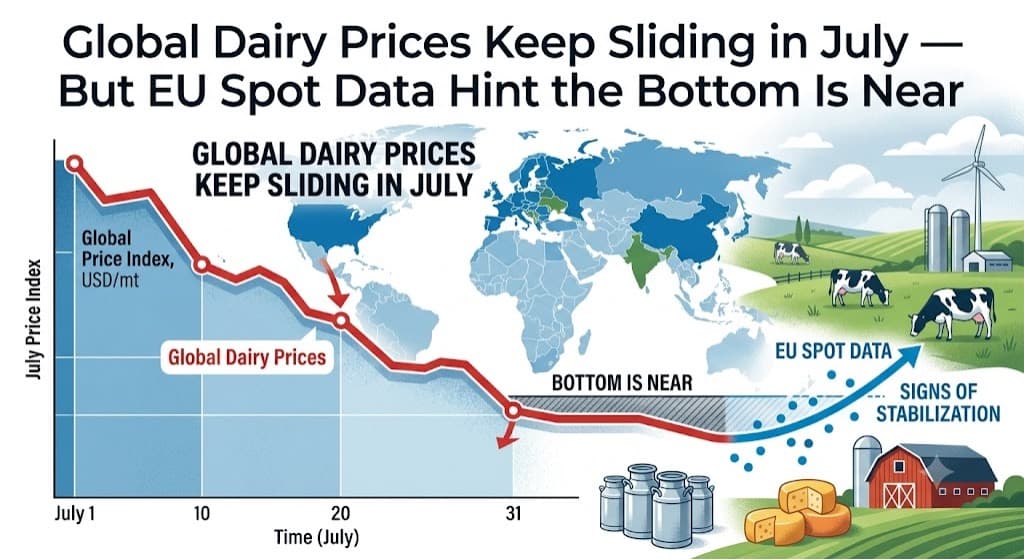
As 2026 approaches, dairy markets are signaling heightened stress due to oversupply and weak price signals, with key industry voices urging producers to prepare for tighter returns next year. According to Agriland’s agriculture outlook, a series of expert assessments — including commentary from leading cooperatives and processors — highlight that global milk markets are now “grossly over-supplied”, a condition expected to weigh heavily on farmgate returns throughout 2026.
Dale Farm’s chief executive Nick Whelan has indicated that, based on current market dynamics, milk prices are headed “below cost of production” in 2026, underscoring the disconnect between supply volumes and demand fundamentals. Meanwhile, Ornua has noted that although demand typically picks up in the second quarter of the year, milk price improvement hinges on a tightening of milk supply, as surplus volumes continue to pressure markets. Industry leaders like Leprino Foods Europe’s Paul Vernon similarly stress the need for significant supply adjustments before farmgate returns can rise meaningfully.
These concerns reflect broader global dairy trends which see production outpacing demand across major export regions, contributing to downward pressure on dairy commodity prices such as butter, cheese and skim milk powder — trends visible in late-2025 price data. Teagasc forecasts also point toward a challenging year ahead for dairy farmers, with Irish milk prices potentially down more than 20% in 2026 compared to 2025 averages, driven by international supply pressures and ongoing volatility.
At the producer level, dairy farm incomes are expected to be significantly lower next year, with Teagasc analyses suggesting average Irish dairy farm income could fall by around 42% in 2026 compared with 2025, reflecting reduced net margins as base prices decline and production costs remain elevated. Teagasc also projects dairy net margins per litre could drop to roughly 11.5c/L, highlighting the tight economic conditions many farms will face unless global pricing dynamics improve.
While long-term demand fundamentals for dairy — particularly protein consumption in emerging markets — remain constructive, the near-term outlook for producers is one of price weakness and margin compression. Industry stakeholders have emphasised strategic response options, including cost control, supply management, and focus on value-added dairy products to help offset raw milk price volatility.
In summary, the dairy sector’s 2026 trajectory is being shaped by global oversupply, subdued commodity prices, and the pressing need for supply-demand rebalancing — a scenario that could redefine farm profitability and strategic priorities in the coming year.
Source : Dairynews7x7 Dec 2025 Agriland