Latest Blogs
See More

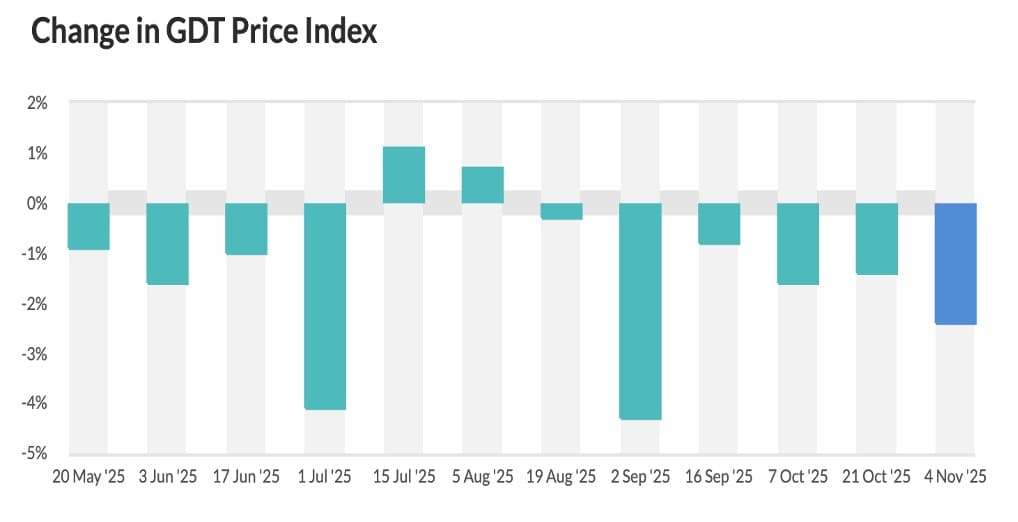
Global Dairy Trade’s Event 391 (4 Nov 2025) extended the recent soft patch in international dairy prices — the GDT Price Index fell 2.4% on the event, with the weighted average price at US$3,768/tonne and 39,508 tonnes sold. The move was broad-based: Whole Milk Powder (WMP) eased 2.7%, the Butter index lost 4.3% to USD 6371/MT, Anhydrous Milk Fat (AMF) declined 1.9% and Cheddar fell 6.6%. Volumes were concentrated in powders but overall trade at the auction showed weaker bidding versus recent events.
The commodity price detail underlines the tone: WMP traded around US$3,503/t (weighted average) across contracts on the event, while AMF averaged near US$6,887/t (all-contracts average) and Butter milk powder around US$2,808/t — each registering mid-single to high single-digit percentage declines versus the previous auction. SMP remained stable at USD 2559/MT. Buyers remained selective, in line with a softer demand backdrop from key Asian and North African buyers and with abundant exportable milkfat and powder availability from Oceania and South America.
What drove the fall? Two forces: supply momentum and cautious buying. Southern Hemisphere milkflows remain strong through spring production in New Zealand and Australia; processors are working through commodity stocks, which keeps selling pressure on bulk powders and butterfat. At the same time, buyers — already cautious after recent price falls — reduced aggression at the auction, preferring to buy incrementally rather than chase higher offer prices. Market commentators noted this was the fifth consecutive softening wave in GDT indices, signalling a persistent oversupply vs. immediate demand balance.
Outlook for Q4 2025 (Nov–Dec) — cautious, range-bound with downside risk.
• If Southern Hemisphere milk output remains elevated, inventories will continue to pressure powders and fat prices — keeping WMP and AMF under downward pressure.
• Ethanol/grain markets and feed costs are unlikely to lift dairy commodity buying materially in the immediate term; buyers will remain price-sensitive into December.
• Expect intermittent rallies only if a major buyer steps in (large tender or state procurement) or weather shocks reduce milk flows. Otherwise, Q4 appears set for range-bound to modestly lower prices with episodic volatility around auction dates.
Industry takeaways: processors and exporters should prepare for thin margins on commodity lines and prioritise product differentiation (specialty/ethnic cheeses, branded powders, value-added ingredients) over bulk commodity exposure. For buyers and feed-dependent sectors, lower commodity prices ease raw-material costs but they should monitor quality-grade spreads (high-quality feed-grade WMP vs. lower-grade offers) and logistic bottlenecks that can create localised price divergence. In short — trade remains active, but the momentum is with sellers working stocks rather than buyers expanding demand.
Source : DAirynews7x7 Nov 5th 2025 GDT and other sources