Latest Blogs
See More


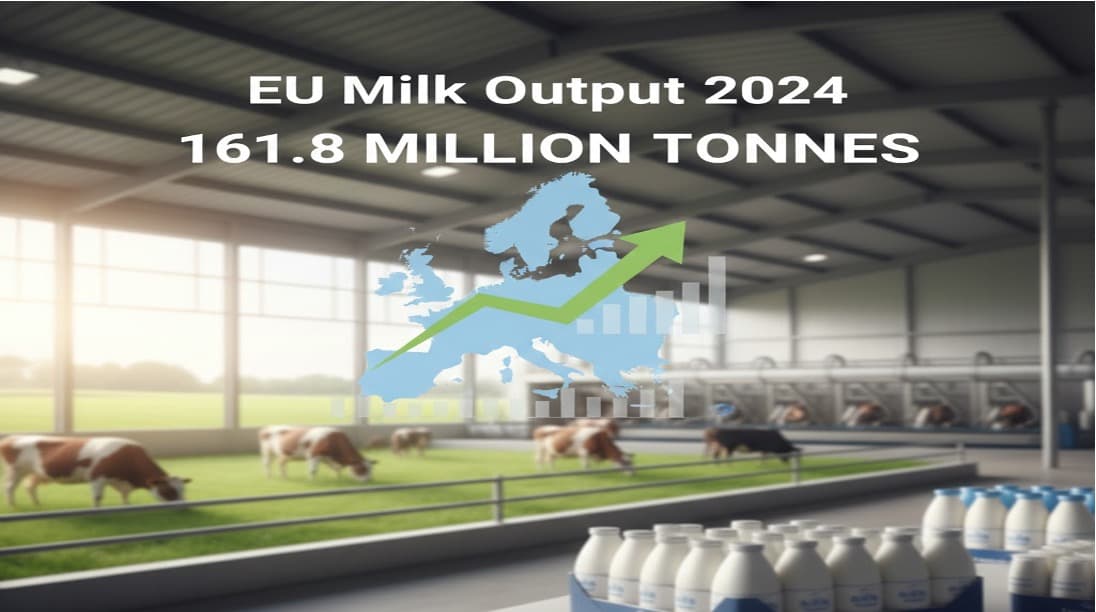
According to Eurostat, farm production of raw milk in the European Union reached 161.8 million tonnes in 2024 — up by 0.9 million tonnes from 2023 and up by 12.1 million tonnes since 2014.
Out of that total, roughly 150.8 million tonnes were delivered to dairies, where they were used to produce dairy products.
Specifically, about 59.9 million tonnes of whole milk and 17.0 million tonnes of skimmed milk were used to produce approximately 10.8 million tonnes of cheese.
Also noted: 44.2 million tonnes of whole milk were used for butter and “yellow products” (butter-oil/rendered butter), and this generated 41.5 million tonnes of skimmed milk as a by-product.
In country-level shares: Germany led drinking milk production (~18.8% of EU), followed by Spain (~15.2%) and France (~12.7%). Also, for cheese & butter production, Germany, France and Ireland had leading shares.
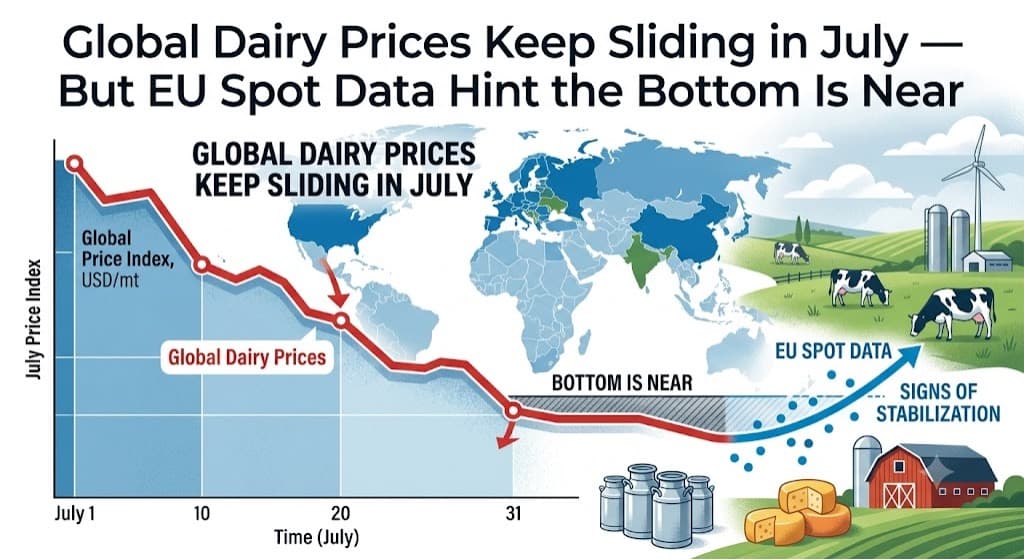
The growth in EU milk output reflects steady supply growth, which may exert pressure on global milk and dairy commodity prices.
Use of milk for cheese and value-added products (in large volumes) shows shift in processing pattern — an insight for emerging markets (including India) to diversify into value-added dairy.
For global dairy trade, increased EU output can influence export flows, commodity prices (butter, skimmed milk powder, cheese) — meaning Indian exporters/processors should keep an eye on these trends.
From a strategy viewpoint: India’s dairy sector (co-ops, private dairies) can benchmark against processing patterns in mature markets like EU to identify new value-added portfolios and risk of surplus.
In 2024, EU agrifood exports reached €235.4 billion, where dairy products accounted for €19.7 billion (~8% of total agrifood exports).
Milk-market situation factsheet: EU dairy exports (milk-equivalent terms) measured in millions of tonnes; value of exports exceeded €6.63 billion (for certain dairy commodity flows) in recent data.