Latest Blogs
See More

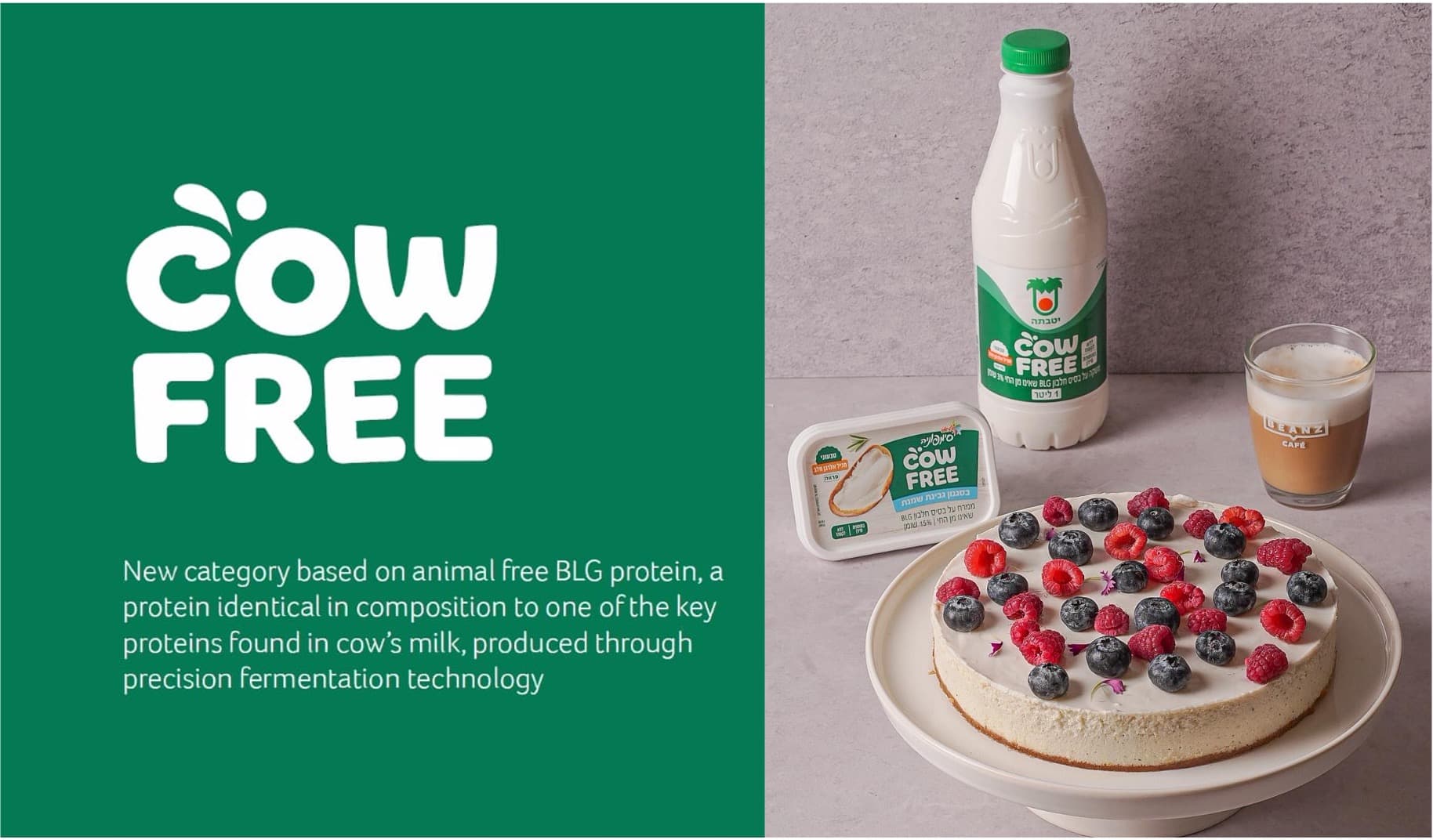
Cow Free — Strauss Group’s animal-free dairy line made via precision-fermentation — launched in Israel in September 2025 and comprises a dairy-style beverage and a spread/cream-cheese alternative, produced using dairy protein (BLG) derived from yeast or fungi instead of cows.
According to the company, everything released so far has sold out, indicating early consumer acceptance.
Strauss insists that Cow Free delivers similar taste, texture, nutritional profile and functional properties to traditional dairy — with the added advantages of being lactose-free, cholesterol-free, and more climate-friendly (less resource-intensive production).
Cow-free dairy offers a compelling alternative for vegans, lactose-intolerant consumers, and those seeking sustainable dairy options, combining dairy-like protein structure with a cleaner supply chain.
By manufacturing dairy proteins via fermentation rather than animal agriculture, Cow Free can significantly reduce environmental footprint — lower water usage, methane emissions, land use and feed requirements compared to traditional dairy.
The success of Cow Free’s initial market test sends a clear signal: “cow-free” dairy is moving from lab-scale curiosity to commercial possibility, potentially reframing how we think about “milk” and “dairy.”
For traditional dairy stakeholders — farmers, cooperatives, processors — this development matters. Over time, if cow-free dairy scales up globally, it could influence demand for conventional milk, feed grains, input sourcing and supply-chain dynamics.
According to Strauss CEO Shai Babad, although everything launched has sold, the total volume is still very small, so it is too early to draw broad conclusions about long-term demand or market stability. The main bottleneck is protein supply: the precision-fermentation derived BLG protein — the core input — is currently available only in limited quantities, restricting output scale.
As a result, the company has put expansion plans on hold until production capacity increases and more protein becomes available, signalling a cautious, phased approach rather than a full-scale dairy industry disruption overnight.
Moreover, as of now this trend is localized — such products are seen in a few markets (like Israel), and regulatory, cost, and consumer-education challenges remain before widespread global adoption.
Whether Strauss (or other food-tech firms) manage to scale up fermentation capacity, open new facilities, and unlock production volumes needed for commercial viability.
How consumers respond over time — repeat purchases, broader product acceptance (like yogurt, cheese, desserts), and price sensitivity.
How traditional dairy industries — milk producers, cooperatives, feed-grain suppliers — adapt if “cow-free” becomes a meaningful market segment.
Regulatory developments globally that may ease (or hinder) rollout of lab-based dairy products.