Latest Blogs
See More


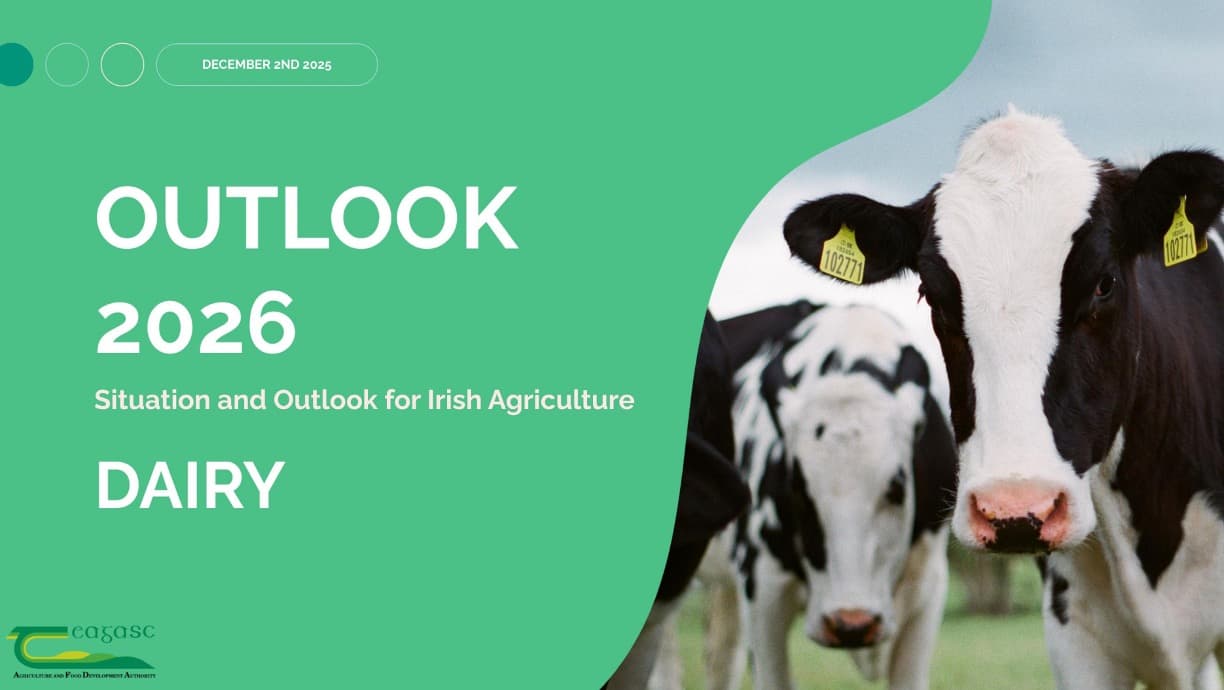
Weaker milk prices, elevated costs and global market uncertainty mean that Irish dairy farmers are facing into a more challenging year in 2026.
That’s according to Dr. Emma Dillon, Senior Research Officer and Economist with the Teagasc National Farm Survey who addressed the recent Teagasc Outlook 2026 Conference, and presented a paper co-authored with Trevor Donnellan, Head of the Agricultural Economics and Farm Surveys Department, Teagasc.Dr. Dillon highlighted the importance of the global supply and demand context, noting that 2025 marked a year of significant production growth worldwide. Irish milk production is estimated to increase by 4-5% in 2025, EU production up slightly, less than 0.5%, while other key exporting regions such as the US and New Zealand are also expected to publish production increases.
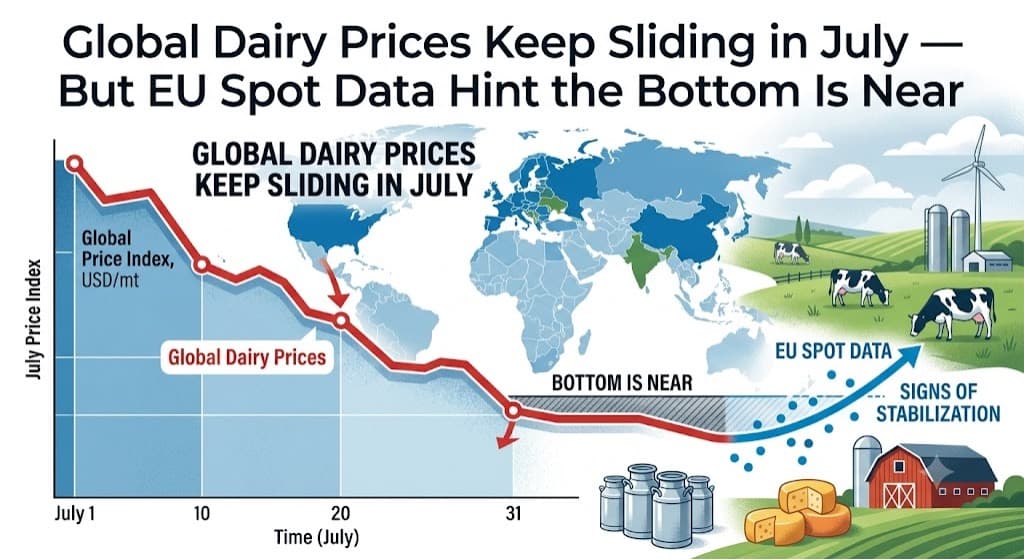
As a result of this increased supply, Dr. Dillon explained, global dairy commodity markets have been under downward pressure in recent months.
This volatility fed directly into milk price movements this year. Irish milk prices are estimated to have risen by about 3% year-on-year in 2025, but Dr. Dillon stressed the sector’s reliance on commodity markets: “When those markets are performing well, the Irish milk price will do well. When they are in difficulty, we are in difficulty.”

Dr. Emma Dillon presenting at the Teagasc Outlook 2026 Conference
Driven largely by the global trade imbalance, ongoing geopolitical and economic uncertainty, along with oversupplied markets, Dr. Dillon provided a forecast for Irish dairy farms for the year ahead: “We are expecting more moderate supply growth in 2026, with lower prices anticipated in the first half of the year,” Dr. Dillon said. “It is very difficult to pinpoint when prices will recover.”
For her forecast on margins for the year ahead, Dr. Dillon used an average Irish milk price of 42c/L (actual constituents) or 37c/L (base price), with production expected to remain stable and costs sticking to their elevated levels. Overall, the Teagasc economist forecast that the average dairy farm net margin would fall to €1,500/ha or lower in 2026, with the net margin per litre forecast to dip to 11.5c/L. However, increased returns from calf and cull cow sales are expected to buffer dairy farmers somewhat from lower market prices, especially in the early half of the year.
Dr. Dillon concluded her presentation by explaining that the Irish dairy sector remains highly exposed to swings in global commodity prices due to the relatively inelastic nature of dairy demand and the slow supply response possible within the sector. However, she noted that the medium to long term prospects look favourable, driven by expected global growth in protein demand and strengthening economic conditions in Southeast Asia, though challenges around inflation and cost of living persist.
For dairy farmers preparing for the year ahead, Dr. Dillon reinforced the messaging from the recent Teagasc National Dairy Conference on cost control and benchmarking.
“Dairy farm incomes need to be viewed in the context of almost 1.9 labour units per farm (1.4 labour units being family labour),” Dillon noted. “Benchmarking costs, controlling overheads, stress-testing cash flow and maintaining liquidity will be essential in the year ahead.”
Source : Dairynews7x7 Dec 15th 2025 Teagasc