Latest Blogs
See More
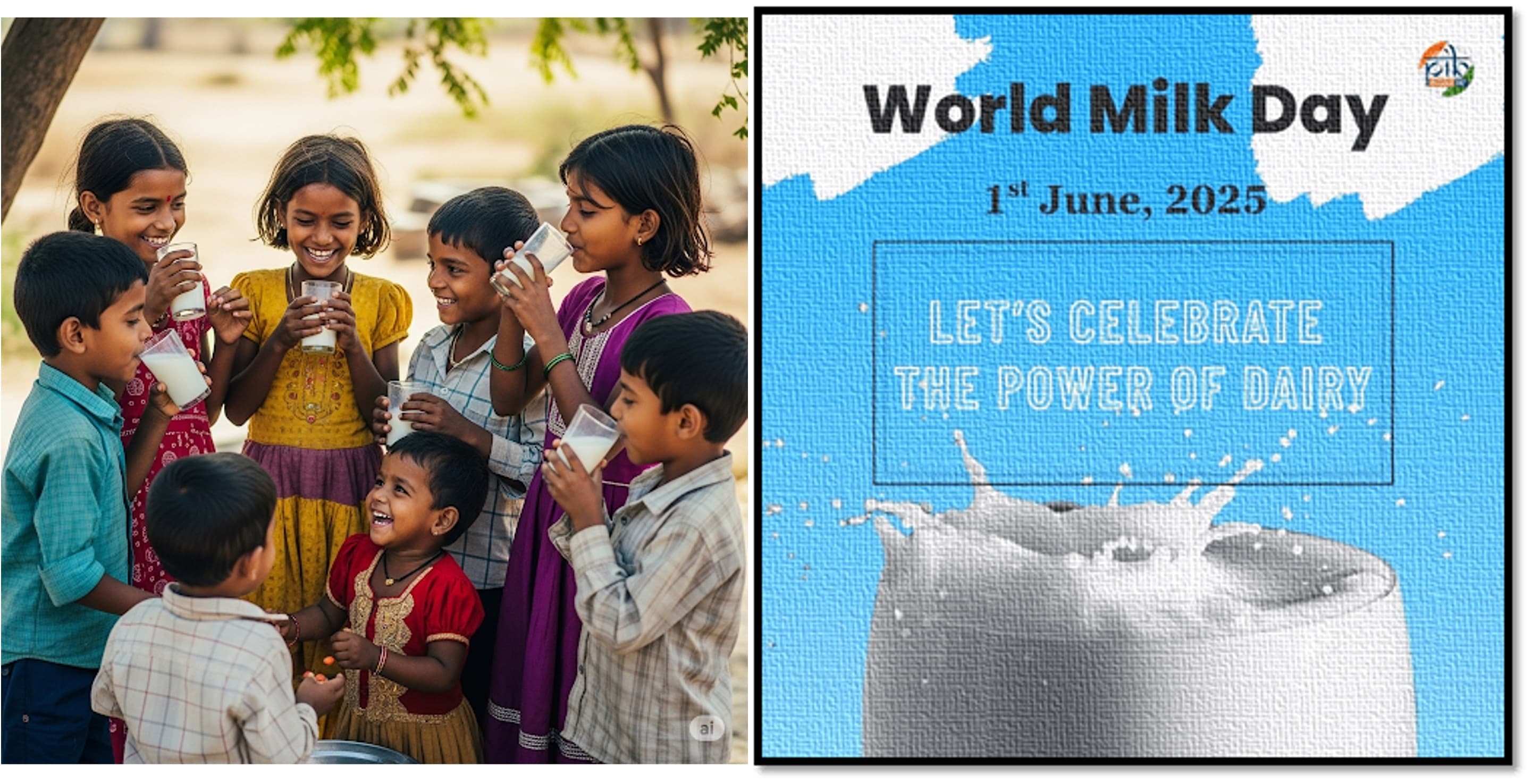
Introduction From the first drop a baby tastes to the energy boost an athlete needs; milk stays with us through every stage of life. Rich in calcium, protein and essential nutrients, this simple white liquid plays a big role in building strong bones, boosting immunity and supporting overall health. Recognising its immense value, the world comes together every year on June 1 to celebrate World Milk Day. It's a day to honour not just a drink but a symbol of nourishment, livelihood for millions of dairy farmers and a key part of our everyday diet.
Recognizing Milk's Global Significance
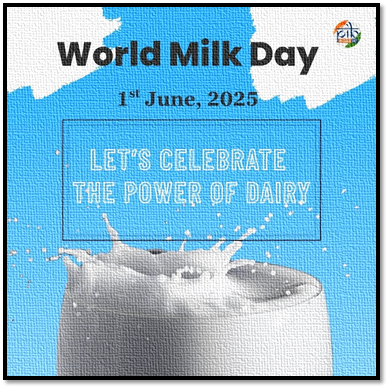
Recognizing just how essential this simple white liquid is, the Food and Agriculture Organization (FAO) of the United Nations declared June 1 as World Milk Day back in 2001. Since then, this day has been celebrated globally to acknowledge milk’s importance as a universal food.
Every year, World Milk Day shines a spotlight on the multiple roles dairy plays:
From Milk Deficit to Dairy Powerhouse
Today, India is a global leader in milk production but it wasn’t always like this. At Independence, the country faced a severe milk shortage. It produced less than 21 million tonnes annually. Per capita milk availability was only 124 grams per day in 1950-51.
A major turning point came in 1965 when the National Dairy Development Board (NDDB) was created. Dr. Verghese Kurien, known as the Father of the White Revolution, was appointed to lead it.
This laid the foundation for Operation Flood (1970–1996), one of the world’s largest rural development programs. By the end of Operation Flood:
This started a big change in India’s milk industry. India’s dairy sector grew fast and became important both nationally and globally.

In 2023-24, Uttar Pradesh was the top milk-producing state. It contributed 16.21 percent of India’s total milk output. West Bengal showed the fastest growth in milk production. It recorded a growth rate of 9.76 percent compared to 2022-23.
A notable aspect of India's dairy industry is the substantial involvement of women, with 35 percent of women participating in dairy cooperatives. There are 48,000 women dairy cooperative societies operational at the village level nationwide, fostering inclusive growth and empowering women in rural areas.
Schemes Driving India's Milk Revolution
Milk production in India is being actively supported through various schemes and programmes introduced by the Department of Animal Husbandry and Dairying. These initiatives aim to boost milk output, improve bovine productivity, and make dairying more profitable for rural farmers.
Rashtriya Gokul Mission
Rashtriya Gokul Mission was launched in December 2014 to develop and conserve indigenous bovine breeds in a scientific and holistic way. The revised mission has been approved with an allocation of Rs 3400 crore for the 15th Finance Commission period from 2021-22 to 2025-26. Under this mission, the Nationwide Artificial Insemination Programme provides free Artificial Insemination services at the farmer’s doorstep in 605 districts. For the first time in the country AI services delivered free of cost at farmers’ doorstep under the programme. As on date 8.87 crore animals have been covered, 13.43 crores Artificial Insemination have been performed and 5.42 crores farmers benefitted under the programme. The aim is to raise the Artificial Insemination coverage from 30 percent to 70 percent.
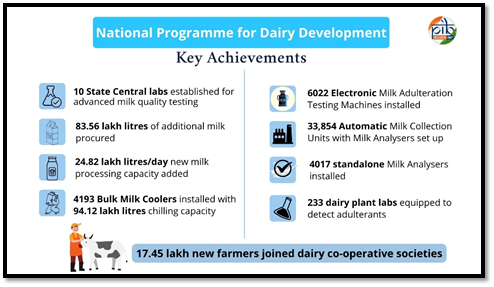
National Programme for Dairy Development (NPDD)
National Programme for Dairy Development (NPDD) was launched in February 2014 to improve the dairy sector across the country. The scheme was restructured in July 2021 and is being implemented during the period 2021-22 to 2025-26. The primary aim of NPDD is to create and strengthen infrastructure for the production of quality milk, as well as for its procurement, processing and marketing. The programme is being implemented through State Implementing Agencies, specifically the State Cooperative Dairy Federations, to ensure better coordination and reach at the grassroots level.
Livestock Health & Disease Control Programme (LHDCP)
On 5th March 2025 Cabinet approved revised version of LHDCP. The scheme has three components namely National Animal Disease Control Programme (NADCP), Livestock Health & Disease Control (LH&DC) and Pashu Aushadhi. LH&DC has three sub-components i.e. Critical Animal Disease Control Programme (CADCP), Establishment and Strengthening of existing Veterinary Hospitals and Dispensaries - Mobile Veterinary Unit (ESVHD-MVU) and Assistance to States for Control of Animal Diseases (ASCAD).
The Pashu Aushadhi is new component added to the LHDCP scheme. The total outlay of the scheme is Rs.3,880 crore for two years i.e. 2024-25 and 2025-26, which includes provision of Rs. 75 crore to provide good quality and affordable generic veterinary medicine and incentive for sale of medicines under Pashu Aushadhi component.
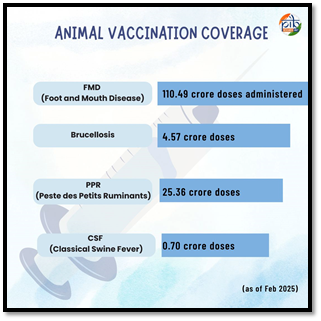
Under LHDCP, vaccination against Foot and Mouth Disease (FMD), Brucellosis, Peste des Petits Ruminants (PPR) and Classical Swine Fever (CSF) is fully funded by the Government of India for all States and Union Territories.
National Livestock Mission
National Livestock Mission (NLM) was launched in 2014-15, underwent revision and realignment in the 2021-22 financial year. The mission aims to boost employment, support entrepreneurship, and increase per animal productivity, leading to higher production of meat, goat milk, eggs, and wool. Surplus production is expected to support exports after fulfilling domestic needs.
The scheme has three Sub-Missions:
Animal Husbandry Infrastructure Development Fund (AHIDF) scheme was launched on 24th June 2020 by Prime Minister under Atmanirbhar Bharat Abhiyan Initiative. The scheme has been approved for incentivizing investments by individual entrepreneurs, private companies, MSME, Farmers Producers Organizations (FPOs) and Section 8 companies to establish
Conclusion
India’s journey from a milk-deficient country to the world’s largest milk producer is a story of resilience, vision, and collective effort. From the launch of Operation Flood to the adoption of modern practices and farmer-focused schemes, we have come a long way in empowering rural communities and ensuring nutritional security. However, this journey is far from over. The path ahead demands continuous innovation, greater use of technology, and sustained support to our dairy farmers. With each step forward, we move closer to building a healthier, self-reliant, and stronger India through a vibrant and inclusive dairy sector.
Source : Dairynews7x7 June 2nd 2025 PIB
References