Unlocking India’s Dairy Export Potential: Challenges and Focus
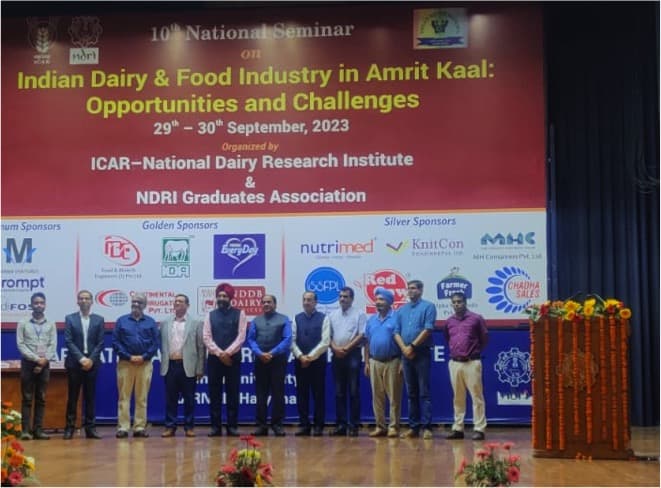
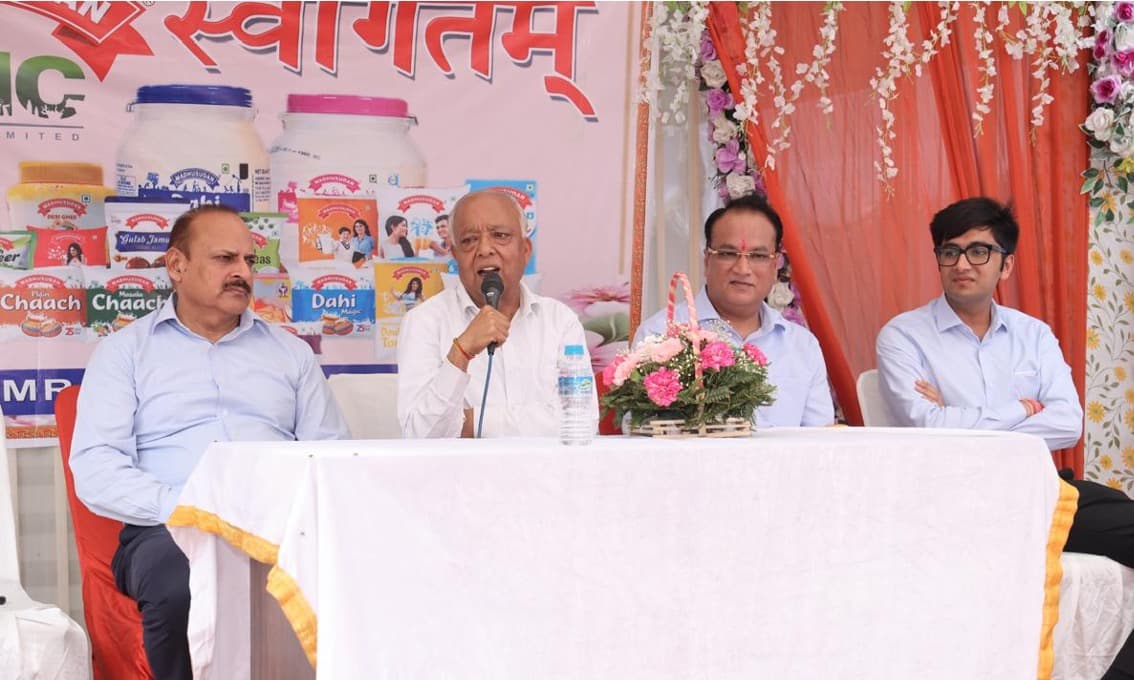
I had the privilege of attending the annual alumni meet at NDRI Karnal on September 30th, a nostalgic event where we reunite with our seniors, juniors, and, most importantly, our classmates. During this gathering, I had the honor of delivering a presentation on the state of dairy exports in India, in the presence of esteemed industry experts, chaired by Dr. R. S. Sodhi, which was truly inspirational.
In this article, I aim to shed light on the challenges and focus areas of Indian dairy exports in the global market. It’s crucial to recognize that the world views India primarily as a market with 1.4 billion consumers, rather than a dairy exporter. Asia currently leads in dairy product imports, with India and Pakistan contributing significantly to the milk production in this region. As my co-speaker and classmate, Vipan Kakkar from Olam, aptly noted, Asia produces 47% of the world’s milk but exports only 4%, while Oceania, despite producing just 4% of the global milk, accounts for nearly 30% of the exports.
As per Kakkar, India possesses two substantial advantages on the global stage. Firstly, it boasts a significant buffalo milk species population, a key source of A2 milk. Secondly, its strategic proximity to SAARC and GCC countries positions it favorably for dairy product exports.
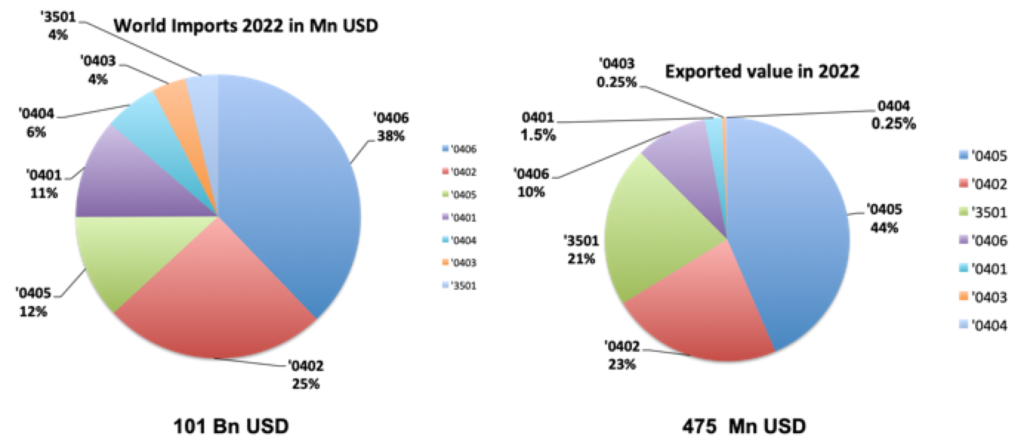
Comparison of Indian dairy exports with World’s dairy imports
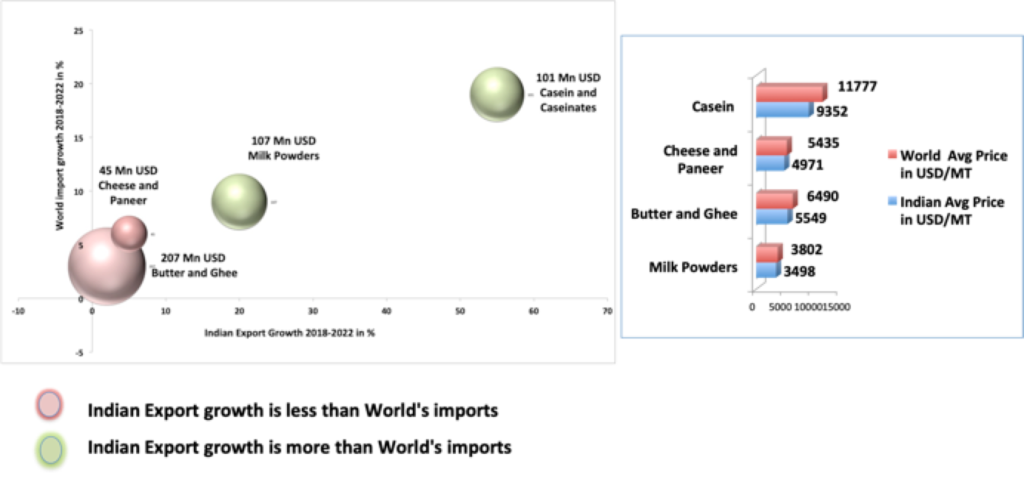
Performance of Key dairy exports from India in the world markets
Importing country profiles for key product categories in Indian exports -2022
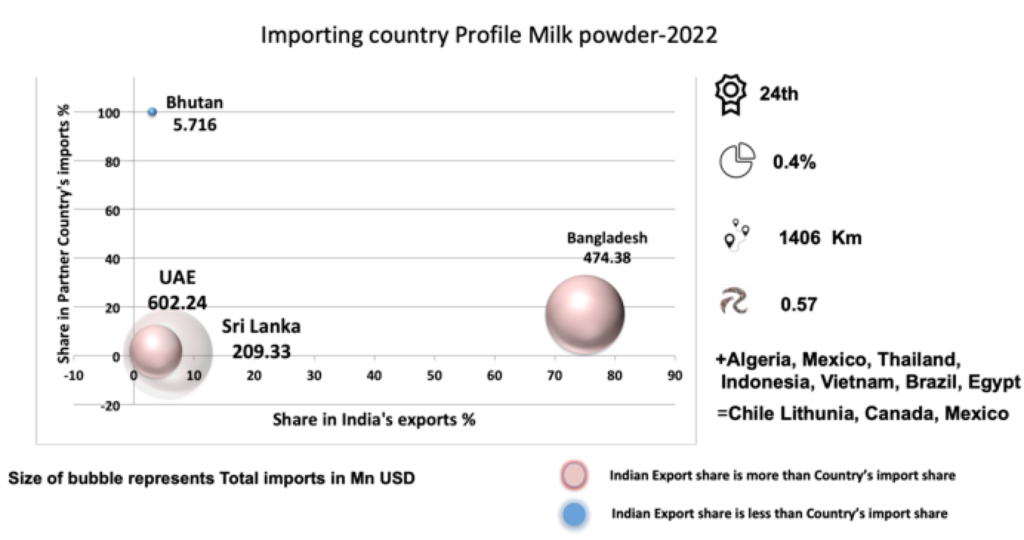
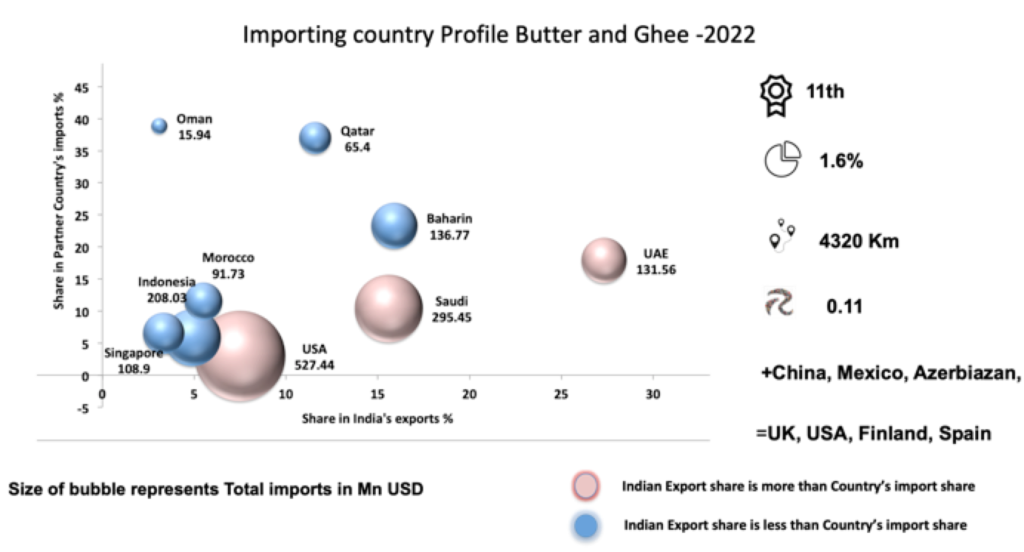
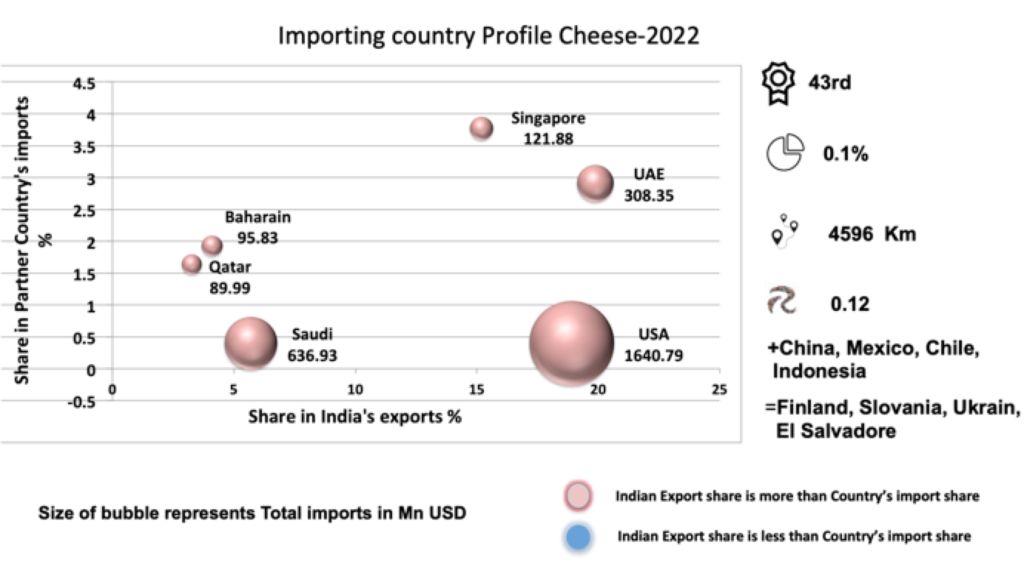
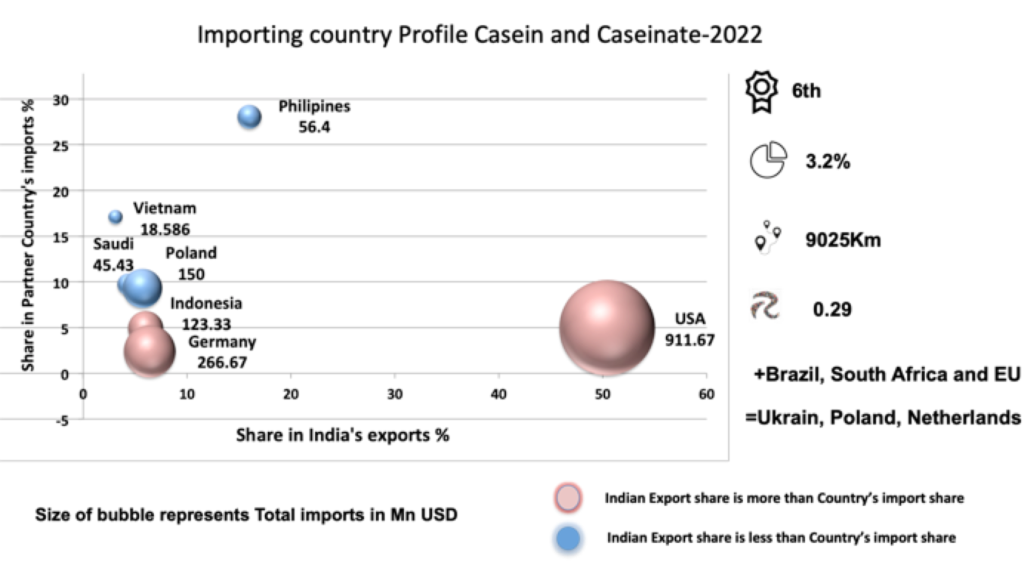
To gain further insights, I examined country profiles for key product categories in Indian exports in 2022. This analysis considered India’s share in partner countries’ imports versus its share in Indian dairy exports.Indian dairy exports in each categories were also ranked for the global rank, % share in world market, average distance covered in exporting and concentration of exports.
Concentration of exports emerged as a critical factor, with Butter being the most concentrated category due to a significant portion going to Bangladesh. Concentration of exports tells us about the dispersion of exports and a factor of above 0.18 is considered as concentrated. Higher concentration levels bear the risk of putting your eggs in very few baskets. Interestingly, Bangladesh’s total powder imports is more than the total dairy exports from India in all dairy categories. For effective expansion, we must consider countries with similar exports (“=”) and those with untapped potential (“+”), while also ensuring market access requirements are met.
Milk Powders 0402
Butter and Ghee 0405
Cheese and Paneer 0406
Casein and Caseinates 3501
Challenges
Addressing the challenges for boosting dairy exports in India requires a multi-pronged approach:a. Quality: Ensuring food safety and hygiene throughout the milk value chain is paramount. Primary production in agriculture and allied sectors must also adhere to food safety standards, and traceability is essential for global markets.
b. Scale: To compete globally, investments in infrastructure for large-scale dairy product production are essential. Expanding schemes like PLI to encompass a wider range of dairy products, especially those with high growth potential like whey, is recommended.
c. R&D and Innovation: Developing products tailored to global consumer preferences is vital. Understanding customer needs is crucial to create innovative dairy products that meet global demand.
d. Subsidies: Subsidies must be strategically allocated to address impediments rather than indiscriminately subsidizing all aspects of dairy production.
e. WTO: A balanced approach to WTO negotiations is necessary to open up markets for Indian dairy products.
India’s dairy exports have reached 132 nations from 2018-2022, showcasing a commendable global reach. While challenges exist, opportunities abound, particularly in whey processing for value-added products. It is imperative for policymakers to support the growth of whey processing infrastructure.
Focus

Source : Dairy blog by Kuldeep Sharma , Chief editor Dairynews7x7– All the chart illustrations are from Suruchi Research with copyrights of Suruchi Consultants