India’s milk production is projected to grow by 6% to around 263 million tonnes in FY27, despite concerns over an emerging El Niño and forecasts of a sub-normal monsoon, according to dairy industry experts. The country’s annual milk production reached 248 million tonnes in FY26, and the expected growth is being driven by an expanding livestock population, improved breeding practices, better veterinary care and the addition of nearly 75,000 new dairy cooperatives across the country.
According to Dr. Meenesh Shah, Chairman of the National Dairy Development Board (NDDB) and Mother Dairy, technology adoption, stronger dairy infrastructure and cooperative expansion are expected to help the sector withstand climatic challenges. This outlook comes even as the India Meteorological Department (IMD) has lowered its monsoon forecast to 90% of the long-period average (LPA), raising concerns over fodder availability, farm output and rural incomes.
India currently accounts for about 25% of global milk production, although productivity remains a challenge. Average annual milk yield per animal stands at around 2,000–2,200 kg, significantly lower than the 10,000–12,000 kg achieved in developed regions such as North America. To address this gap, the government is expanding digital livestock management through the Pashudhan platform, which supports animal tracking, breeding management, health monitoring and targeted welfare delivery.
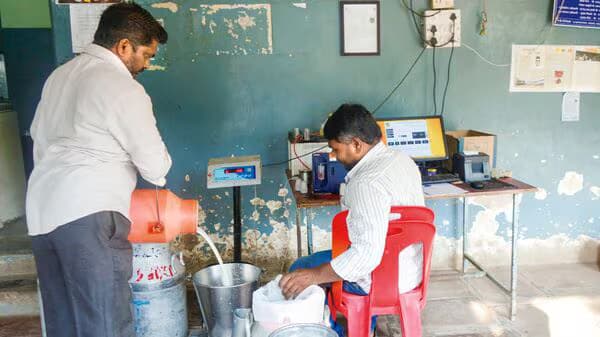
The dairy sector is also witnessing a gradual shift towards organised players, including cooperatives and private companies. However, only 30–35% of India’s marketable surplus milk is handled by the organised sector, while the unorganised segment still accounts for 65–70% of the market. India currently procures around 130–135 million litres of milk daily, with cooperatives and private companies contributing almost equally.
Strong domestic demand for milk and value-added products such as paneer, curd, cheese, butter and ghee continues to support sector growth. Higher milk production could also boost exports, which rose 80.6% to $492.85 million in FY25 from $272.91 million in FY24, although exports declined 17.4% to $407.18 million in FY26. Industry leaders believe that increased milk availability could create fresh opportunities for value-added dairy exports and improve farmer incomes. (mint)
Source: Dairynews7x7 08 June, 2026 Read full story here
#MilkProduction #IndianDairy #NDDB #DairyCooperatives #DairyExports #ValueAddedDairy #DairyNews