







Let us start with a simple question: which state do you think is most productive in terms of value creation in agriculture on per hectare (ha) basis? If Punjab comes to your mind, you could be very much off the mark. Punjab, known for its high physical productivity of rice and wheat, falls at number 13 amongst Indian states when it comes to agri-value created , i.e., agri-GDP on per ha basis. There could be at least two ways to estimate it. First, divide state agri-GDP by Net Sown Area (NSA); and second, divide agri-GDP by Gross Cropped Area (GCA), which encompasses the effect of cropping intensity. Here we use both indicators for the year 2021-22, for which the latest information is available.
When we look at agri-GDP/ha of NSA, Andhra Pradesh (AP) leads the pack with Rs 6.43 lakh/ha, followed closely by West Bengal (WB) with Rs 5.19 lakh/ha, Tamil Nadu (TN) with Rs 5.14 lakh/ha, and so on. In contrast, Punjab stands 13th in ranking with Rs 3.71 lakh/ha, trailing even behind Jharkhand (Rs 4.41 lakh/ha). The disparity becomes starker when we consider agri-GDP/ha of GCA. In this regard, even Bihar with Rs 2.18 lakh/ha, Odisha with Rs 2.57 lakh/ha, and Assam with Rs 2.34 lakh/ha outpace Punjab with Rs 1.92 lakh/ha (see infographic).
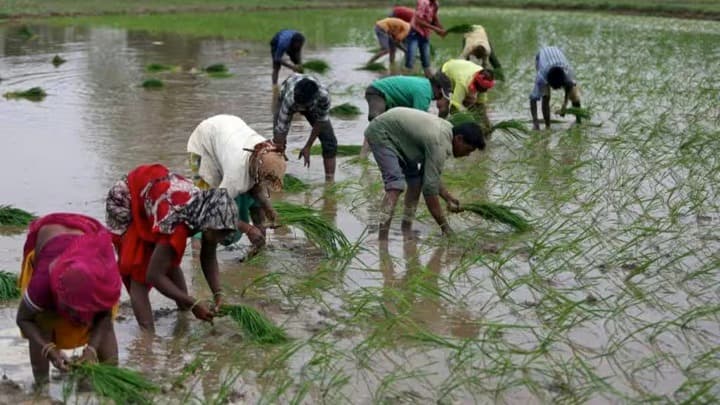
Punjab, caught up in the rice-wheat system induced by the MSP regime and open-ended procurement, along with free power and highly subsidised fertilisers, failed to diversify to high value agriculture. This is despite repeated reminders by the Johl Committee report in 1986, and again in 2002. Today, 84% of Punjab’s GCA is under wheat and rice, leading to 76% of its blocks over-exploited in terms of groundwater.
Punjab and Haryana desperately need a new deal to switch away from rice cultivation. Just to save these from ecological disaster, a minimum of 1.5 million hectare (Mha) of rice area (out of about 4.5 Mha) needs to be shifted to pulses, oilseeds, and even maize for poultry and ethanol, and fruits and vegetables. For this to happen, crop-neutral incentive structures need to be created. What this means is that the growers of these alternative crops must be rewarded about Rs 25,000/ha when they switch from paddy to these crops, as that is the minimum savings from power and fertiliser subsidy. This package towards sustainable cropping patterns needs to be devised by the Centre and states together.
But if farmers’ incomes have to be augmented substantially, Punjab and Haryana have plenty of lessons to learn from states who have already diversified into high value agriculture. In this context, it is interesting to note that an Andhra farmer creates 74% more value in agriculture than a Punjabi farmer on per ha of NSA. How did that happen? The answer lies in high-value inland fisheries. With 24% of its agriculture value added (AGVA) attributed to fisheries, AP leads the nation in fish production, contributing 30% to its national output. It is this proficiency in cultivating high-value shrimp that boosts their profitability. This success story of AP serves as a compelling example for Punjab and Haryana, if they want to switch from rice-wheat rotation.
Tamil Nadu sets a high bar for fruit cultivation, with mangoes and bananas comprising over 80% of its fruit production in 2020-21. This success translates into a 39% higher value creation in agriculture compared to their counterparts in Punjab. It is a clear signpost for Punjabi farmers’ higher income aspirations. But it is not just about diversifying into horticulture; it is also about embracing innovative agricultural practices. For example, TN farmers practice Ultra High-Density Plantation (UHDP) for mangoes. This method allows 674 mango trees per acre compared to the traditional method of 40. This translates to a significant increase in yield and profits. This technique of UHDP, being promoted by Jain Irrigation, leads to significant water savings (up to 50%) and fertiliser savings (up to 30%), further enhancing profitability.
West Bengal, a state with only 2% agriculture power consumption in 2021-22, creates 40% more value than Punjab, which gets free power for agriculture. WB cultivates vegetables on 15% (1.5 Mha) of its GCA of 10.2 Mha. The central government’s recognition of this success is evident in the establishment of an Agri-Export Zone (AEZ) dedicated to vegetables in WB, encompassing three key districts: Nadia, Murshidabad, and North 24 Parganas. Year-round production of a variety of vegetables makes cropping intensity so high (199%) in WB. The state has successfully transitioned from a “production-oriented” model to a more strategic “market-driven” system. This focus on market demands is reflected in their impressive production figures for vegetables like brinjal (2.9 MMT), cabbage (2.3 MMT), cauliflower (1.9 MMT), and potato (15.1 MMT) in 2020-21 (Horticulture Statistics). Emulating West Bengal’s model necessitates identifying Punjab’s own AEZs for horticulture.
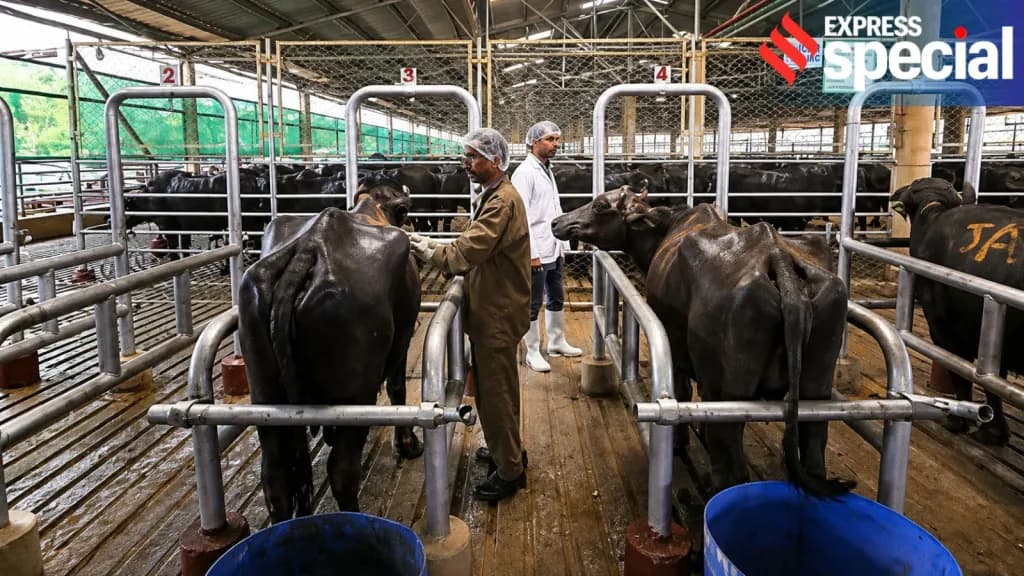
Punjab’s dairy sector, contributing 28% to its Gross Value agri-Output (GVO) in 2019-20, highlights its growth potential. This presents a golden opportunity for Punjab to capitalise on its existing dairy strength by venturing into value-added processing, from cheese to chocolates, for Indian and export markets.
The path towards revitalising Indian agriculture and boosting farmers’ incomes requires moving beyond traditional staples. Punjab-Haryana need to embrace a demand-driven high value agricultural system, if they truly want their farmers to be prosperous. This would require shedding the mindset of an MSP-based cropping system.