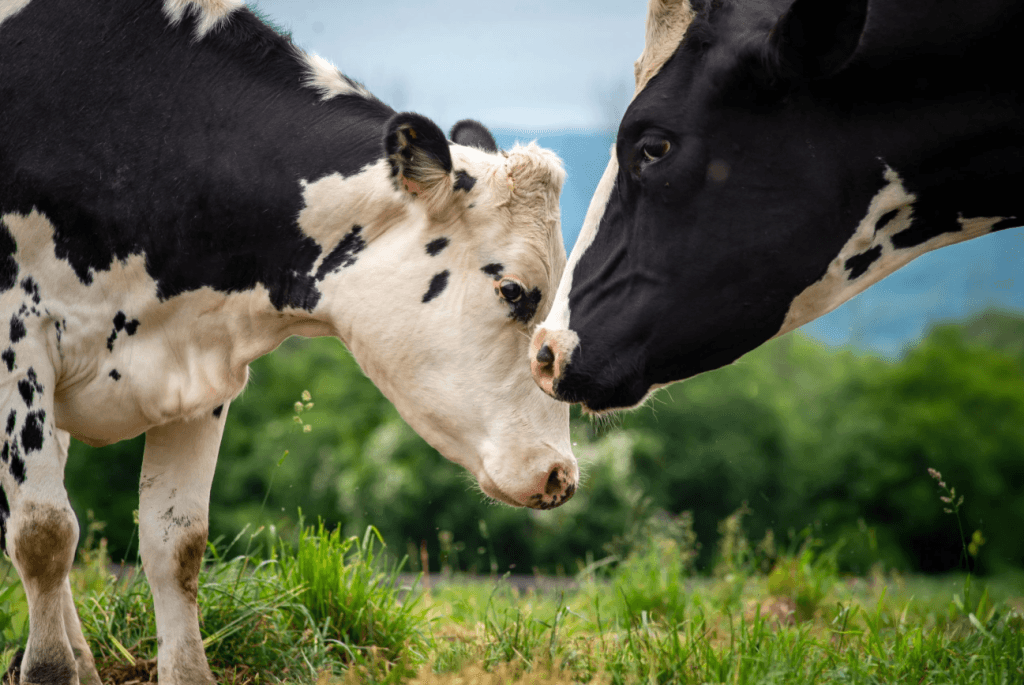
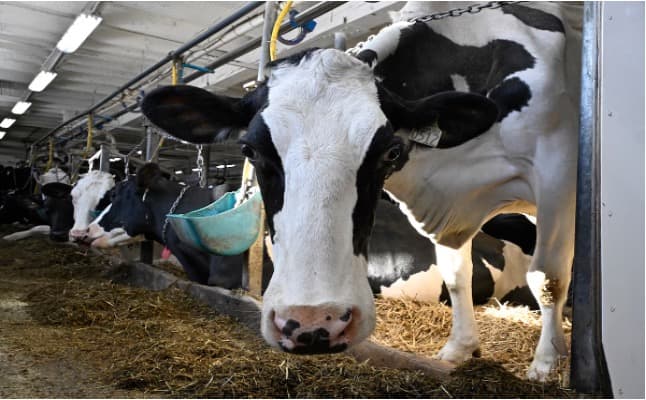
Canada's dairy sector wields considerable political power despite not matching the growth rate of other large agricultural industries
Canada’s dairy farms are growing in size and shrinking in number, and the sector has failed to grow at the same rate as other large agricultural industries.
Yet dairy farmers are largely protected from international competition by a half-century old policy called supply management. And this policy – which sets a production quota and price point for dairy products – threatens to hurt other Canadian industries as U.S. President Donald Trump assails what he calls unfair protectionist measures and threatens to walk away from trade deals.
Despite these threats to Canada’s relationship with its largest trading partner, Ottawa has doubled down in its support for supply management, which includes eggs, chicken and turkey products. In June, a bill prohibiting the federal government from making concessions on supply management in trade dealssailed through the House and Senate and received royal assenton June 26.
Here’s a look at the source of dairy’s political power, and how it is evolving.
Quebec and Ontario account for more than 80 per cent of the total number of dairy farms in Canada. Quebec has the highest number in the country, with a total of 4,215 producers, according to the provincial marketing board’s 2024 annual report.
Dairy farms in Quebec also have a larger share of farm cash receipts than in the rest of Canada – an indication of the industry’s sizable footprint in the province.Dairy also accounts for a significant share of farming operations in the Atlantic provinces. But the number of farms is small (Nova Scotia has the most with 195 farms).
Dairy’s big footprint in Quebec
The supply management system - which came into force for dairy in the 1970s - was designed to deal with a surplus of milk, and quell volatile pricing that was driving farmers out of business. The logic was simple. By capping production, and setting prices, farmers were assured that their product would return a profit. The system also protects food sovereignty, said Dairy Farmers of Canada.
“Smaller farms that are spread out across the country help protect food supply and reduces impact of storms, droughts or disease on consumer price and availability,” said a statement from Annie AcMoody, chief policy and economics officer at Dairy Farmers of Canada.
The argument in favour of supply management has a strong foothold in politically undecided ridings in rural Quebec, said Noah Fry, an academic who has extensively studied Canada’s supply management system.
However, dairy farm jobs are not as common as they used to be.
Across the past 60 years, the number of dairy farms in Canada has steadily declined, alongside the number of people employed in the industry. Milk production has – however –increased.
This is because ofsignificant productivity gains, said Marvin Slingerland, senior vice-president of agriculture and director of livestock services for consulting firm MNP.
In the early 1980s, a dairy cow could produce 6,000 kilograms of milk a year. Largely because of better nutrition, breeding and genetics, a cow can now produce 11,000 kilograms a year, Mr. Slingerland said.
This means dairy farms need fewer employees, he said, and technological advancements also drive economies of scale and farm consolidation. In 2023, an average of $200,000 in net capital was invested per dairy farm in Canada Ms. AcMoody said.
Fewer, more productive farms
However, the debate over supply management is not about jobs, Mr. Fry said.
The marketing and lobbying groups that represent the dairy industry are among the most active in Canada, he said. A search of the federal lobby registry of “dairy farmers” returns2,802 lobbying communications. This would include national and provincial entities. (By comparison, the most active lobbying organization in Canada - the Mining Association of Canada - has 2,519 communications, Mr. Fry said.)
These dairy lobbyists have positioned the debate around supply management on ideological grounds.
“They are good at framing the issue of dairy supply management as one about national persistence and localism ... it usually comes down to federalism, rural support and – in the case of those who were located in Quebec – Quebec’s autonomy.”
And this argument is used to protect the sector, even when it risks other agricultural sectors, Mr. Fry said.
For example, Bill C-202 will hamstring the federal government in all future trade negotiations because it prohibits any concessions that would give more market access to the supply managed industry’s international competitors. It passed the House and Senate in less than three weeks.
Introduced by the Bloc Québécois, it was the second attempt to enshrine protection for supply-managed industries after Canada gave more access to the dairy market under Mr. Trump’s first term USMCA negotiations.
That is unfair to other agricultural producers, said Michael Harvey, executive director of the Canadian Agri-Food Trade Alliance.Only 10 per cent of the farms in Canada are supply managed, he said. The remainder are export-orientated, and the bill hurts trade negotiations with the U.S.
The dairy sector has also not seen the same rate of growth as canola and beef. Upstarts like the greenhouse sector have seen growth of nearly 1,200 per cent since 1996, eight times faster than dairy. The U.S. is the No. 1 market for all three of these industries. All three are also exposed to global commodity markets and international competition. (Canola is currently facing Chinese tariffs on a number of products, a result of Ottawa’s bid to protect a nascent EV industry with a 100-per-cent tariff on Chinese-made models).
“We really need to get away from organizing our trade policy around the interests of the minority,” Mr. Harvey said.
However, while supply management might hurt trade negotiations, it also stabilizes prices for consumers.
The average annual price inflation for dairy products in Canada over the past 25 years was 2.5 per cent. The price inflation for U.S. dairy products was 2.2 per cent, with significantly more volatility.
This makes business more predictable for Canadian dairy farmers, said Ms. AcMoody, adding that in 2024, Canada experienced farm price variability of 8 per cent, while U.S. counterparts experienced variability of up to 47 per cent.
However, Canadian prices for milk are on average 20 per cent to 30 per cent higher over the past seven years compared with U.S. prices.
The cost of eliminating supply management would be substantial. The quota given to each farmer was free when first allotted in the 1970s. However, the value of that quota has skyrocketed. So far this year, the price for dairy quota in Quebec – where the rate is capped – was $24,000 for quota that would cover the butterfat production of one cow.
The average cost in Alberta in May – where it is a free market – was $53,990.
Quota is a significant asset to a dairy farmer. It is common practice to use quota as collateral to secure loans with banks, Mr. Slingerland said. Farmers will also borrow money to buy quota.
The total value of the quota across all supply-managed sectors, including eggs, chicken and turkey, was $50-billion in 2024, according to Statistics Canada. This number is largely based on the price of quota that is bought in exchanges. However, a very small share changes hands each year. That lack of liquidity would result in higher prices per quota.
A buyout would therefore not necessarily equal this amount, said Mr. Fry, but would still likely be substantial. Dairy farmers received $1.2-billion in payouts over a six-year period after the USMCA trade negotiations granted the U.S. an increase of less than 4 per centof Canadian market share.
Source : DAirynews7x7 July 10th 2025 byThe globe and mail Kate Helmore Agriculture and food policy reporter
Jason Kirby
Stay Updated
Get the latest dairy industry news directly in your feed.