Latest Blogs
See More

Indian Dairy News

DairyNews7x7
Global Dairy News

DairyNews7x7
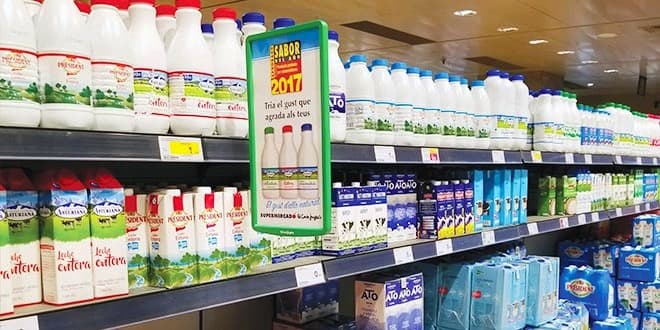
The cost of inflation is pushing more people in Spain towards buying cheaper private label products instead of better-quality and more expensive fresh produce.
Despite the rise in inflation starting to stabilise from the peak of 10.8% reached in July last year to the 3.5% in September this year, the advance CPI for October was released this Monday and it remained under pressure at 3.5% due to the rise in the price of energy. Food prices also remain high, following 17 consecutive months of double-digit year-on-year growth. It will force families to continue with the same shopping habits they’ve adopted in the past year in a bid to avoid such a hit to the pocket.
The change in consumer habits pointed out during a conference the Aecoc association held in Zaragoza last week, which brings together more than 3,000 companies in the sector, revealed shoppers will continue with these purchasing ways unless inflation decreases. But recent drought and crop devastations also threaten to keep food prices high.
Private labels are benefiting with such products occupying more space than ever in the shopping basket. It’s now caused Spain to become the country in the Eurozone with the highest share of private labels, more than 43% of the total, overtaking Germany and the United Kingdom. “The white brand is accelerating because salaries are not keeping up and people are making this type of arbitrage with cheaper products,” said Javier Roza, general manager of Mantequerías Arias. The company, which, like the rest of the industry, has been hit hard by the rise in milk prices, said: “The more expensive products are being bought more, although the reason may be that a family decides to stay at home instead of going out to a restaurant, opting for those premium products”.
After some tough years with falling margins due to the decline in the purchasing power of their customers, the sector is confident that the Christmas campaign will help end the year on a high. “It is a time when people like to eat well,” they pointed out. However, 76% of the companies that form part of Aecoc believe consumers will continue to suffer the “gnawing effect” of inflation on their pockets in the coming months.
The most expensive milk in Europe
The recent moderation in milk prices, which according to national statistic institute (INE) data have fallen since the beginning of the year by 0.5% for whole milk and 2% for skimmed milk, does not seem to be enough for the dairy industry, which has been complaining for some time about the loss of competitiveness as it continues to pay the highest prices for the raw material at source.
According to statistics, compared to September 2022, whole milk prices are still rising by 13%, while skimmed milk prices are up by 11.3%. This is a problem for manufacturers such as Javier Roza, general manager of one of the large national groups in the sector. He said 80% of their costs come from the raw material (milk), which then causes a rise in prices on the shelves.
The price of butter has risen by 11.1% in the past 12 months and the price of cheese and yoghurt has risen by 9.2% and 7.8%, respectively, according to INE data. “The price of cow’s milk in Spain has traditionally been low; in 2019 it was paid on average at 32 cents per litre to the producer, compared to the European average of around 35,” the sector pointed out. “Since the inflation crisis, it reached a maximum of 65 cents, and now it is paid around 52 cents in Spain; but in Europe it has fallen to 45”, they added.
Spain has gone from one of the cheapest countries to one of the most expensive. “This is not good, because if manufacturing a product in Germany is cheaper, a logical decision would be to move production to another country,” the industry warned.
Source : Surin English Oct 30th 2023 by Clara Alba Madrid