Latest Blogs
See More
Indian Dairy News


DairyNews7x7
Global Dairy News

DairyNews7x7
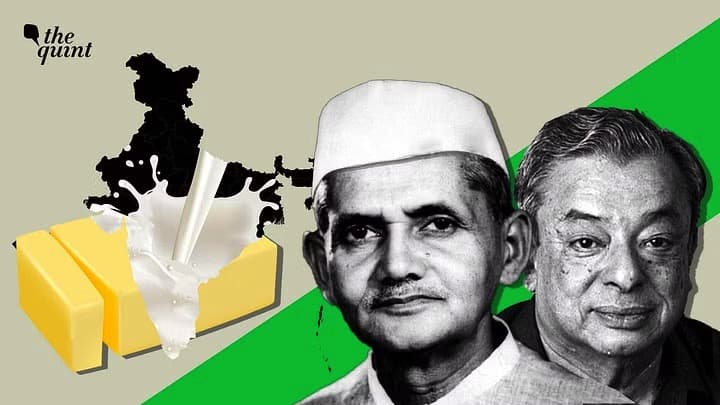
When people talk of profound change and transformation, they often associate it with big pronouncements, highly publicised policy decisions with all the bells and whistles, and the usual dose of hype. But the transformation that enriches the lives and livelihoods of tens of millions of citizens often happens without fanfare.
An unpublicised and largely forgotten meeting held about 60 years ago is a classic example of this. Lal Bahadur Shastri was elected as the Prime Minister of India after the death of Jawaharlal Nehru in May 1964. Despite 17 years of independence, India continued to face chronic and persistent shortages of food and milk to feed its malnourished masses.
Belonging to a family of farmers, Shastri was keen to find solutions to resolve this perennial crisis. One initiative being pioneered in Anand in the Kheda district of Gujarat fascinated Shastri no end.
There, a farmer’s milk cooperative managed by a technocrat V Kurien had miraculously transformed the lives of cattle farmers whose average incomes had multiplied. In the process, the region also saw milk shortages become a thing of the past.
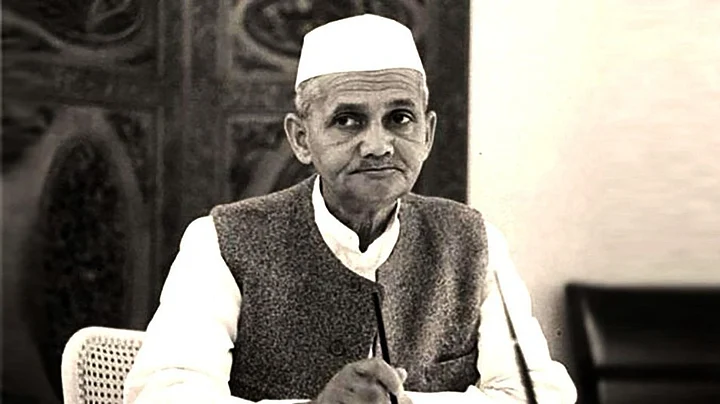
So, when Shastri was invited to inaugurate a cattle feed plant at Anand in October 1964, he gladly accepted. His private request to the Gujarat Chief Minister Jivraj Mehta was: a night secretly spent with a farmer in Anand and a one-on-one meeting with V Kurien, General Manager of the cooperative dairy.Kurien accompanied Shastri as he quietly moved around villages in Kheda interacting with farmers. One farmer was astonished when he found that his “fellow farmer” PM Shastri would spend the night in his house. Locals in the village still talk of that night almost as if it is part of folklore.
In the one-on-one meeting with Kurien the next day, Shastri said he wanted Kurien to become the chairman of the National Dairy Development Board and replicate the Anand cooperative model across the country.
Kurien had two conditions: he would continue to be an employee of the Anand cooperative and the headquarters of NDDB would have to be in Anand with no interference from Delhi bureaucrats.Another former technocrat P S Deodhar has described the meeting in a write-up for the magazine MoneyLife: “Once in the privacy of his chamber, Shastriji expressed his surprise about what he had witnessed the previous night. He said, “I am wondering about your success in Anand. I met hundreds of your farmers and visited their homes…Kurien said: As a professional manager, my job is not to just deliver what they want, but also to bring in techniques and technology that help us to be efficient in what we do. We are still making efforts to improve our performance.” …Shastriji said, “But in our milk co-operatives too, we have put competent and experienced officers from the IAS. In spite of this, nowhere do we see similar success. In what way are you different?”
Kurien was frank in saying, “Sir, in Kheda, I am the employee of the farmers. If I fail, they can fire me. In other cases, the farmers are the subjects of the government official controlling their society.” Shastri agreed to the conditions set by Kurien and the rest, as they say is history.
When Shastri had met Kurien about 60 years ago, India was dependent on milk powder delivered as aid by countries like Sweden. Back then, India produced about 20 million tons of milk. Today, it produces about 222 million tons of milk. The rise has been both steady and spectacular.
In that context, the White Revolution that transformed dairy farming in India owes its success to the pioneering technocrat V Kurien and the “humble” yet far-sighted prime minister Lal Bahadur Shastri who facilitated the formation and operations of NDDB without bureaucratic interference from Delhi.As the accompanying chart shows, the White Revolution started really taking off in the 1980s, just like the Green Revolution. Without a shadow of a doubt, the milk cooperative movement is one of the most successful cooperatives in India; perhaps even the world. Sugarcane is another agricultural crop with a large presence of cooperatives. But it is dominated by political lobbies and families and riddled with scams.
Numerous analysts and commentators have studied the success story of Amul to find out what makes it so enormously successful. The reasons are simple. The cattle and the milk are owned by farmers who sell it to the cooperative without any middlemen being involved. The farmers elect their representatives who run the cooperatives. But the key factor is that the commercial aspects of the dairy business are run independently by professional managers just like they do in any private sector entity.
There is a lot of traditional politics in elections in hundreds of cooperatives that contribute milk for Brand Amul. But mercifully, the “business’ is run by professional managers without interference from politicians or bureaucrats. The success of Amul has triggered similar success stories like Mother Dairy and many other state-level cooperatives.
The phenomenal success of the White Revolution also reveals a well-known secret that is not highlighted as much as it should be. It is about scientists and technocrats being given free rein without too much interference from Delhi. One classic example is ISRO. Scientists in the organisation have been facilitated by prime ministers since the times of Nehru. But they have mostly worked without having to follow the diktats of some “babu” sitting in Delhi. No wonder, it is hailed as a global success story even before the success of the Chandrayaan and Aditya missions.
Yet another example is the Delhi Metro. Technocrat E Sreedharan was given a free hand by the powers that be. Thanks to the passion and zeal of the team of technocrats and engineers led by him, Delhi Metro is now the largest metro service in India (not counting the old Mumbai local train services) with six million commuters using it every day.
Even in transformative programs completely controlled by the government, a touch of “technocratic” passion makes things happen.Parameswaran Iyer was an IAS officer who was a tad different from his fellow bureaucrats. He worked as a rural sanitation specialist for a global body in the first decade of this century, “ignoring” his duties as an IAS officer.
When he was served a notice by the then regime, Iyer resigned and joined the World Bank as a rural sanitation expert. After PM Narendra Modi launched the Swachh Bharat mission, he invited Iyer to lead the effort. Iyer decided to give up life and time spent with family in the United States and agreed. We all know what a phenomenal success he achieved.
There have been many more success stories. But if you want to single out the two most significant ones India has recorded since 1947 are the White and Green Revolutions. The latter was perhaps, more significant because it permanently erased famine. Incidentally, Lal Bahadur Shastri played a key role even in kickstarting it.When he became PM in 1964, India was hopelessly dependent on food aid from the United States and other countries like Canada. That is because agricultural output, particularly rice and wheat, was so low that it simply wasn’t enough to feed all Indians.
The last “famine” that tormented India was in 1965-66 when between 50,000 to 200,000 citizens died of starvation. Shastri had persuaded an old-school Congress leader C Subramaniam to handle the Agriculture Ministry and seek urgent solutions to the perennial food crisis. CS, as he was known, found out that a 40-year-old genetic scientist with a degree from Cambridge University had abandoned his “global dreams” and was working on new rice and wheat varieties as a scientist at the Indian Agricultural Research Centre. His name was MS Swaminathan, the miracle man of India who recently passed away.
MS convinced CS that India must import and cultivate new seed varieties of wheat that were developed by an American scientist Norman Borlaug. Shastri gave a green signal without any hesitation.
Luckily for India, this massive push to acquire new technology continued under Indira Gandhi as prime minister after Shastri died suddenly in January 1966. But the authors do have an opinion. Shastri is just one of numerous towering Indians who have not been given due credit for their transformational impact on India.
Source : The Quint – Oct 19th 2023 by Yashwant Deshmukh & Sutanu Guru work with CVoter Foundation. This is an opinion piece and the views expressed are the author’s own. The Quint neither endorses nor is responsible for them.)