Latest Blogs
See More

Indian Dairy News

DairyNews7x7
Global Dairy News



DairyNews7x7
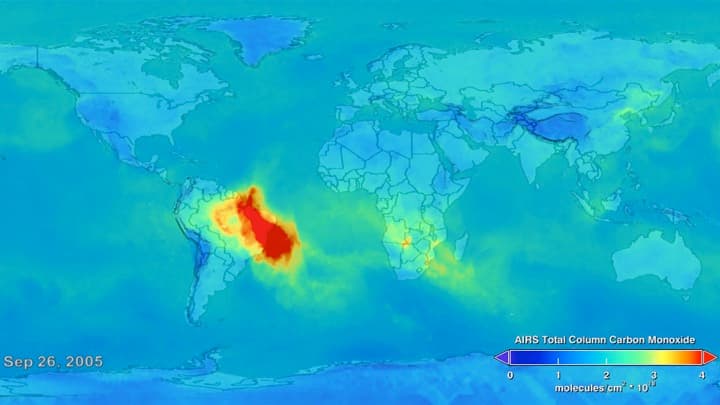
Milk and methane seem to make strange bedfellows in Canada, a country that feeds on one and is trying to limit the other.
Canadian dairy farms produce large quantities of both, and now Dalhousie University researchers are using satellite data and AI to track dairy farm methane emissions in an effort to help set realistic emission reduction targets.
“When you compare methane to carbon dioxide, methane is much more powerful to trap the heat over 100 years,” said Suresh Neethirajan, associate professor and research chair in Dalhousie’s computer science and agriculture faculties.
“Reducing methane emissions is much more critical for the climate goal. Yes, we have to control carbon dioxide, but reducing methane emissions is much more critical for the short-term climate goals. If you look at the dairy farms, if you look at who is producing the methane, of course agriculture is the largest contributor for methane in the climate.
“Dairy farms are number one, so naturally we look at how we can bring down methane emissions in dairy farms."
Studies show that methane emissions related to the dairy industry have increased fourfold in Canada over the past 130 years.
Collecting accurate methane emission data across multiple locations has always presented significant challenges because methane concentrations can vary widely due to factors such as wind direction, atmospheric conditions, and local emission sources.
Traditional ground-based measurement methods are often limited in scope and may not effectively capture the variability of emissions.
Neethirajan said his study overcame those limitations by leaning on NASA and European Space Agency satellite data along with advanced machine learning techniques (AI) to track emissions and identify trends on when emissions peak, how the pandemic affected their release and the areas in the country that emitted the highest amounts of the potent greenhouse gas.
“It’s an eye from the sky,” Neethirajan said. “When we look at it, it’s precise. The precision and accuracy offered by satellite data with artificial intelligence help us to precisely, accurately measure for the methane values.”
Neethirajan and his team analyzed weekly methane concentration data from 575 dairy farms and 380 dairy processors across the country and identified some interesting patterns.
Methane levels peak during winter, and Ontario has the highest concentrations in the country. The COVID-19 pandemic resulted in unexpected shifts in methane emissions due to altered production methods and disrupted supply chains.
“A particular farm in Nova Scotia, if they produce 30 litres of milk per cow per day, we look at how much methane, carbon dioxide and nitrous oxide is being released per litre of milk,” Neethirajan said of the three powerful greenhouse gases.
“It varies between farms and between provinces. This is a benchmarking system, a very interesting study because it gives a very clear indication of what kind of strategies, the approaches the farmers have to develop. It’s always multifactorial, the combination of intervention, changing feeding or adding certain supplements, kelp or some kind of unique supplement, to bring down the methane emissions.”
Neethirajan said 95 per cent of the milk cows are holsteins and two or three per cent are jerseys, “so what are the breeding-related changes that could be followed?"
The research supported conclusions that implementing policies that support emission mitigation strategies during winter months and focusing on high-emission provinces like Ontario could prove particularly effective.
Addressing the factors contributing to increased emissions post-pandemic — such as production scaling and supply chain inefficiencies — should be a priority to reverse this upward trend, the study concludes.
“By anticipating periods of elevated emissions, farmers and processors can implement best practices and emission reduction strategies precisely when they are most needed,” the study found.
“Embracing data-driven decision-making can lead to more efficient operations, reduced environmental impact, and enhanced competitiveness in markets that increasingly value sustainability. Overall, this study not only elucidates the temporal and spatial dynamics of methane emissions within the dairy sector but also highlights the transformative potential of combining satellite data with machine learning for environmental monitoring.”
The federal government has set a goal of reducing carbon emissions by 40 to 45 per cent by 2030 on the path to net zero emissions by 2050.
“Denmark has a law to tax dairy farms producing too much methane,” Neethirajan said. “We are not looking at that model here in Canada … but we have an obligation to meet the Paris climate goals, all the countries. This is a very big, huge country, so there is a need for certain formula, methodology from the government of Canada ,to say you are doing OK, you are in the threshold or you are way below the expected threshold. How do they come up with that particular framework? They need a tool or a platform because there is nothing available. Our technology, our methodology helps. That’s what drew us to do this.”
Cows emit methane when they belch, through a process called enteric fermentation that takes place in the digestive systems of animals, particularly ruminant animals like cattle. A smaller percentage of methane is also produced in the cow's large intestine and released, and significant amounts of the greenhouse gas are generated in settling ponds and lagoons used for processing cow manure to be spread on crop-yielding fields.
Neethirajan said contributing factors to methane contained in cow dung include how much water they drink and the feed they consume.
He said tractors and machinery used for cultivation and harvesting “all combine to the emission values of the cows.”
Neethirajan said more energy-efficient farming methods, like using solar panels to generate power, are part of “a series of recommendations in terms of interventions and strategies to bring down” overall farm emissions.
Those recommendations from the study’s authors are shared with the federal government and with the Dairy Farmers of Nova Scotia and other similar provincial dairy farming organizations, along with free consulting services for farmers.
““By advancing our ability to accurately benchmark and predict methane emissions, we provide a robust scientific foundation for developing more effective emission reduction strategies,” the study concludes. “Future enhancements to the model structure and the incorporation of more granular data could further refine predictions, contributing significantly to global efforts to mitigate climate change and lessen the greenhouse effect’s impact on our planet.”