Latest Blogs
See More
Indian Dairy News

DairyNews7x7
Global Dairy News

DairyNews7x7
To meet climate goals, some European countries are asking farmers to reduce livestock, relocate or shut down — and an angry backlash has begun reshaping the political landscape before national elections in the fall.
This summer, scores of farmers descended on the European Parliament in Strasbourg, France, to protest against new E.U. rules aimed at restoring natural areas and cutting emissions that contribute to climate change. Farmers have protested in Belgium, Italy and Spain, too.
The discontent has underscored a widening divide on a continent that is on the one hand committed to acting on climate change but on the other often deeply divided about how to do it and who should pay for it.
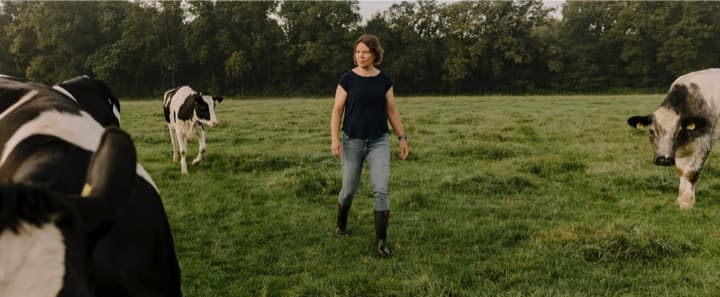
Those like Helma Breunissen, who runs a dairy farm in the Netherlands with her husband, say that too much of the burden is falling on them, threatening both their livelihoods and their way of life.
For almost 20 years, Ms. Breunissen has provided the Dutch with a staple product, cow’s milk, and she felt that her work was valued by society, she said. The dairy sector in the Netherlands, which also produces cheeses like Gouda and Edam, is celebrated as a cornerstone of national pride.
But the sector also produces almost half the Netherlands’ emissions of nitrogen, a surplus of which is bad for biodiversity. Ms. Breunissen and thousands of other farmers bridle that they are now labeled peak emitters.
“I was confused, sad and angry,” said Ms. Breunissen, who manages a farm of 100 cows in the middle of the country. “We are doing our best. We try to follow the rules. And suddenly, it’s like you are a criminal.”
But it was also a nod to national identities and a way to protect competing farming interests in what would become a common market. To that end, from its outset, the bloc established a fund that, to this day, provides farmers with billions of euros in subsidies every year.
Increasingly, however, those subsidies and the bloc’s founding ideals are running up against a new ambition: to adapt to a world where climate change threatens traditional ways of life. Scientists are adamant: To fulfill the bloc’s goal of reaching net zero emissions by 2050 and to reverse biodiversity losses, Europe has to transform the way it produces its food.
In the Netherlands, the government has asked thousands of farmers to scale back, move or close. The authorities set aside about 24 billion euros, about $26 billion, to help farmers put in place more sustainable solutions — or to buy them out.
Wilhelm Doeleman, a spokesman for the Dutch Agriculture Ministry, said farmers were not the only ones affected. “The government has also imposed measures in the sectors of construction, mobility and industry,” he noted.
“But,” he acknowledged, “the biggest challenge lies with the farmers.”
For Ms. Breunissen, who is 48 and works as a veterinarian in addition to her duties on the farm, none of the government-proposed options seem feasible. She is too young to quit and too old to uproot her life, she said, and the authorities have not provided enough support and information on how to change what she now does.
“There are so many questions,” she said. “The trust in the government is completely gone.”
Although only nine million out of almost 400 million voters in Europe work in agriculture, they are a vocal and influential bloc that attracts the sympathy of many on a continent where a nation’s identity is often tied to the food it produces.
A host of new groups are vying to displace traditional parties. They include the Farmer Citizen Movement, known by its Dutch acronym BBB, which was established four years ago.
The party has just one seat in the 150-member Dutch House of Representatives, but it swept regional elections in March, and polls predict it will do well in national elections in November.
Caroline van der Plas, the party’s co-founder, used to be a journalist in The Hague covering the meat industry, and she has never worked in farming. But she grew up in a small city in a rural area, and she said in an interview that she wanted to be “the voice of the people in rural regions who are not seen or heard” by policymakers.
She and her party have talked down the need for drastic steps to cut emissions, saying the reductions can be achieved through technological innovation. Policies should be based on “common sense,” she said, while offering no concrete solutions.
“It’s not like science says this or that,” Ms. van der Plas said, referring to how theories can change. “Science is always asking questions.”
Parties like the Farmer Citizen Movement are making headway, analysts said, by presenting the issue of ecological transition as part of the culture wars.
Referring to that phenomenon, Ariel Brunner, the Brussels-based Europe director of the environmental charity BirdLife International said, “There is political manipulation.”
But, he added, “it is feeding on real grievances, and a real sense of hardship.”
Geertjan Kloosterboer, a 43-year-old farmer with 135 cows in the east of the Netherlands, is the third generation to work his family’s farm. He said that four of the past six summers had been extremely dry.
“There is something changing,” he said. But, the question, he added, was: “What can we do about it together?”
Mr. Kloosterboer said that he was willing to innovate but that the government was asking too much, too quickly. “Tell me what I have to do, in order to do the right thing,” he said.
Source : The New York Times Aug 26th 2023