Latest Blogs
See More
Indian Dairy News

DairyNews7x7
Global Dairy News

DairyNews7x7
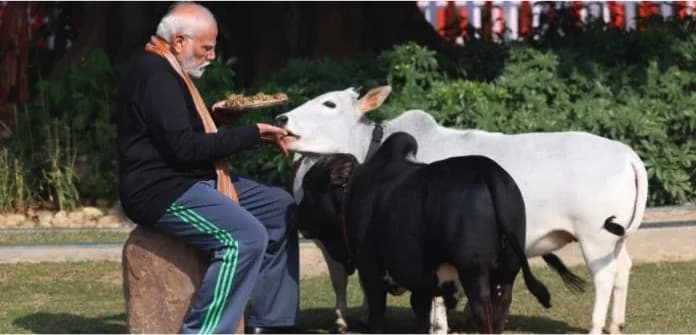
Much like India’s own dream run towards growth and development since 2014, the country’s dairy sector serves as a unique example of resilience and rise. Due credit belongs to PM Modi’s government which has worked matchlessly to achieve a rare transformation of the sector.
Cattle wealth and dairy business have been integral to our socio-economic life for thousands of years. As the Prime Minister himself has noted, the dairy sector in India has unique characteristics leading to its vibrance and strength.
However, the post-Independence era was one of hardship and impoverishment for the dairy farmers. They struggled to generate any significant incomes due to a supply chain dominated by middlemen. This was set to change post the 1970s with Operation Flood. Designed by Dr. Verghese Kurien, Operation Flood led to the organisation of dairy farmers into village-level cooperatives, responsible for production, procurement, and supply of milk and milk products across India. It effectively created a ‘national milk grid’ linking producers with consumers all across, also ensuring that modern technology and management practices were made available to all members. The White Revolution, as it is called, freed the farmers from the excesses of middlemen, effectively assisting them in directing their own development with control over the resources they created.
Building on this unique movement and taking it ahead with its vision of ‘Sahkar se Samridhi’, the Modi government assists dairy cooperatives and FPOs engaged in dairy activities with soft working capital loans, creating a network of over 1.5 lakh dairy cooperatives. This has made India’s dairy sector a unique business model for the world—a model led mostly by small farmers and women. As the PM has said, “It is not about mass production, but production by masses.”
Achieving newer milestones since 2014, the dairy sector today contributes 5% to India’s GDP, employing over 8 crore farmers directly. In fact, India has become the world’s largest producer of milk, representing 23% of global milk production. Worth mentioning is the tremendous growth experienced in milk production in the last 8 years, from 146.3 million tonnes in 2014-15 to 221.06 million tonnes in 2021-22—a remarkable increase of over 51%. This stands in stark contrast with global growth in milk production moving at 1.2% annually as against India’s rate of 6.4%.
These phenomenal numbers are an outcome of exceptional initiatives of the Modi government in the last nine years. To begin with, the National Programme for Dairy Development was launched in 2014. It aims at strengthening infrastructure for milk production and processing, encouraging value-addition in milk and milk products apart from increasing farmers’ access to organised markets. The central government contributes Rs. 2297.25 crore towards 185 projects in 28 states and 2 UTs within the total cost of Rs. 3015.35 crore under this scheme.
Further, 37 projects worth Rs. 5544.53 crore have been approved under the Dairy Processing & Infrastructure Development Fund initiated in 2017. Via the Fund, we have achieved milk processing capacity of 63.70 lakh liter per day (LLPD), chilling capacity of 3.4 LLPD, milk drying capacity of 265 metric tonner per day, while the manufacturing capacity of value-added products has reached 10.46 LLPD.
Another asset of the dairy sector in India is its livestock population. Growing at a compound annual growth rate of 7.93% during 2014-15 to 2020-21, the livestock sector contributed nearly 6.2% to the total GVA in 2020-21. Its contribution in the agriculture and allied GVA has increased from 24.38% in 2014-15 to 30.87% in 2020-21.
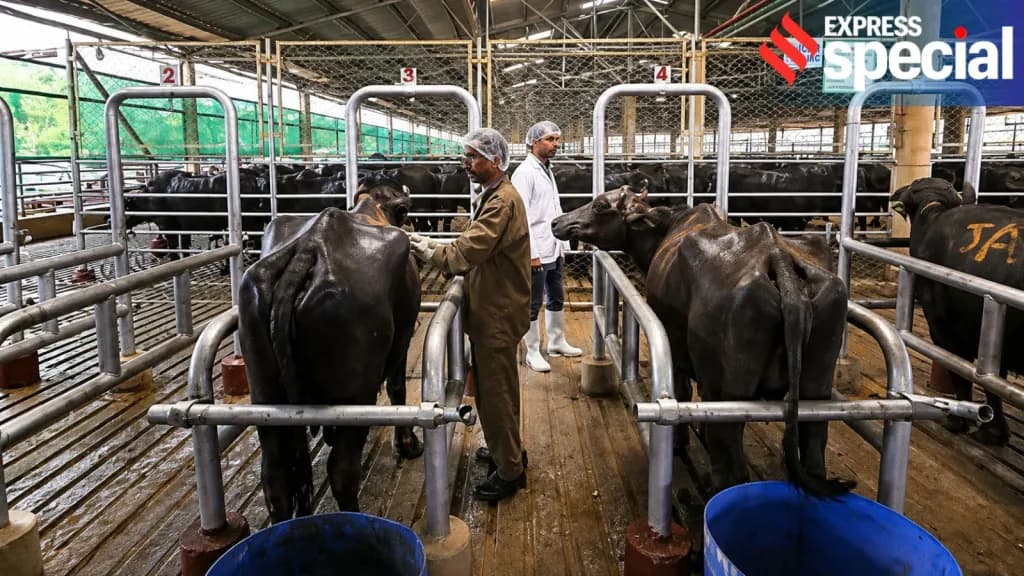
Transforming this asset is the government’s focus on indigenous breeds and overall livestock health. In this direction, the government has launched the Rashtriya Gokul Mission towards development and conservation of indigenous bovine breeds. With a budget of Rs. 2400 crore, the Mission has multiple achievements to its credit like coverage of 5.71 crore animals under artificial insemination, DNA-based genomic selection for indigenous breeds, identification and registration of 53.5 crore animals, establishment of Gokul Grams as integrated indigenous cattle development centers, and successful adoption of e-Gopala app, among others. Its sub-component National Digital Livestock Mission is working towards improving productivity of animals, control diseases and ensure quality livestock for domestic and global markets. The government provides a direct 50% subsidy to individuals, SHGs, and FPOs, among others to establish breed multiplication farms like poultry farms with hatcheries and brooder mother units, piggery farm and feed-fodder units, among others.
The government is also building a large database of dairy animals through Pashu Aadhaar—a unique biometric identity for better animal husbandry practices.
This emphasis on conserving indigenous bovine breeds holds significance for Indian economy since climate comfortable cattle are another unique aspect of the Indian dairy sector. Highlighting the same, PM Modi said, “I would like to give you the example of the Banni breed of buffaloes of Gujarat. Because the climate in the Kutch region is tough and days are very hot, these cattle graze at night. They need less water. They don’t need to be watched, and they find their way back home on their own next morning.” Local breeds like Sahiwal, Rathi, and Tharparker are well known for their adaptability to harsh climatic conditions, and add resilience to the dairy sector.
Disease control is another area where the government is at the forefront with its One Health approach. The Livestock Health and Disease Control Programme focusses on vaccination of animals of economic and zoonotic importance. So far, 2.19 crore animals have received vaccination against Brucellosis and 24.18 crore animals against Foot and Mouth Disease (in the second round). Hence, we are well on the path of vaccinating 100% of the animals against both these diseases by 2025. It is also worth noting that India successfully developed its own indigenous vaccine for lumpy skin disease—a mark of our rising prowess in the field of scientific research and innovation.
The dairy sector has emerged as a crucial source of rural employment, absorbing a significant portion of the country’s workforce. Women, in particular, comprise 70% of the dairy workforce. In addition, over one-third of members in milk cooperatives are women. PM Modi has said, “Women are the real leaders of India’s dairy sector. Nari Shakti is the driving force.”
With such motivation in place, PM Modi’s government has revolutionised the wider contours of the dairy sector in India. Such strategic focus has not only bolstered the income of millions of small and marginal farmers but has also played a pivotal role in strengthening the agricultural and allied sectors, contributing to the overall growth of the Indian economy.
In fact, dairy cooperatives model in India is a peerless inspiration for the whole world and can serve as a lucrative business model for poor countries.