Latest Blogs
See More
Indian Dairy News

DairyNews7x7
Global Dairy News

DairyNews7x7
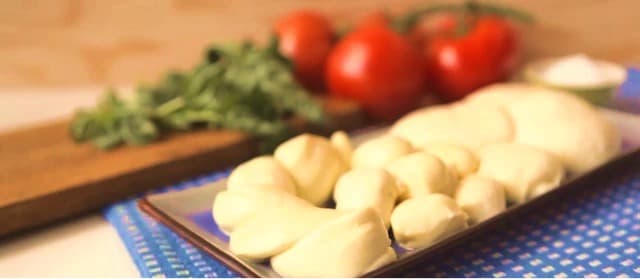
(Mozzarella cheese is not a local product, nor widely consumed in India outside our metros, or even widely produced in India. Essentially a milk-paneer-butter country, our per capita annual consumption of cheese is less than 200gm, compared to a global average of 7kg per annum. So, it puzzled observers when the Union cabinet rolled out a Rs 10,900 crore production-linked incentive support for food products, including mozzarella. We look at how this is playing out on the ground in Gujarat’s Anand district, whose signature ODOP is dairy products.)
High on UK Prime Minister Boris Johnson’s priorities during his recent visit to India was a meeting with dairy producers, to convince India to ease restrictions on British Dairy products . In fact, this was such a high priority for the British PM, that he started his trip by arriving in Ahmedabad before Delhi. The sale of dairy products to India, one of the world’s biggest dairy producers itself, might seem like sending coal to Newcastle, but it appears that the UK wants greater access for ‘higher value dairy products… targeting the growing Indian middle class.’ But the Indian government has an entirely different plan.
Gujarat’s Anand district is home to one of India’s largest and oldest cooperative dairy societies- the Gujarat Cooperative Milk Marketing Federation Ltd (GCMMF), better known by its brand Amul, which was at the forefront of pioneering the first Dairy Revolution in the country back in the 1970s. So naturally, it chose dairy products for the ODOP Initiative. Amul’s success story on both, national and global fronts, is well-documented with its innovative branding and strategy becoming a staple for most business school case-studies. But today, traditional milk and dairy markets in India, particularly in Gujarat, are saturated and highly organised. So what more can be done to boost Anand’s economy and improve livelihoods for dairy farmers?
Despite tepid growth, Amul recently announced that it would invest over Rs 200 crore into two buffalo milk production facilities in Anand and double their capacity . The move will dramatically boost buffalo milk production, and generate employment for thousands. But what drove this decision?
When the fine print of the new scheme’s guidelines, and details of the application process were eventually released, the announcement came as a welcome surprise. Only four specific categories of food products were shortlisted by the government for support under the scheme — ready-to-eat foods, processed foods and vegetables, marine and seafood products and lastly, mozzarella cheese .
Mozzarella cheese? India was absent from the list of top ten producers of cheese in the world, let alone mozzarella- a specialty that originated in Southern Italy but is now universally consumed, and is a primary ingredient in that ubiquitous food — pizza. Why the Union government decided to roll out such a massive incentive programme for a specific targeted product that was neither local to India, nor was widely consumed outside of the larger metros baffled observers. Cheese production in India accounts for less than one per cent of total dairy item production, and its household penetration is currently no more than five per cent. While India is a leading producer and consumer of dairy products, its dairy production and consumption is centered around milk products like paneer, butter, ghee etc. Critics predicted that there would be few or no takers for this initiative, and that it would be a non-starter .
What was prematurely dismissed, turned out to be a disruption, which was nothing short of a game-changer. Not only did the scheme generate substantial interest, but it was also fully subscribed, with many more applications received than originally budgeted for. So what exactly happened, and again, why mozzarella cheese?
The Production Linked Incentive Scheme is a uniquely structured initiative that provides incentives over a five-year period to private sector applicants, who commit to investing in developing manufacturing capacity and infrastructure in identified areas. The selected applicants who invest in creating manufacturing units are then incentivesed with monetary support that ranges from four to 10 per cent of their incremental sales of the product — mozzarella in this case — capped each year at a certain maximum amount . This was a carefully calculated and well-calibrated economic decision driven by hard data, and extensive research.
The global market for cheese products is estimated to be worth approximately $65 billion, out of which mozzarella alone accounts for almost $8 billion. India’s slice of the cheese pie is minimal, owing to relatively less expertise or manufacturing capacity in cheese making, particularly mozzarella. But decisions aren’t made on the basis of how things are, but rather on the basis of how things should be. The markets for traditional dairy products such as butter, ghee, milk solids etc. have peaked. Evolving consumer tastes, global surges in the demand for mozzarella and India’s need to reduce its dependence on cheese exports, combined with the tremendous foresight of officials in the government of India led to the realisation that providing a quantum boost to mozzarella production was essential for the next White Revolution in India.
The Ministry of Food Processing Industries finally shortlisted and selected 60 different companies for the Food Processing PLI Initiative, four of which were in the mozzarella segment – Parag Milk Foods Ltd, Gujarat Co-Operative Milk Marketing Federation Ltd (GCMMF), Sunfresh Agro Industries Pvt Ltd and Indapur Dairy and Milk Products Ltd . Several other players like Keventers, Mother Dairy and international dairy companies like Nestle also expressed interest but were not selected. Of those selected, three proposed to set up manufacturing capacity in Maharashtra, but the biggest of the applicants by far was by GCMMF, better known as Amul- the pioneer in the first Dairy Revolution.
India currently imports the bulk of its specialty cheese, including mozzarella. Access to markets such as Europe for Indian dairy products are currently restricted. But with investments into cheese production and improving quality, India will eventually leap-frog as a global cheese exporter. With European exports of cheese products restricted by Russia due to the ongoing Ukraine conflict, new markets for Indian dairy are opening up. With the boost from the Mozzarella PLI, a non-tariff incentive that was designed specifically to be in compliance with global trade agreements, India will reduce its dependence on imports, in line with the grander vision of creating an Aatmanirbhar Bharat, and is all set to launch a new White Revolution — this time powered by cheese.