Logo
IndianGlobalBlogsPublicationsPodcastsMarketAboutContact
Logo
IndianGlobalBlogsPublicationsPodcasts
7News
Rajahmundry Milk Incident: Accident or Adulteration?Dairy Minister Telangana with Chairman Vijaya visit NDDB AnandScale up India’s dairy cooperative model: Sunita NarainHyderabad Raid Busts ₹18.26 Lakh Fake Ghee UnitNZ Seeks Opposition Support to Advance India Free Trade Agreement

Indian Dairy News

Bitter Milk: Lessons from Rajamahendravaram Case
Mar 10, 2026

Bitter Milk: Lessons from Rajamahendravaram Case

The milk adulteration tragedy in Rajamahendravaram in Andhra Pradesh’s East Godavari district has raised serious concerns about food safety, regulatory oversight and the vulnerability of consumers to...Read More

Sangam Dairy Chief Slams ‘Fake Propaganda’ Claims
Mar 10, 2026

Sangam Dairy Chief Slams ‘Fake Propaganda’ Claims

Dhulipalla Narendra Kumar, who is also a **Sangam Dairy chairman and MLA from Ponnur, strongly criticised leaders of the YSR Congress Party (YSRCP), accusing them of spreading false propaganda and bas...Read More

Nandini Demand Boosts Profits for Dairy Farmers
Mar 10, 2026

Nandini Demand Boosts Profits for Dairy Farmers

Rising demand for Nandini dairy products has significantly increased revenues for the Chikkaballapur District Milk Producers Cooperative Union (CHIMUL) in Karnataka, enabling the cooperative to share...Read More

DairyNews7x7
Advertisement

Latest Blogs

See More
Rajahmundry Milk Incident: Accident or Adulteration?
Mar 10, 2026

Rajahmundry Milk Incident: Accident or Adulteration?

The recent editorial “Bitter Milk” published by The Hindu raises important concerns about food safety in India. The editorial deserves appreciation for attempting to broaden the conversation and under...Read More

Milk Prices Rise in South & West: Is North Next?
Mar 05, 2026

Milk Prices Rise in South & West: Is North Next?

The recent round of retail milk price increases across South India and Maharashtra is no longer an episodic adjustment but a clear signal of structural stress building up in India’s milk economy. Over...Read More

India’s Dairy Climate Paradox: Production Triumph Meets Methane Time-Bomb
Mar 02, 2026

India’s Dairy Climate Paradox: Production Triumph Meets Methane Time-Bomb

India’s rise to the top of the global dairy league board has been one of the most remarkable agricultural success stories of the 21st century. With milk production surpassing 247 million tonnes per ye...Read More

India’s First Cow Culture Museum in Mathura
Feb 16, 2026

India’s First Cow Culture Museum in Mathura

India’s first national “Cow Culture Museum” is set to be established in Mathura, Uttar Pradesh, on the campus of Pandit Deendayal Upadhyaya Veterinary Science University, announced the Uttar Pradesh B...Read More

Global Dairy News

Data Replaces Handshakes in Dairy Lending
Mar 10, 2026

Data Replaces Handshakes in Dairy Lending

The dairy financing landscape is undergoing a major transformation as traditional relationship-based lending gives way to data-driven credit evaluation, according to industry insights. Historically, d...Read More

Rabobank Sees Cautious Dairy Price Recovery
Mar 10, 2026

Rabobank Sees Cautious Dairy Price Recovery

Global dairy commodity prices are showing early signs of recovery in 2026, but the rebound is expected to remain cautious due to abundant global milk supply, according to Rabobank’s Global Dairy Quart...Read More

US-Iran Tensions Raise Indirect Risks for Dairy
Mar 10, 2026

US-Iran Tensions Raise Indirect Risks for Dairy

Escalating tensions between the United States and Iran are creating indirect challenges for the global dairy sector, mainly through higher energy, freight and packaging costs, according to market anal...Read More

DairyNews7x7
Advertisement
Dairy News 7x7

Your trusted source for all the latest dairy industry news, market insights, and trending topics.

FOLLOW US
CATEGORIES
  • Global News
  • Indian News
  • Blogs
  • Publications
  • Podcasts
SUBSCRIBE TO OUR NEWSLETTER

Stay informed with the latest updates and trending news in the dairy industry.

No spam, unsubscribe at any time

GET IN TOUCH
C-49, C Block, Sector 65,
Noida, UP 201307
+91 7827405029dairynews7x7@gmail.com

© 2026 Dairy News 7x7. All Rights Reserved.

Terms of ServicePrivacy Policy
Prefer Us
Prefer Us

India GST: The ‘cheesy’ row over pizza toppings tax in India

By DairyNews7x7•Published on October 27, 2022

India GST: The ‘cheesy’ row over pizza toppings tax in India
Prefer on

It can be a challenge to get the right mix of toppings that makes a pizza delicious. An overload of toppings could make the dough soggy and a wrong mix can affect the flavour.

But in August, an Indian firm making pizza toppings mounted a different challenge in a court.

It was not about the taste of the toppings. It was a dispute over the rate of Goods and Services Tax (GST) that they attracted.

Since it was introduced five years ago, the nationwide uniform levy has helped boost India’s taxes: the GST is now generating more than $17bn (£15bn) a month for the world’s fifth largest economy.

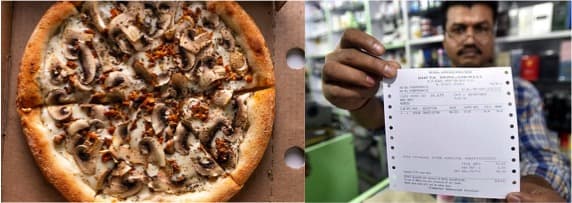
In court, the Khera Trading Company argued that their mozzarella topping should be classified as cheese, which attracts a lower GST of 12%. After all, cheese and milk solids made up more than a third of the toppings, it said.

But a court in Haryana state disagreed. It said the cheese in the topping could not be truly classified as cheese alone.

The toppings, it said, contained vegetable oil – 22% of the ingredients, to be precise. The firm said the oil helped with the texture, added flavour to the pizza and was cheap as well.

The court said vegetable fat was not an ingredient of cheese. That would disqualify the toppings to be counted as cheese – instead, it would be called an “edible preparation” and taxed at a higher 18%. The firm lost its case.

Such courtroom battles lead tax experts to believe that India’s ground-breaking GST – which replaced a thicket of local taxes across 29 states – is too convoluted. With five different rates – 5%, 12%, 18% and 28% and zero for unpacked food – the tax on nearly 2,000 goods and services has become too cumbersome, they say. (Petrol, diesel, electricity and real estate are exempt from GST).

“This has led to confusion on the categorisation of a product or service based upon specified codes along with their rates. There has been a plethora of [court] rulings since the inception of GST,” says Anita Rastogi, partner, GST and indirect taxes, at PricewaterhouseCoopers, a consulting firm.

The tax especially seems to have tied itself in knots when it comes to India’s food industry.

In September, a court ruled on a 20-month-long case over the paratha, a crisp, flaky pan-fried flatbread which attracts a GST of 18% as opposed to roti, a basic round flatbread which is taxed at 5%.

A Gujarat-based firm, Vadilal Industries, went to the court in June last year questioning why their packed frozen parathas – it made eight different types, some stuffed with cooked vegetables – should be taxed differently from rotis, a subcontinental staple. After all, the key ingredient in both was wheat flour.
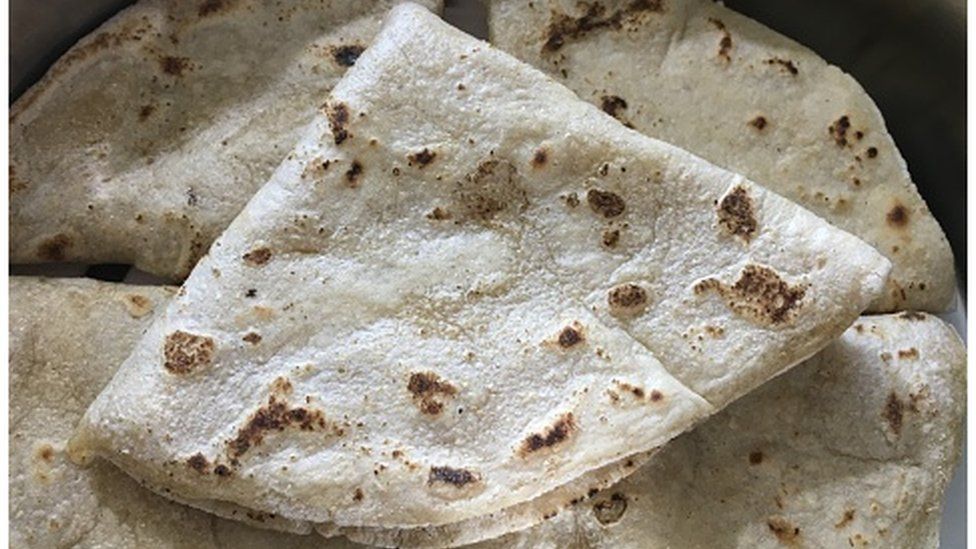
Image caption,The humble roti attracts a 5% GST…
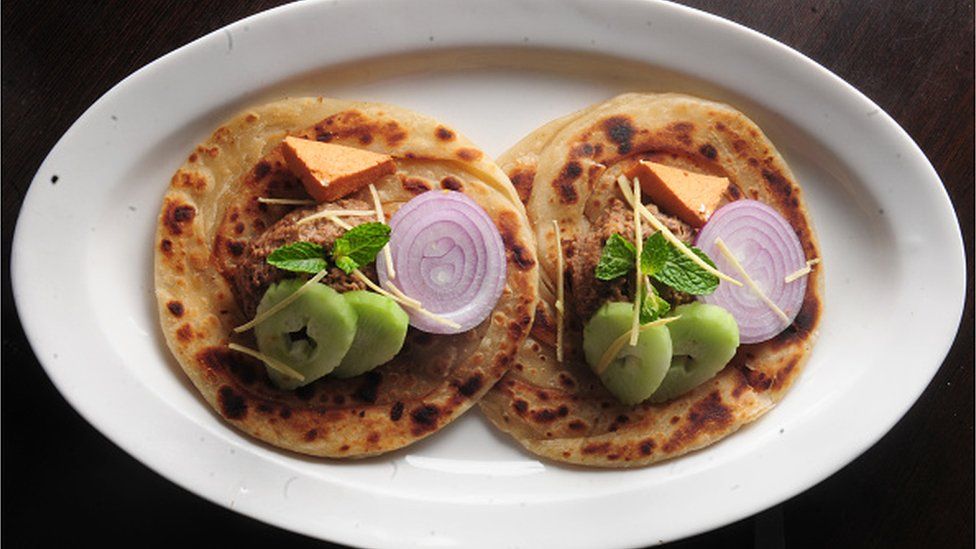
Image caption,…while the paratha is dearer at 18% tax
The court said no. The judge agreed that packed parathas mainly contained wheat flour but – here comes the catch – also had “other ingredients” such as water, vegetable oil, salt, vegetables and radish. Rejecting the plea the court said: “The parathas supplied by the appellant are different from roti.”

There are more of such head-scratching verdicts, as many term them. A court decided that ice creams sold by parlours would attract a higher (18%) tax than ice cream sold in restaurants since they sell “already manufactured ice cream and do not cook/prepare ice cream for consumption like a restaurant”. The parlours sell ice cream as a “good and not as a service, even if the supply has certain ingredients of a service”.

Then there was a case in Gujarat involving a maker of ‘fryums’ – an Indian snack food made of potato starch and sago – who wanted his product to be exempt from GST like papadams, thin, round pancake snacks. But the court noted that fryums were ready-to-eat when sold, while papadams had to be cooked. “Both the products are different and have their individual identity,” the judge said. The ‘fryums’ continue to attract a 18% tax.

A flavoured milk maker went to court challenging the 12% tax on his drink when ordinary milk enjoyed a tax exemption. The firm said its product comprised “92% milk, and only 8% sugar”. But the court said flavoured milk was not covered under the “definition of milk” in the laws and therefore was not exempt from the tax. And then there was a dispute over whether ready-to-cook dosa (a popular breakfast food) and idli (a steamed rice cake) should attract a higher tax than the batter used to make them.
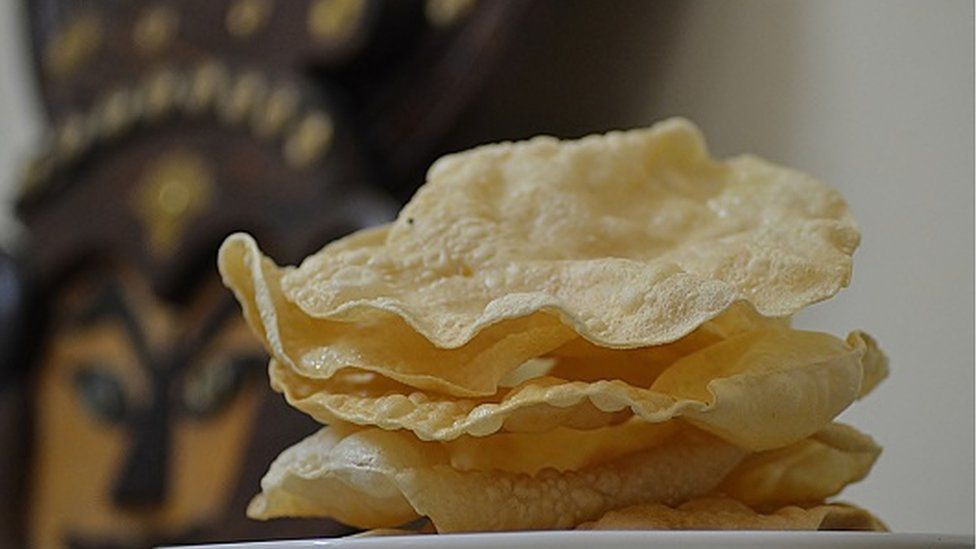
Image caption,Papadams, a popular snack, are exempt from GST
Tax experts believe one way to get around this would be to simplify and collapse the different rates into one reduced rate. (80% of the countries which introduced the GST after 1995 have opted for a single rate.)

Economists Vijay Kelkar and Ajay Shah say that “various pressure groups [in India] lobby for higher or lower taxes on one industry or another, and this distorts the resource allocation of the economy”. With the government being a major buyer of goods and services, a low single-rate GST would “yield cost savings for all levels of government”, they believe.

A low single rate is likely to eliminate classification disputes, reduce incentives for evasion and bring down compliance costs .

“The moment you conflate or reduce the rates, classification disputes will reduce. But in a country like India with high income disparities, a single or even a dual rate structure risks imposing a larger tax burden on the poor,” says Uday Pimprikar, partner, indirect tax services, India, at global accounting and consultancy firm EY.

Prime Minister Narendra Modi had once described the GST as a “good and simple tax”. Clearly, it hasn’t entirely turned out that way.

Stay Updated

Get the latest dairy industry news directly in your feed.

Prefer Us on Google Search

Swipe to continue reading

Previous Article

Next Article