Latest Blogs
See More

Indian Dairy News


DairyNews7x7
Global Dairy News

DairyNews7x7
McDonald’s has shelved its meat-free burger trial and stock in one of the major manufacturers has dipped nearly 70%
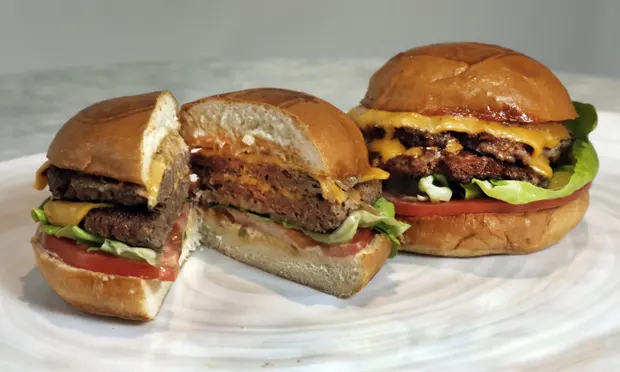
At the start of the year, McDonald’s launched a plant-based burger “sizzled on a flat-iron grill, then topped with slivered onions, tangy pickles, crisp shredded lettuce, Roma tomato slices, ketchup, mustard, mayo and a slice of melty American cheese”. For a while, it looked like a glimpse of the future.
The US test run of the McPlant burger was quietly shelved last month (it is still available in some markets, including the UK) in one of a series of setbacks for a meatless-meat industry that only a year ago was claiming it could change the great American menu for ever.
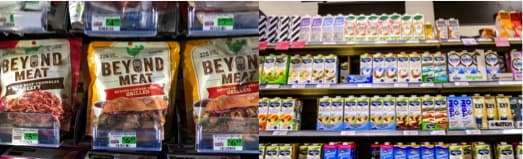
Getting meat eaters in the US to adopt plant-based alternatives has proven a challenge. Beyond Meat, which produces a variety of plant-based products, including imitations of ground beef, burgers, sausages, meatballs and jerky, has had a rough 12 months, with its stock dipping nearly 70%.
Multiple chains that partnered with the company, including McDonald’s, have quietly ended trial launches. In August, the company laid off 4% of its workforce after a slowdown in sales growth. Last week, its chief operating officer was reportedly arrested for biting another man on the nose during a road rage confrontation.
It’s a dramatic reversal of fortune. Just two years ago, Beyond Meat, its competitor Impossible Foods and the plant-based meat industry at large seemed poised to start a food revolution.
After nearly a decade of development, plant-based meat started hitting the mainstream in 2018. Grocery stores started selling Beyond Meat ground beef and sausages, while more restaurants were offering plant-based meat on their menus. Burger King announced the launch of the Impossible Whopper, while other fast-food chains came out with similar launches, like a plant-based breakfast sausage sandwich at Dunkin’ and meatless pepperoni pizza at Pizza Hut.
For a time, Wall Street went vegetarian. In 2019 Beyond Meat was valued at over $10bn (£8.9bn), more than Macy’s or Xerox. The most bullish investors believed that plant-based meat would make up 15% of all meat sales by 2030. But the reality of Americans’ interest in plant-based meat has proven more complicated than investors thought, and the adoption of meat alternatives has been slower than what was once hoped. Today Beyond Meat is valued at just over $900m (£799m).
The sobering story is similar to those experienced by many new ventures that see exhilarating hype after a flood of Silicon Valley venture capital cash, fueled by excitement about innovation. Bill Gates backed Beyond Meat, and a number of venture capital firms that typically invest in tech startups funneled money to startups making plant-based meat. Even the meat industry’s biggest players have, ironically, invested in companies coming up with plant-based meat.
"If I’m spending money in a restaurant, and I’m a meat eater, why would I spend money on plant-based meat? I would rather eat an actual burger"Bhagyashree Katare
“The bulls in the industry, I think, had a very wild, very optimistic estimate of how big the market could get,” said John Baumgartner, an analyst at Mizuho Securities. “There was a lot of exuberance in this category. It was new, it was different, it was on trend.
“But the consumer environment is tough, and this stuff is not cheap,” he added. “It’s going to take time to change cultural practices. It’s not going to happen overnight.”
Some investors believed that plant-based meat would become what plant-based dairy alternatives have become to the dairy market, Baumgartner said. Dairy alternatives, like almond, oat and soy milk, now make up 15% of the market and are worth $2.5bn (£2.2bn). A third of Americans drink some kind of non-dairy milk weekly.
But plant-based meats are different. For one, milk alternatives have been around for decades, while the development of plant-based meat really only started about a decade ago. Lactose intolerance has driven many Americans to choose non-dairy milk. And unlike plant-based meat, which is usually just as expensive or even slightly more expensive than regular meat, plant-based milks are priced between non-organic and organic milk, making their cost more accessible to consumers.
Both are, of course, better for animal welfare and potentially for tackling climate change, even more than plant-based meat. Research has shown that reducing meat consumption is the most effective thing individual consumers can do to fight climate change. One major study showed that a huge reduction in meat consumption – ideally 75% less beef, 90% less pork and half the number of eggs per world citizen – is “essential” to avoid climate catastrophe.
But consumers seem hesitant to adapt their behavior when the environment – not their health or wallets – is the sole beneficiary. Despite the increasing alarm over climate change, the number of Americans who are vegetarian or vegan has remained relatively stable over the last 20 years. About 5% of Americans in 2018 said they are vegetarian, while 3% are vegan, according to a Gallup poll.
Even when participants in a study conducted at Purdue University in Indiana were given information about the carbon footprint of meat production, participants were more likely to go with regular meat over a plant-based alternative.
Bhagyashree Katare, an author of the study, said that participants may have been put off by the taste of plant-based meat and the fact that it is not necessarily a healthier alternative to regular meat. Many plant-based meat alternatives are comparable to their real meat counterparts in nutritional content. That it costs about the same as meat also diminishes its attractiveness to consumers.
“If I’m spending money in a restaurant, and I’m a meat eater, why would I spend money on plant-based meat? I would rather eat an actual burger,” Katare said. “It’s a technology, and it takes a long time for people to trust the technology and adopt it. I think that’s where plant-based meat is. Maybe the technology will improve, and it will get better health-wise.”
Different companies have taken varying approaches to developing their plant-based meat products. Beyond Meat has focused on using natural ingredients, like protein from peas, mung beans and brown rice, for its meat. Impossible Food, its Silicon Valley competitor, has taken a more technological approach, using genetic engineering and fermentation to make its meat alternatives.
“It’s still quite early on in the plant-based food industry,” said David Julian McClements, a professor of food science at the University of Massachusetts Amherst who researches plant-based food alternatives. “It’s very challenging. Meat has a very complicated structural architecture, very complex, fibrous structure … And that structure is what determines its appearance and its texture, the way it behaves in your mouth when you’re chewing it, how chewy or juicy it is.”
When making their arguments against plant-based meat, lobbyists for the meat industry have pointed out that these meat alternatives are processed food. One ad campaign called them “ultra-processed imitations” and asked consumers “what’s hiding in your plant-based meat?”
Plant-based meat has also struck a nerve in America’s neverending culture wars. Ten conservative states in 2018 and 2019 outlawed the use of “meat” in labels for products that are not coming from animals, targeting the plant-based meat industry. Republicans took on a talking line in 2021 that Democrats were going after red meat as a part of Joe Biden’s climate plan, though it was based mostly on speculation and false reports.
“Not gonna happen in Texas!” Greg Abbott, the state’s governor, tweeted in response to the fake reports.
Despite naysayers against plant-based meat, McClements is optimistic that science can bring better meat alternatives, ones that will eventually be harder for meat eaters to resist.
“Just because it’s processed doesn’t mean it’s unhealthy. You can design good nutrition and health into these products. Some companies are really making a big effort to do that.”
There is still a lot of cash going toward companies working on better alternatives. The Good Food Institute, a non-profit that promotes plant-based alternatives, estimated that such companies got $1.4bn (£1.2bn) in funding in 2021 – a record for the industry. Companies are also making a wider array of products, including alternatives to fish and steak.
“The ideal situation is you make a product that is indistinguishable from meat, and it’s cheaper, convenient and accessible,” McClements said. “Then if you have a choice between meat and this product, you always buy the plant-based one because you know it’s better for the environment, it’s definitely better for animal welfare, and it should be better for your health if designed properly.”