Latest Blogs
See More


Indian Dairy News



DairyNews7x7
Global Dairy News

DairyNews7x7
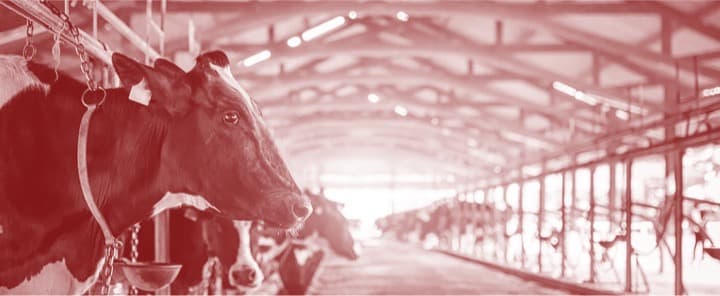
In fact, global food systems are a major driver of emissions. The Intergovernmental Panel on Climate Change’s (IPCC) Sixth Assessment Report finds that the agriculture, forestry and other land use sector on average, accounted for 13-21% of global total anthropogenic greenhouse gas (GHG) emissions in the period 2010-2019.
Within the food system, the meat and dairy industry is accountable for the largest amount of emissions. At the same time, climatic changes are also creating significant impact on the dairy industry.
What is AMNC, the World Economic Forum’s meeting in China?
The World Economic Forum’s Annual Meeting of the New Champions focuses on leadership, innovation and entrepreneurship.
More than 2,000 participants, including leading experts in science and technology, attend the meeting in Dalian, People’s Republic of China. They will take part in over 100 working sessions.
The meeting pools ideas and galvanizes progress towards a building a future where entrepreneurship serves everyone in society. The key focus areas are: Fostering Agile Industry Leadership, Achieving Technology Leadership, Sustaining Economic Leadership and Promoting Responsible Leadership.
Heat stress reduces milk yield, fluctuations in temperatures impede crop growth, and disrupted hydrological cycles result in water shortages for productive farms. If global GHG emissions remain high, the dairy and meat industries will lose $39.94 billion annually by the end of this century.
Beyond these financial losses, there will be broader socioeconomic implications for communities and society at large.
Businesses within the dairy industry are increasingly cognisant of the implications and are assuming leadership in transforming the sector to be more sustainable.
Increased production of milk and other dairy products is creating rising emissions from the industry. This occurs over the full life cycle, from producing the resources used on the farm, through processing and distribution to consumer consumption and waste handling.
This includes land cleared to make way for cattle, to the enteric fermentation, manure handling and storage during the growth cycles, and the product packaging and retail in supermarkets.
Other agricultural commodities, such as soy and palm oil are also heavily used in this industry. Notably, as a great fat supplement, palm oil is introduced into dairy products such as milk powder and ice cream, as well as into animal feed to provide energy and enable milk to maintain its fat content.
Given the scale and size of the sector, China’s commitment to reduce the environmental footprint of its agricultural commodities, together with net zero strategies from leading Chinese food companies, will bring meaningful and positive impact at global scale.
This is a huge step forward for sustainable dairy production, given that the company is the largest dairy producer in China – the seventh largest in the world – supplying more than 95% of urban households in China. It joins other Chinese food giants in making the deforestation-free pledge, including COFCO International.
As an industry leader, Mengniu’s deforestation-free commitment will catalyse and drive large-scale transformation across global agri-commodity supply chains over the next seven years. Under the pledge, all its suppliers, including suppliers in the palm oil and soybean sectors, will need to ensure that their products are traceable and certified to be deforestation-free.
To illustrate, China is the world’s largest importer of soy, where 85% of the soymeal after the oil extraction stage becomes animal feed. With more than 60% of the soybean coming from Brazil, such a commitment will help prevent further deforestation in the critical Amazon biome.
According to EY Future Consumer Index in 2022, one in four global consumers place “planet first” as the biggest influential factor in purchasing decisions, ahead of “affordability first” or “experience first”. Two thirds of Chinese consumers believe that businesses need to bring about positive social impact, double that of the global average.
Companies should consider these shifting consumer trends in their sales and marketing strategies. Companies who are prepared to go the extra mile to reduce their emissions, stop deforestation and support more climate-friendly consumption will be able to strengthen their competitive advantage and improve consumer relationships in the longer run.
Existing and potential investors are also increasingly interested in financing nature-based solutions such as sustainable food production and supply chains, as part of fulfilling their own nature and climate commitments.
With the adoption of Kunming-Montreal Global Biodiversity Framework during the UN Biodiversity Conference (COP15) by close to 200 countries in December 2022, more companies and investors are taking action to better safeguard biodiversity, protect and restore landscapes.
The Taskforce on Nature-related Financial Disclosures (TNFD) provides a useful framework for nature related risk management and disclosure.
What is the World Economic Forum doing to help ensure global food security?
Two billion people in the world currently suffer from malnutrition and according to some estimates, we need 60% more food to feed the global population by 2050. Yet the agricultural sector is ill-equipped to meet this demand: 700 million of its workers currently live in poverty, and it is already responsible for 70% of the world’s water consumption and 30% of global greenhouse gas emissions.
New technologies could help our food systems become more sustainable and efficient, but unfortunately the agricultural sector has fallen behind other sectors in terms of technology adoption.
Launched in 2018, the Forum’s Innovation with a Purpose Platform is a large-scale partnership that facilitates the adoption of new technologies and other innovations to transform the way we produce, distribute and consume our food.
With research, increasing investments in new agriculture technologies and the integration of local and regional initiatives aimed at enhancing food security, the platform is working with over 50 partner institutions and 1,000 leaders around the world to leverage emerging technologies to make our food systems more sustainable, inclusive and efficient.
The World Economic Forum is bringing together public and private actors from across supply chains to catalyse and promote action oriented partnerships and solutions to address the world’s food and climate crises, working with companies to translate their ambition and commitments to credible and effective actions.
Farmers lie at the heart of the food systems transformation. To transition food systems to be more nutritious, more affordable and more environmentally sustainable, it is essential to provide support to the farmers, especially smallholder farmers, promote active collaboration across supply chains, and help farms harness the power of technological innovations. These are pre-requisite for success.