Latest Blogs
See More
Indian Dairy News
DairyNews7x7
Global Dairy News

DairyNews7x7
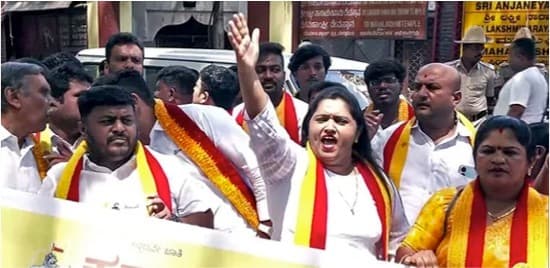
State milk cooperatives have fostered a no-competition spirit among each other. Now, the Gujarat-based milk procurer has caused a stir as it enters the South
In the 1980s and the 1990s, the best suitor to the rich, brown Robusta from the blue Nilgiris was the creamy-complexioned Aavin from Tamil Nadu’s plains. In neighbouring Karnataka and Andhra Pradesh too, similar alliances were nurtured: Coorg’s Arabica was found to be most compatible with Nandini, and the crimson-red make from Andhra’s Araku, considered limited edition, was matched with Vijaya, the whitecap from the state’s sunny side. The coffee and cream duos grew to win the hearts of every south Indian whose mornings were unthinkable without Aavin, Nandini, and Vijaya — the homegrown cooperative milk federations’ 6 am drop-offs.
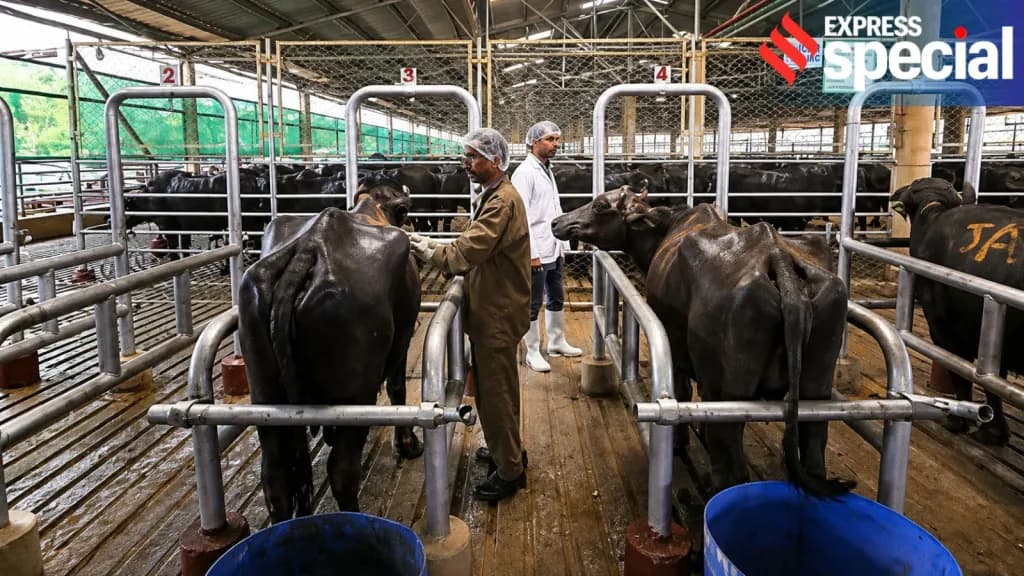
Cut to 2020. Enter Amul, and a bitter battle ensued disrupting the long-standing relationship between dairy farmers, federations, and consumers across all southern states. Amul, or Anand Milk Union Limited, owned by the Gujarat Cooperative Milk Marketing Federation (GCMMF), is considered India’s largest and most successful milk procurer and marketer. In the last two years, it has been repeatedly chastised for barging into territories alien to its jurisdiction, buying up liquid milk, and thronging the south Indian markets with its brightly packaged products. At the heart of the discontent of Aavin, Nandini, Vijaya, and Kerala’s Milma —the four regional milk marketing federations —is Amul’s unfair pricing and procurement of milk from dairy farmers.
Earlier this month, Tamil Nadu chief minister MK Stalin requested the urgent intervention of Union home minister Amit Shah to direct Amul to desist from milk procurement from Tamil Nadu’s Aavin milk shed area. Stalin said that the entry of Amul into the market would create unhealthy competition with Aavin, the state’s dairy cooperative federation functioning since 1981.
“Until now, Amul was just selling their products through their outlets in the state,” Stalin said in his letter to Shah. “Recently, it has come to our notice that the Kaira District Cooperative Milk Producers’ Union (one of the unions that forms Amul), has utilised their multi-state cooperative licence, to install chilling centres and a processing plant in Krishnagiri district and has planned to procure milk through FPOs and SHGs in and around Krishnagiri, Dharmapuri, Vellore, Ranipet, Tirupathur, Kanchipuram and Thiruvallur districts in our state,” he wrote.
“This act of AMUL infringes on Aavin’s milk shed area which has been nurtured in true cooperative spirit over decades,” the TN CM wrote.
K Annamalai, the BJP state chief, however, refuted the allegations. Aavin’s daily milk procurement is 35 LLPD against the total milk production of 244 LLPD in the state, he said.
Amul’s procurement in the South
Southern milk federations are up in arms at the way Amul has bought liquid milk from dairy farmers through agents at higher rates than the local unions, enticing farmers with bonuses and spot payments.
In Andhra Pradesh for instance, the first state that Amul tried penetrating in late 2020, it collected milk through the Jagananna milk flood scheme, introduced by the state government. By 2022, farmers reported a fifth increase in the procurement price of both cow and buffalo milk. Subsequently, Amul also increased the collection price of butter by ₹32 in the Uttarandhra districts.
“Jagananna milk collection started in December 2020 in three districts, and within three months, Amul started expanding its procurement operations to 17 districts. From 100 villages and 27,300 farmers, the number has now risen to more than 2,50,000 farmers across nearly 2,900 villages in the state. This has helped us farmers tremendously,” V Srinivasa Rao, the leader of the Krishna District Milk Producers Mutually Aided Cooperative Milk Union said.
After the state raised the procurement price of milk for the fifth time in one year, Amul was buying buffalo milk at ₹87.52, paying ₹16 higher than the state dairy, and cow milk at ₹42.46, paying ₹8.26 more than Vijaya Dairy’s procurement price. By the end of 2022, Amul had compensated the farmers by paying ₹232 crore to buy more than five crore litres of milk from Kaira, Sabarkantha, and Banaskantha unions in the Rayalaseema, Coastandhra and Uttarandhra regions, respectively, according to Seediri Appalaraju, the minister for Animal Husbandry and Fisheries made at a press conference last year in November.
The milk procurement price is akin to the minimum support price (MSP), a baseline or floor price below which the market prices of commodities cannot fall even in case of a supply glut or a bumper crop. In the case of crops, while the Central government decides the MSP beforehand each year, the state cooperatives determine the procurement and sale price of milk and milk products in consultation with the state dairy federation and state government based on the availability of milk.
“Before winning the election, YS Jagan Mohan Reddy promised to pay the dairy farmers a higher procurement price than the private dairies if they were voted to power. The government is now enabling this through Amul. Government officials are holding camps to threaten farmers to supply milk to Amul and not to Visakha or Vijaya dairies,” said former Communist Party of India (Marxist) parliamentarian P Madhu.
Vijay Mohan, a dairy expert from Andhra Pradesh said that private players too increased the procurement costs of raw milk because of a decline in milk output due to the Lumpy Skin Disease (LSD) outbreak in 2022-2023 and an increase in fodder prices. “Commensurate with the input costs, the dairy industry players took price hikes in cow and buffalo milk but once the threat and spread of the disease waned, they did not resort to additional price hikes. The health of Amul’s balance sheet allows it to procure milk at higher costs even if they are not viable in the short term.”
Last year, Amul also took over the assets of the defunct Chittoor Dairy, a unit of the Andhra Pradesh Dairy Development Cooperative Federation (APDDCF) investing ₹385 crore to create a new facility. In July 2023, chief minister YS Jagan Reddy laid the foundation for the Amul milk procurement and production facility. The Chittoor unit was shut down 20 years ago after incurring recurrent losses due to the advent of Heritage Dairy, a private firm owned by Nara Chandrababu Naidu’s wife, N Bhuvaneswari.
The Anand-based cooperative corners dairy unions by pumping in cash through agents, Madhu said. According to Srinivas Rao, who leads the Krishna District Milk Producers Mutually Aided Cooperative Milk Union, Amul paid a spot bonus per litre to farmers and unions through agents. Small district units of the state dairy are thus made part of the Gujarat cooperative’s network, which also includes private players to supply milk for Amul. The three-tier system in the Dairy Cooperative structure consists of a Dairy Cooperative Society at the village (Primary Dairy Cooperative Society), district, and state levels.
“This is how the cooperative dairies are systematically dismantled in the state,” the CPI (M) leader said.
Other states are feeling the pinch too
“As cooperatives, our aim is not to make profits. It is to support the farmers and uphold the cooperative movement. Amul is functioning like a Multinational Corporation and is violating the state’s cooperative laws,” KS Mani, chairman of Milma, the milk brand run by the Kerala Cooperative Milk Marketing Federation (KCMMF), said.
Mani, who is also on the board of the National Cooperative Dairy Federation of India, said he tabled the issue of Amul’s encroachment amongst the NCDFI’s members. “Amul, or any cooperative for that matter can sell all other products across India, but procurement and sale of liquid milk should be restricted within their jurisdiction. As a sister concern, I am proud that Amul is doing well. But we should not fight each other. Amul should share its best practices and help other federations to function better,” he said.
In Karnataka, the issue turned into a political slugfest during the polls last year.
The Congress alleged that the Bharatiya Janata Party (BJP) was allowing the Gujarat-based Amul to “strangulate” Nandini, Karnataka’s milk cooperative — a charge vehemently denied by the BJP. Brand Nandini, run by the Karnataka Milk Federation (KMF), offers the cheapest milk in the state.
A dairy farmer in Karnataka’s Mandya region who did not wish to be named said, “Amul is procuring milk through the India Tobacco Company-owned (ITC) Sunfeast’s farmer producer organisations (FPO) network. Sunfeast is doing white-labelling for Amul, that is to say, it is packaging products for Amul, which will later be sold at Amul outlets.”
The Karnataka government, now run by the Congress, has introduced a ₹5 subsidy for every litre of milk sold to state-run KMP.