Latest Blogs
See More

Indian Dairy News

DairyNews7x7
Global Dairy News

DairyNews7x7
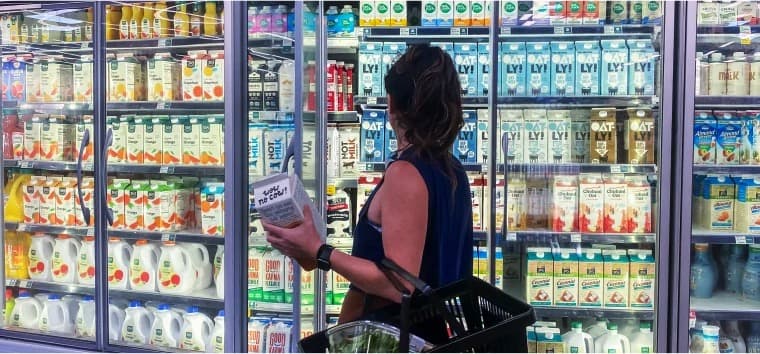
WASHINGTON — Almond milk — not almond beverage, almond drink, or even almond juice — appears here to stay.
There’s few issues in the food world that generate as much vitriol as the debate over what to call nut, oat, and other plant-based alternatives to cow’s milk.
Dairy farmers and their advocates for years have tried everything to convince regulators companies like Silk and Oatly shouldn’t be able to slap “the m word” on their products. Actress Aubrey Plaza starred in a commercial sarcastically plugging the launch of a new fictitious product dubbed “Wood Milk.” State legislators from Oklahoma and North Carolina to Virginia and Maryland have introduced bills banning these products from being called milk.
Rep. Mike Simpson (R-Idaho), a vocal dairy advocate in Congress, has even walked around grocery stores placing “This is not milk” sticky notes on cartons of plant-based drinks, he told STAT.
For dairy advocates, the issue is simple. Milk comes from a lactating mammal, and as former FDA Commissioner Scott Gottlieb once said, “an almond doesn’t lactate.”
“If you were able to extract liquid from a brick, would you be able to call that milk?” asked Sen. Peter Welch (D-Vt.) in an interview with STAT. “Milk is milk.”
But the Food and Drug Administration released a draft policy earlier this year allowing plant-based companies to use “milk.” Regulators cited their own research showing that most consumers aren’t being duped into buying plant-based products, but instead seek them out voluntarily.
The dairy industry’s multi-year campaign? “It really hasn’t worked,” said Stephen Ostroff, a former Deputy Commissioner for Foods and Veterinary Medicine at the FDA.
The entire fight is a window into the ways food companies use nutrition policy to impact their bottom line. In fact, the fight over the labeling of plant-based products is just one way in which the milk industry has tried to use nutrition policy to hamper the business of their competitors. Dairy companies have also opposed efforts to include plant-based alternatives in the public assistance program WIC.
“It’s up to the dairy industry to go out there and promote the benefits of their products, not try to drag the other guy off the market — that’s the far more effective strategy,” added Ostroff.
The dairy industry’s one last shot to change the labeling of these products, if it can’t convince the FDA to completely abandon its policy, likely rests with a massive agriculture bill that must pass in the coming months. Dairy-state lawmakers are trying to get language into that legislation, known colloquially as the Farm Bill, that would ban plant-based companies from using the word milk. But it’s an uphill battle: Lawmakers have been pushing a similar legislative effort since 2017 to no avail, and if the bill does get signed into law, it’s likely to be challenged in court.
Adding to the challenge: the dairy industry is also splintering on this very issue, making their pitch to lawmakers that much harder.
In an interview with STAT, a spokesperson for the National Milk Producers Federation put a positive spin on the FDA’s latest move, highlighting a separate provision that recommends plant-based companies calling their products milk include a voluntary disclaimer that they are lower in certain nutrients than cow’s milk.
“Yes, a lot of dairy farmers are livid that [plant-based products] can still use the term milk — we don’t agree with that either — but we do think that the FDA has at least taken a step in our direction,” said Alan Bjerga, the group’s executive vice president of communications & industry relations.
“Remember the old truism: First they ignore you, then they laugh at you, then you fight them, then you win,” Bjerga added. “We are in stage three right now.”
Much of the motivation behind the dairy industry’s campaign appears to be economic. Dairy consumption has been dropping for decades, while the plant-based milk industry has rapidly grown into a multi-billion dollar enterprise. While the dairy industry emphasizes its sales still dramatically outpace plant-based products, and that plant-based sales are floundering as of late, there’s evidence that some people are replacing their cow’s milk with plant-based alternatives.
But it’s about more than just money. Family farms produce most of the dairy in the United States, according to the Department of Agriculture, and many of those farms are multi-generational.
“There’s an element of pride here,” said Welch, the Vermont senator. “They’re entitled to the respect that the milk label has conveyed to them.”
However, the dairy industry insists that the entire effort is meant to stop consumer deception.
Shortly after the FDA released its draft policy earlier this year, postcards from dairy farmers around the country began arriving at the agency’s Rockville, Maryland office complex. In bright blue letters they demanded: “STOP MISLEADING LABELS.”
“Consumers are confused by the misuse of the word ‘milk’ on imitation beverages. They should not be misled into associating the nutritional profile of cow’s milk, that is packed with 13 essential nutrients for growth including calcium, potassium and protein, to the inferior nutritional content of these imitation products,” the postcards stated.
It’s true that dairy and plant-based milks are very different nutritionally. Cow milk generally has higher levels of protein than plant-based milk, which generally also has fewer calories and saturated fat. Some plant-based milks have more potassium and calcium than cow’s milk, others do not.
The dairy industry points to a number of studies showing that a portion of consumers purchasing plant-based products believed they contain cows milk, and that consumers of these products also often believe they have “the same or more” vitamins, protein, and minerals like calcium and potassium.
But the FDA commissioned its own focus groups in 2019 that found that while consumers “do not understand the nutritional differences between milk and plant-based milk alternatives,” they don’t believe the products contain dairy milk. That finding convinced the FDA that blocking plant-based products from calling themselves milk wasn’t necessary.
The dairy industry’s last shot to crack down on plant-based products likely rests with lawmakers, who have introduced a bill to ban plant-based products from calling themselves milks. The lead sponsors of that bill in the House and Senate confirmed to STAT they are pushing to get that legislation signed in the coming months as part of the farm bill reauthorization.
Though Congress is talking about a legislative ban on “milk,” the effort is in early stages.
Simpson, one of the lead sponsor of the House effort, told STAT he hadn’t had any conversation with the Agriculture Committee yet, which controls the process for passing the farm bill.
And while the chairman of that committee, GT Thompson, is himself from a family of dairy farmers and disagrees with the FDA’s policy decision, he sounded doubtful about his panel’s jurisdiction over the issue in a recent conversation with STAT, since FDA policy is not typically in the jurisdiction of his committee.
And not everyone in the dairy industry is actively pushing that bill, which is known as the Dairy Pride Act. One of the lobbies representing the dairy industry, the International Dairy Foods Association, is sitting on the sidelines. Some of its member companies, such as Danone, the company behind brands like Dannon and Activia yogurt, have recently added plant-based milk products to their lines. Danone now owns the Silk and So Delicious brands, too, and supports the FDA’s decision to allow the use of the word “milk.” An IDFA spokesperson told STAT that its members companies’ varied positions on the issue did not influence its decision not to lobby on the bill.
If the bill becomes law, it also will almost certainly be challenged in court. Both plant-based and dairy-industry lawyers said it would be difficult to defend it. That’s because the government can only limit so-called commercial speech if it has a “compelling interest” to do so. Preventing consumer deception could be considered one, but the government already has its own research calling into question just how deceptive the terminology is.
“It’s a law that says you can’t say this because it’s misleading, but the government has data showing it’s not misleading,” said Madeline Cohen, senior regulatory attorney at the Good Food Institute which advocates for plant-based products.
Faced with the fact that almond, oat, and soy milk will likely contain the word milk on their labels for the foreseeable future, the dairy industry has begun a new tactic: Trolling.
Lobbying groups have taken to shaming plant-based milk companies into complying with the FDA’s suggestion that they include a statement on their label disclosing that their products are lower in certain nutrients than cow’s milk. The National Milk Producers Federation recently went to grocery stores to photograph current plant-based milk labels. In a blog post, it argued that labels on products like Ripple pea milk “illustrates just how out of hand unchecked marketing claims have become — and why FDA shouldn’t hesitate in bringing it under control.”
The Plant Based Foods Association, meanwhile, has threatened to sue FDA over the recommendation about disclosing nutritional value compared to milk. They say the policy is unprecedented, unnecessary, and would unfairly dissuade consumers from buying their products because the disclosures “point out to consumers nine ways in which cow’s milk may, subjectively, be more nutritious than plant-based milks and none of the ways in which plant-based milks [may be] more nutritious than cow’s milk.”
There’s also been no shortage of mocking the proliferation of products now being used to create plant-based milk.
In addition to the commercial starring Plaza, the California Milk Processor Board has created its own ad featuring depictions of salmon milk, cranberry milk, and noodle milk.
The video, to the tune of “If you’re happy and you know it,” ends with: “Everybody wants to be milk. It remains the undefeated real healthy tasty beverage champion.”
Source : Statnews USA Sep 26th 2023 by Nicholos Florko