Latest Blogs
See More
Indian Dairy News

DairyNews7x7
Global Dairy News

DairyNews7x7

Though Shashi Kumar, the co-founder and CEO of Akshayakalpa Organic, a farmer entrepreneurship initiative, was born into a farming family, it was never a career path his father wanted him to pursue. “I am not the exception. He educated me out of farming to become an engineer,” recalls Shashi, who went on to spend close to 15 years in the IT industry before going back to his roots in 2010, when he co-founded Akshayakalpa Organic in an attempt to create a sustainable, economically-viable farm model. “
Over the last 13-odd years, the company, seed-funded by 27 technology professionals, has expanded and increased its reach, supplying organic milk, produce, and eggs to over 3 lakh consumers across Bengaluru, Chennai, and Hyderabad. They have also, most recently, entered Maharashtra and are now present in retail and e-commerce stores in Mumbai and Pune. They have also just identified a place in the Manchar area, near Pune, where they plan to set up a production system. “We have been discussing with farm groups, but it will take 4-5 years to establish,” he says, adding that till this is up and running, the milk products will be coming from their 24-acre farm in Tiptur, Karnataka.
In a freewheeling interview, Kumar talks about the journey so far, the benefits offered by organic farming and what lies ahead for the company.
Milk has been villainised for several reasons, including ethics and health. What are your thoughts about it, especially considering there are so many plant-based options in the market today?
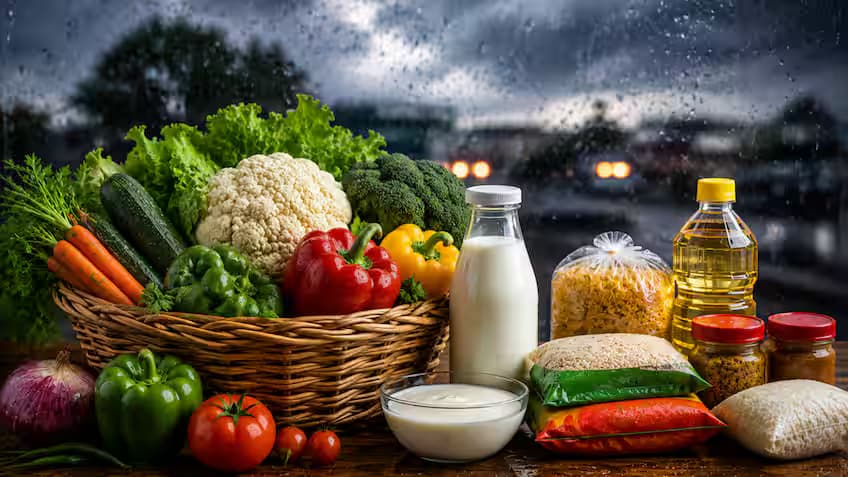
Whether we like it or not, milk is the cheapest source of protein for humans. For example, 1 kg of almond milk costs ₹250, while a litter of organic milk is around ₹90 per litre. Also, if you look at a protein-wise comparison between almond milk and this one, it has over 50% more protein. It is a beautiful system that one can fortify and use. In rural India, where there are huge nutrition issues, milk can be a wonderful food. For a lot of people who are vegetarian and do not take meat, for whom access to protein is a limitation, milk can fill that gap.
Dairy allows you to do local production — something your almonds and oats cannot do. Most of the almonds, nearly 80%, are produced in California. Why do you want to get those almonds to India to drink almond milk? Go to your neighbourhood, work with a farmer, and ask him instead. While I have a lot of respect for the vegan movement, if you want to be successful, you need to go local. It is not good enough to say that I don’t eat dairy.
What about the research that indicates many of us are lactose intolerant?
Milk drinking is an acquired habit, resulting from around 10,000 years of agriculture when we domesticated animals like horses and cows. Our gut has evolved over a period of time to be able to digest milk.
So why are we talking about lactose intolerance? It is because our food habits have changed.
Our gut has an enzyme called lactase that acts on milk and converts lactose into glucose and galactose so the body can absorb it. The lactase action on lactose is a very slow and gradual process, something the body needs.
Today, with the fast-food culture, where we eat a lot of junk food, we have lost the lactase enzyme in the gut. That is the source of the problem, not milk. There is a lot of literature that says that the gut can be re-cultivated with lactose enzyme, and we can start digesting the lactose very easily. It is very important we understand this, or else we will lose access to the cheapest source of protein available.
Why is the farmer entrepreneur so important? How does the Akshayakalpa model help create them?
This is the status quo throughout India right now. Farmers don’t want their children to become farmers because they see it as not profitable. In coastal Karnataka, young men who take up farming don’t get girls to get married to. No parent wants to marry off their daughter to a guy who is a farmer because it now has a stigma.
So, how do you solve this problem? I believe every parent should have a role model farmer in the village who can prove that farming can be very remunerative. Being a farmer, I can take care of my parents, educate my children, build a home, and have a wonderful, healthy life. This is the only way we can encourage people to farm.
At Akshayakalpa, we work closely with the farmer to help him become an entrepreneur. We go to villages, do surveys in the villages, pick up just one farmer in a village, and work with him. We teach him better soil management, do a lot of trenching and bunding, and introduce poultry, bees, greens, and vegetables. It is a 3-year-long journey, a difficult phase. We have gone to 1200 villages and selected 1200 farmers, taking their revenues to ₹1,00,000 every month.
Market access is given, and we continue to deliver backend services. We work in a cluster model. Our first cluster is operated out of Tiptur district in Karnataka. Our second cluster is in Pooriyambakkam, Tamil Nadu, and our third cluster is coming up near Shad Nagar, near Hyderabad. The fourth cluster will be coming up in Manchar, near Pune.
While the Green and White Revolutions have undoubtedly made mistakes, they have been instrumental in feeding a burgeoning population and mitigating hunger. Scalability, therefore, is a very important aspect of food production. Can a model like this be scaled up, or will food produced in an organic system continue to be a somewhat niche product?
What we were trying to do when we set up was to create a role model that we wanted others to copy. There is nothing proprietary about this model, and we need to make it accessible to everyone.
One Akshayakalpa cannot do it, but there is nothing holding back other people from imitating this model. We have trained dairies in Jharkhand and Hyderabad, who have copied what we are doing and are now doing it on their own. Others are also welcome to copy this; it is what we want.
I am not criticising the Green Revolution. We had to do what was required then, and we need to do what is required now. We need to go back 100 years and recreate what we were doing back then. And yes, it can be easily scaled up, in my opinion.
Do you see a growth in consumer awareness when it comes to food? Has the organic food narrative changed in any way over the years?
Organic as a concept has a lot of backers from the consumer space, and because of this, the government has come in to ensure that they aren’t being taken for a ride. Consumer demand will change government behaviour. You can’t just write organic and sell something. Today, you have to put the Indian Organic Logo given by APEDA as well as the certification from the Food Safety Standards Association of India (FSSAI). Also, the minimum residual levels in food should be ten times less in organic when compared to conventional. Anyone not following these norms will get into trouble.
The second aspect is that farms are getting more productive. Initially, it was a struggle, but farmers are now seeing the benefit as they are spending less on producing the same food. With more farmers and greater consumer adaptation, economies of scale will come into this industry.
We have done a lot of consumer surveys, and you will be surprised to know that more than 80% of them buy it for their children, even if they buy conventional food for themselves. These children will become organic consumers. Affordability isn’t an issue; it is awareness. If we create awareness, the change will happen.
What are your thoughts about the millet moment in India? Do you think this is a good thing or not from a farming perspective?
How were millets grown earlier? If a guy had one acre of land—he would grow ragi, beans, mustard, a little bit of urad, black gram—a mix of everything in the same cropping system. Here, they are talking about the millets in a monoculture system. What we did in the Green Revolution, we are trying to do with millets.
Millets are hardy, environmentally resistant crops. That should be the narrative rather than glorifying millets, as glorifying things gets us into trouble. It is a good initiative that they are promoting hardy crops, but we need to take a balanced view.
Source : The Hindu Nov 9th 2023