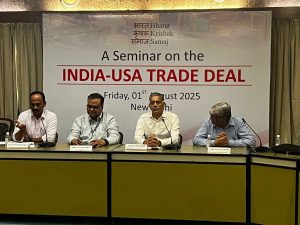
Today I was invited to a panel discussion on the India-US Trade Deal, organised by Bharat Krishak Samaj. The session was opened by Ajay Vir Jakhar, who, referring to the pre-decided title of the program, jokingly asked, "What should we call this program now—India-US No Deal?" The hall erupted in laughter, instantly setting the tone for a candid and lively discussion.
Mr. Jakhar, during the course of the discussion, invited me to share my views on the current status of the India-US FTA from the dairy sector’s perspective. I structured my deliberation around four to five key areas.
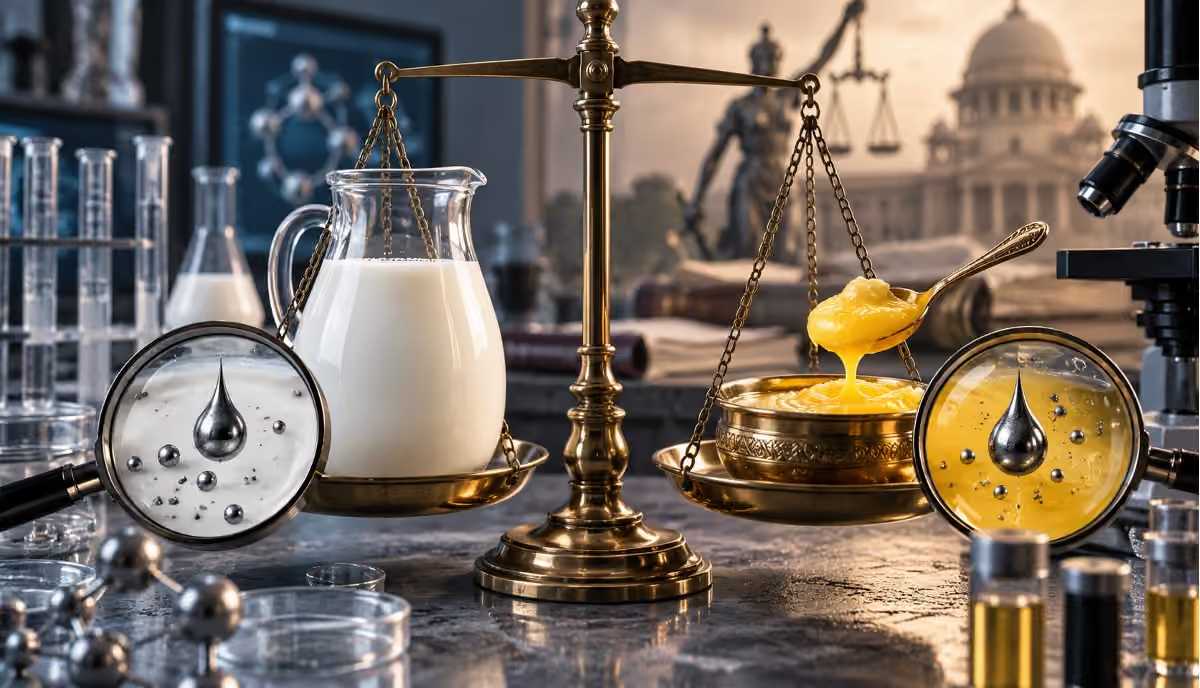
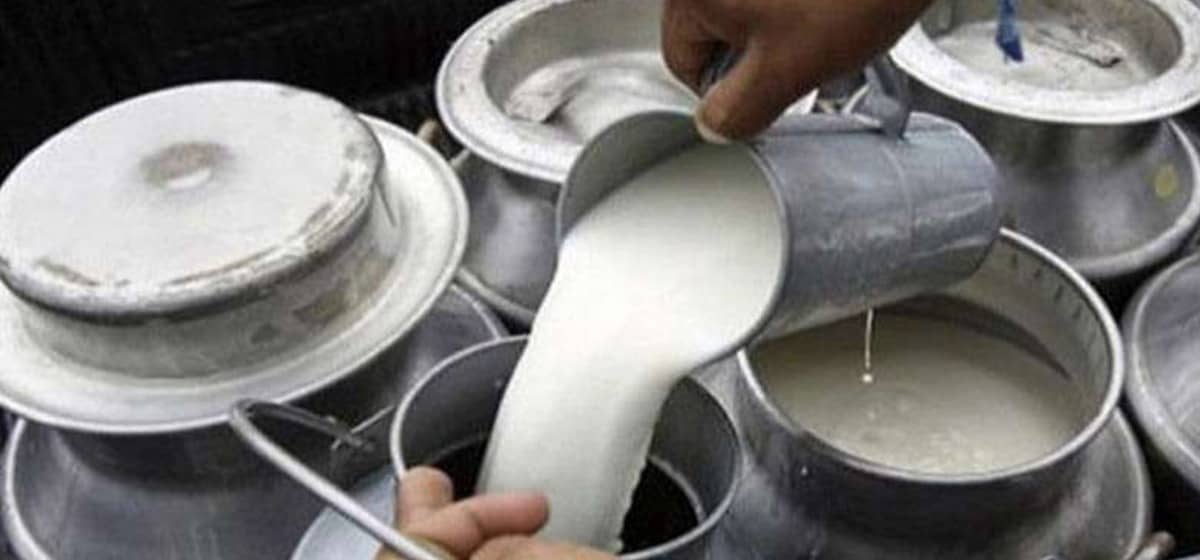
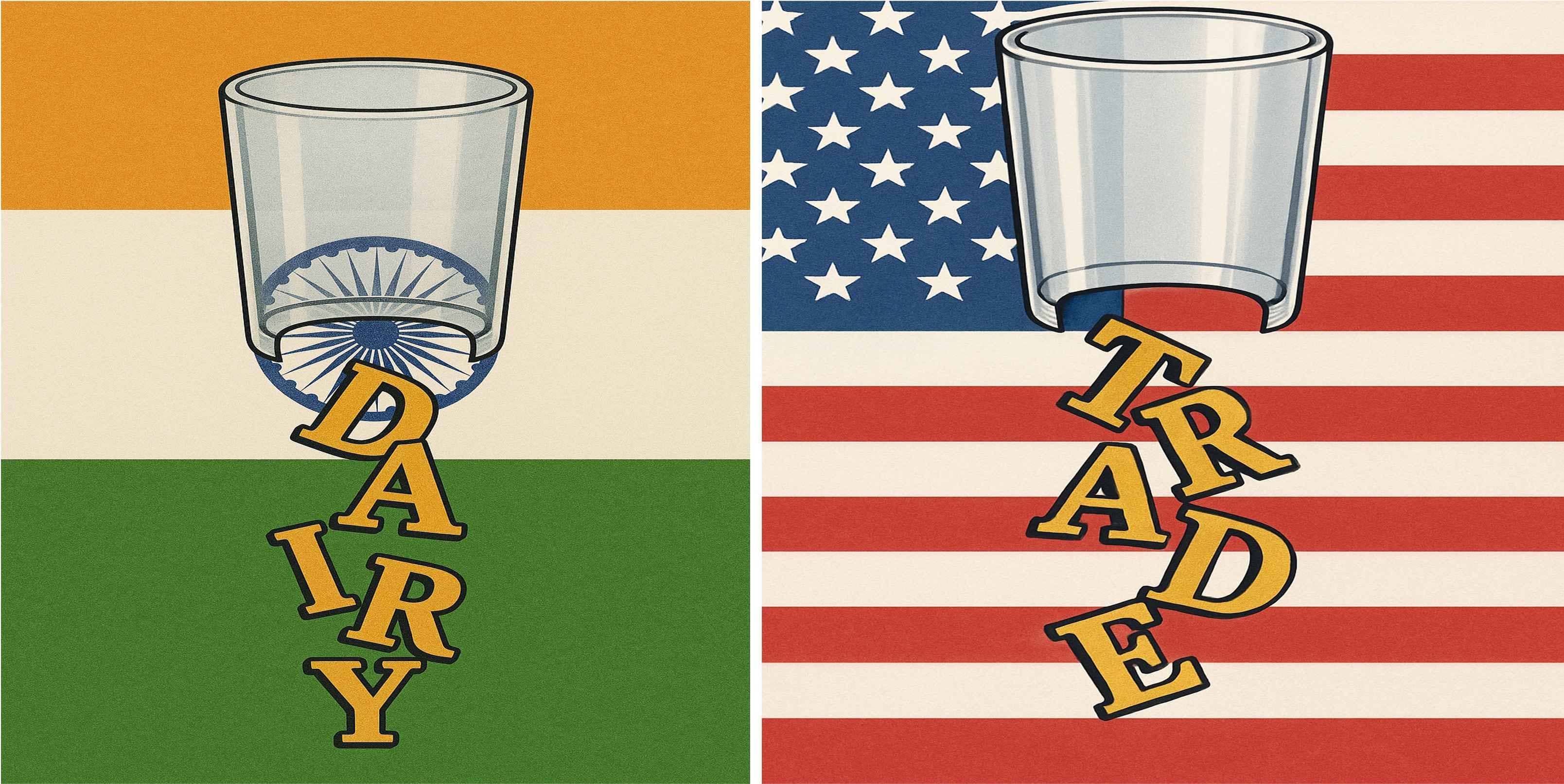
First, I voiced my objection to the government’s continued use of the dairy sector as a non-negotiable item in most FTAs, ostensibly to protect our dairy farmers. Dairy is the largest contributor to India’s agricultural GDP and GVA. Thus, invoking dairy in FTAs is less about protecting individual farmers and more about safeguarding the agricultural sector at large. There is hardly any evidence of a farmer committing suicide with a cow tied up in the backyard.
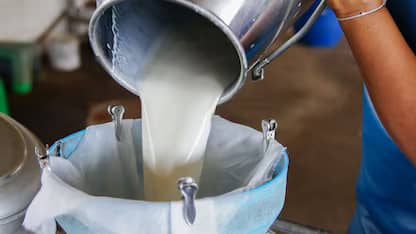
At the heart of this lies India’s deeply sensitive socio-economic fabric, interwoven with the dairy sector that supports over 80 million rural households. The Indian government has traditionally resisted foreign demands to allow imports of milk derived from animal-based feed and GMOs used in cattle nutrition—mainstays of the U.S. dairy industry. These practices are considered culturally and ethically unacceptable to a large vegetarian population. The so-called "non-veg milk" debate has stirred the Indian psyche more than anything else. For us, the cow is a sacred animal and an emotional part of a farmer's family. Dairy is less of a business and more of a social contract. Even whispers of animal waste being used in cattle feed can deeply unsettle the Indian consumer. Nevertheless, this issue was aggressively sensationalised across news channels for TRP.
The U.S., on the other hand, perceives India's high tariffs—ranging from 30% to 60% on dairy imports—as protectionist. Their demand to eliminate these tariffs under an FTA is compounded by India's strict SPS (Sanitary and Phytosanitary) regulations, which they deem "non-scientific." This deadlock has created mutual frustration, stalling broader FTA negotiations, despite strategic imperatives on both sides.
Ironically, the U.S., which heavily subsidises its dairy farmers and even supports exports through various insurance-linked programs, is in no position to call India protectionist. On a per capita basis, U.S. dairy subsidies exceed Indian subsidies by more than 200 times. This exposes the double standards in global trade rhetoric.
While India has a large and growing consumer base, its dairy trade volumes—both imports and exports—are modest compared to global levels. Between India and the U.S., dairy trade under HS Code 04 is minimal. The substantial volumes are actually under HS Codes 17 and 35, involving casein, lactose, and whey protein. India exports a significant amount of casein to the U.S., which could now face setbacks due to increased tariffs. On the import side, U.S. whey and lactose products—until now allowed mostly under self-certification for pharmaceutical and nutraceutical use—will face stricter scrutiny. A new FSSAI notification requires these products to be accompanied by a health certificate from a competent authority like the U.S. FDA, confirming that the milk source was never fed animal-based feed throughout its life. Unless the earlier exemption is extended, this rule will come into force from July.
India remains largely self-sufficient in dairy. Projections suggesting a potential Rs 1 lakh crore market loss if U.S. dairy is allowed appear exaggerated. The total size of the organised dairy sector in India is estimated to be around Rs 2.5 to 3 lakh crore. The claim that one-third of this market could be eroded by U.S. imports lacks credibility. Still, allowing American dairy into India at reduced tariffs could destabilise our smallholder-driven, unorganised dairy sector. The U.S. has the capacity to dump heavily subsidised dairy products into global markets, placing Indian farmers—already operating on thin margins—at a severe disadvantage. This could undo years of rural progress initiated through Operation Flood and the White Revolution.
Moreover, Indian dairy cooperatives and MSMEs may not be equipped to compete with the American dairy sector’s scale and automation. The threat here isn’t just economic—it’s also cultural. U.S. dairy products often involve rBST hormones and GM-fed cattle, clashing with India's ethos of ethical and hormone-free dairy production. Even if such products are allowed under clear labeling, misinformation and confusion are likely to spread, threatening consumer trust in domestic brands.
India has already seen the consequences of making concessions in FTAs—particularly under ASEAN, where domestic sectors like edible oils and rubber suffered. If India yields to U.S. pressure on dairy and GMOs, there may be short-term benefits in terms of tariff relief for exports like gems, textiles, rice, and pharmaceuticals, which now face a 25% slab plus the new "Putin penalty." But the long-term cost could be rural unrest, a compromised dairy economy, and the erosion of food sovereignty.
I was quite cornered by the moderator at the end when he asked, “If India is so self-sufficient and competitive, then why not allow US dairy imports at concessional rates—provided the milk complies with India’s regulatory and cultural requirements?”
Several safeguards came to my mind in that moment. However, the thought of heavily subsidised milk and milk products from the US entering Indian markets caught me off guard and left me momentarily fumbling for a response.
We are not anti-trade; we are pro-farmer and pro-food sovereignty. Any deal must reflect the unique sensitivities of our dairy sector. Safeguards we would consider include:
- Maintaining high tariffs on liquid milk and bulk dairy powders
- Allowing only limited import quotas for non-sensitive products such as lactose or specialized whey proteins, used in pharmaceuticals or infant nutrition
- Strict enforcement of vegetarian feed certification on all dairy imports
- Phased liberalisation, if any, tied to domestic competitiveness targets and infrastructure development
- And most importantly, creation of a ‘Dairy Resilience Fund’ to buffer Indian farmers from global price volatility
We welcome investment, technology exchange, and even joint R&D, but not trade terms that undermine 80 million dairy livelihoods."
While all the above measures may sound reasonable in theory, in reality, it is imperative to keep the livelihoods of 80 million dairy farmers at the forefront. These safeguards—and perhaps even more—may become necessary evils in a phased manner over time, but not today.
From a purely economic standpoint, sectors like IT, pharmaceuticals, and engineering may seem more worthy of protection due to their global exposure and higher value addition. But dairy is the largest agricultural employer in the country. Trading it off for export gains in other sectors could deepen rural distress and widen the urban-rural divide. This is not merely an economic trade-off—it is a socio-political and ethical dilemma.
Conclusion: Should India agree to a dairy-GM trade-off to protect other sectors?
India must not treat dairy as a disposable pawn on the FTA chessboard. While tactical concessions may offer short-term trade relief, they risk unraveling the gains of the last five decades in rural prosperity and nutrition security. A nuanced engagement—founded on ethics, farmer interests, and scientific parity—is the need of the hour. India must clearly define its red lines now or risk sacrificing its most people-centric agri-sector at the altar of geopolitics and trade diplomacy.
Source : Dairynews7x7 Aug 1st 2025 blog by Kuldeep Sharma Chief editor
Never miss an important dairy update
Follow DairyNews7x7 on Google to get live milk prices, policy alerts, and daily headlines directly in your feed.