Latest Blogs
See More

Indian Dairy News



DairyNews7x7
Global Dairy News


DairyNews7x7
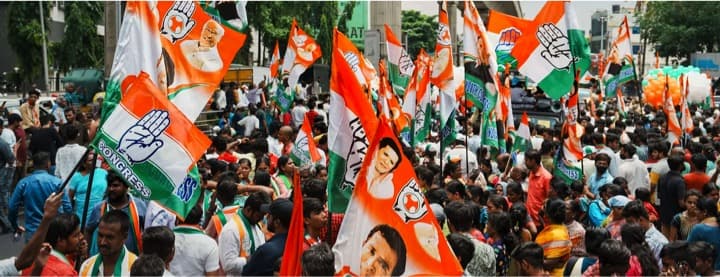
Congress is known to be a party since Independence that thrives on divide & rule policy. Right from dividing our country based on religion, it went on to divide on the basis of caste, language etc. Now, it has reached a disgusting level of creating a divide based on economic origin – which is absolutely against the Constitution, which grants freedom of economic activity all over the country. The recent controversy over Nandini and Amul by the Congress during the Karnataka elections only for getting some votes is highly deplorable.
The division of people by Congress starts with its sets of lies. For instance, when GST was introduced that had the involvement of all States led by different parties, including Congress, it was falsely spread among the masses that GST is a system of looting the poor and benefiting the rich. The attempt was to pitch the poor vs rich, while in reality, the average tax had reduced from around 15per cent to less than 12 per cent. Also, the lie was spread to divide the exemplary federal institution into a central vs state issue, lying that the centre decides, while in reality, it is the entire committee that decides!
In the agitation against the farm laws, Congress favoured farmers selling produce only to APMC traders, not providing economic opportunities to farmers to realise competitive prices. However, BJP favoured farmers to sell produce to anybody offering competitive prices, including APMC traders. Obviously, where the market competition is restricted (to only traders of APMCs), farmers will receive a lower share of consumer price, while traders realise higher margins. The compulsive lies of Congress ensured that farmers had to lose out on their economic gain.
In the recent Assembly elections, Congress politicised the market competition between Amul and Karnataka Milk Federation (KMF) by spreading rumours that Nandini is being undermined and will impact the State dairy farmers. Left to the market alone, the cooperatives might have had healthy competition, and each of the cooperatives of the State would expand based on the customer demand. This might have helped Nandini popularise in other States. But the virus of politicising the market activity has now spread to other States and is backfiring on the business potential of Nandini as the Kerala milk federation is now opposing the sale of Nandini products in its State. But well before the AMUL -Nandini controversy incited by Congress in Karnataka, KMF expansion in Kerala was not felt a concern as the milk demand of the State cannot be met by domestic production. Kerala’s Milma mainly depends on Karnataka’s Nandini and Aavin of Tamil Nadu during the festive seasons and when milk production is low in Kerala.
The controversy went so bad that the Kerala Minister went to the extent of calling KMF milk as of very low quality. So not only KMF had to lose its economic space in Kerala but had to take the flak for no fault of its. Thanks to the divisive nature of Congress, today Karnataka’s farmers and milk producers are at a loss.
While KMF’s Nandini milk is the dominant player in the fresh milk market space, Amul occupies the third or sometimes fourth place. Although Amul plans to enter the quick commerce platform in Bengaluru to sell milk, the Gujarat brand has been selling fresh milk in Belgaum and Hubli for the past eight years. The company sells 6000-8000 litres per day in the two cities, compared to Nandini’s 1.25-1.3 lakh litres per day. However, Amul’s Taaza milk, at Rs 54 per litre, is costlier by Rs 14 compared to Nandini. This will mean that KMF will always retain its top space, while allowing other players to be in the smaller niche areas without hurting the producers and the consumers will also benefit from variety of products at multiple price points.
KMF supplies to over 81 per cent of villages (22,000 villages out of 27,028) of Karnataka from 26 lakh milk producers procuring 81 lakh kgs of milk every day from 17,000 cooperative milk societies, selling 52 per cent of milk (42 lakh kgs of milk) per day paying Rs 17 crore per day to farmers. The annual turnover of KMF is around Rs 14,000 crore in FY23.
There are already ten private brands selling milk in Bengaluru. Despite all this no one is able to compete with Nandini because of the price point and quality that people respect. Nandini is selling milk at the lowest rate. Nandini sells more than 10 Lakh Lts daily to milk-deficient States, and it also sells milk in Chennai, Mumbai and Hyderabad with competitive pricing with AMUL. This politics of Congress might now impact its sale in other states if others start similar regionalism-based divisiveness and protesting the sale of Nandini there. Nandini holds over 90per cent of the market share in Karnataka for milk and milk products. Therefore any State barring Nandini should not matter significantly for Nandini. Also, any unsold milk can always be converted to other milk products.
In organised milk marketing, outside Karnataka, Nandini, Amul, etc are all oligopolists. Oligopoly is characterised in imperfect competition where non-price competition, such as selling effort, branding, advertising dominate over price competition. This is the reason Amul is able to sell in markets outside Gujarat due to brand image built.
In Kerala, Nandini has opened their outlets in Mancheri and Tirur in the Malappuram district and Kochi in the Ernakulam district, and Pandalam in the Pathanamthitta district. And Nandini products are also available in supermarkets in major cities in Kerala. Nandini can also expand its market share in other States without hindrance through price competition. For example, if Nandini products are available over e-commerce at lower prices, then anybody would obtain a price advantage.
While Cooperatives are getting diluted in many sectors, it is only in Milk that Cooperatives have proved not only successful but also have growth with professionalism. India is a shining example for this in the entire world. The backbone of the Cooperative structure is democratic decision-making and involvement of members. Thus any decision concerning policy looming over economics, marketing, supply chain, value chain, spanning across states or within State can be made by respective Federations under NDDB.
In conclusion – Congress has the sad mindset of pitting one against the other for its own selfish gains, even if it means that large number of people will suffer. A case in point is that of KMF. The milk producers of Karnataka will have to feel unwanted & constrained in places like Kerala only because the local politicians there are following the same cheap tactics of not allowing outside players to come in – even when the dominant player will be the local player and the outsider would add to the gaps.
This as of now, hurts the Nandini & its ecosystem in a small way, but what is more important is the mindset that Congress spreads, that needs to be called out, stopped and rooted out.